Top companies trust Zapier to automate work that solves their unique business problems—no coding required.
How Zapier works
Zapier makes it easy to integrate Gmail with Webhooks by Zapier - no code necessary. See how you can get setup in minutes.
100%
Help
Gmail
Gmail
1. Choose trigger event
Webhooks by Zapier
Webhooks by Zapier
2. Choose action
1. Select the event
Setup
Test
Gmail
Choose a trigger event
Choose a trigger
A trigger is the event that starts your Zap—like a "New Attachment" from Gmail.
Add your action
An action happens after the trigger—such as "Custom Request" in Webhooks by Zapier.
You’re connected!
Zapier seamlessly connects Gmail and Webhooks by Zapier, automating your workflow.
Supported triggers and actions
Zapier helps you create workflows that connect your apps to automate repetitive tasks. A trigger is an event that starts a workflow, and an action is an event a Zap performs.
Create a new record or update an existing record in your app.
URL
Required
Payload_type
Data
Wrap Request In Array
File
Unflatten
Extract Variables
Basic Auth
Headers
Action
This is an event a Zap performs.
Write
Create a new record or update an existing record in your app.
For AI agents & developers
Use Gmail and Webhooks by Zapier with AI agents and code
Beyond Zap workflows. Call Gmail and Webhooks by Zapier actions directly from your AI client or your codebase, using the same 9,000+ app integrations Zapier already runs.
No code
Connect via Zapier MCP
Expose Gmail and Webhooks by Zapier actions as tools in any MCP client. Authenticate once, then call them in natural language.
Example actions on this page
Add Label to Email
Custom Request
Works with
Claude · ChatGPT · Cursor · any MCP-compatible client
There is no Python package yet. SDK is TypeScript-only (@zapier/zapier-sdk). The MCP server URL is personal to your account; get it at zapier.com/mcp.
Zapier is the automation platform of choice for 87% of Forbes Cloud 100 companies in 2023
93%
Customers who say using Zapier has made them better at their job
25m
Customers have created over 25 million Zaps on the platform
6 mins
The average user takes less than 6 minutes to set up a Zap
Practical ways you can use Gmail and Webhooks by Zapier
Receive notifications for starred emails
Stay organized and never miss an important email. When you star an email in Gmail, Zapier will trigger a webhook to notify your preferred communication platform or tool instantly, allowing you to address high-priority correspondence immediately.
Streamline your incident response process. When Gmail receives an email matching your predefined criteria (such as specific error codes or sender addresses), Zapier will trigger a webhook to escalate the alert to your incident management system or dashboard.
Analyze engagement with your email campaigns effortlessly. When Gmail tags an incoming email reply using specific labels, Zapier will trigger a webhook to log the data into your analytics or CRM platform, helping the team understand campaign performance.
Learn how to automate Webhooks by Zapier on the Zapier blog
Make work flow with AI
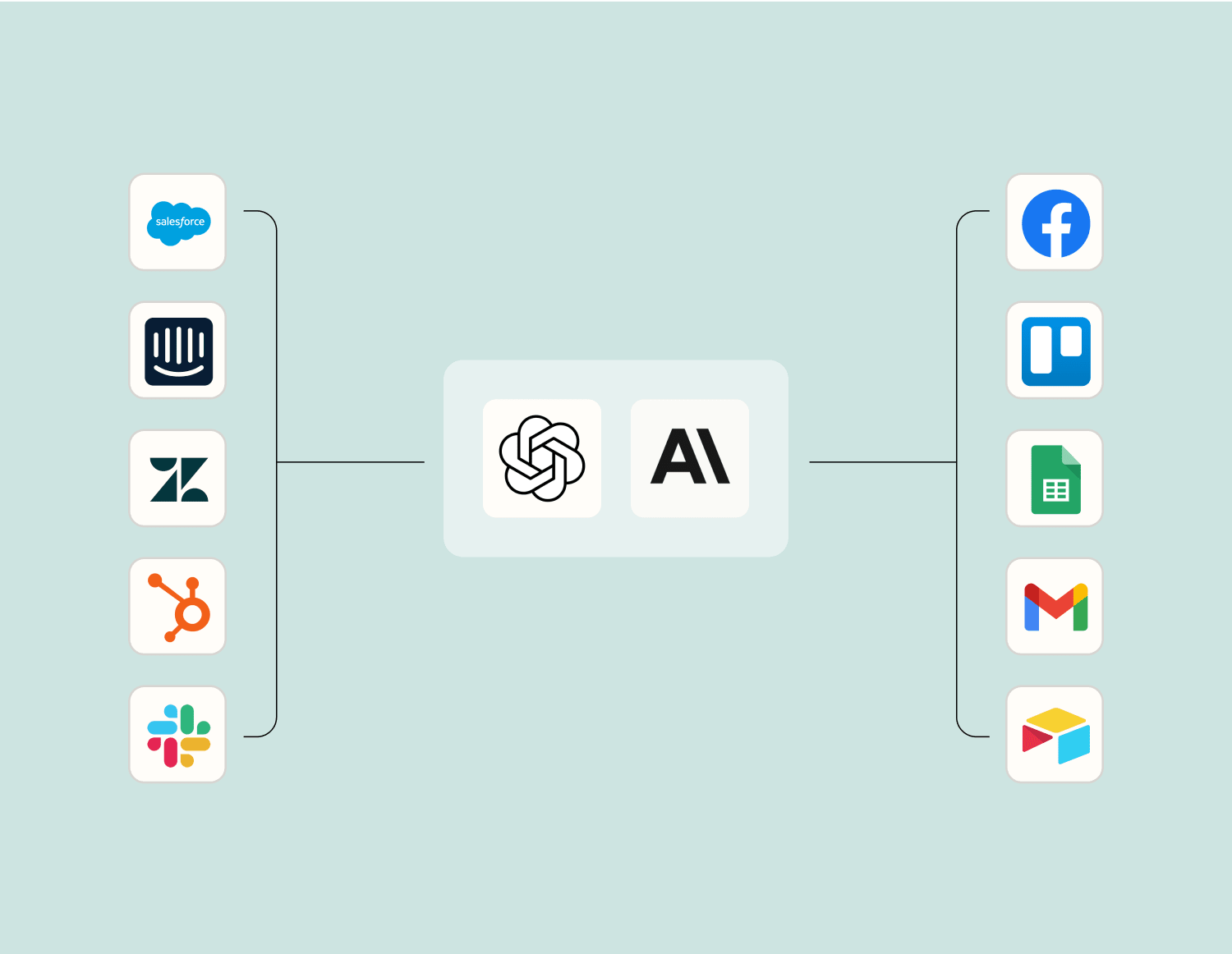
Level up your Gmail to Webhooks by Zapier integration with AI. Extract, summarize, and transform your integration data with leading AI models like OpenAI, Anthropic, and more.
Frequently Asked Questions about Gmail + Webhooks by Zapier integrations
New to automation with Zapier? You're not alone. Here are some answers to common questions about how Zapier works with Gmail and Webhooks by Zapier
What is Zapier's role in integrating Gmail with Webhooks?
We act as the connecting platform that allows you to create automated workflows called Zaps, where you can set up triggers in Gmail that send data to Webhooks, enabling real-time data sharing.
How do I set up a trigger for new Gmail emails in Zapier?
You can set up a trigger by selecting Gmail as your trigger app and choosing the 'New Email' event. You'll then connect your Gmail account to Zapier and specify any search criteria for the emails you want to trigger the Zap.
Can I use Webhooks in Zapier to receive data from Gmail attachments?
Yes, you can use Webhooks by setting up a 'New Attachment' trigger in Gmail. This setup will allow the webhook to capture any attachment received in your specified emails, and then send this data to another application.
Is it possible to filter which emails trigger a webhook using Zapier?
Absolutely! In Zapier, you can apply filters after setting up your Gmail trigger. This means only emails that meet your specific criteria—like sender email or keywords—will activate the webhook action.
What happens when an email triggers a webhook via Zapier?
When an email matches your specified criteria and triggers the webhook, we send an HTTP request with the email data—like subject, body content, and attachments—to the URL you've configured.
Do I need coding skills to integrate Gmail with Webhooks on Zapier?
No coding skills are necessary for basic setups. Our user-friendly interface allows you to choose triggers and actions without needing technical expertise, although customizing webhooks might require knowledge of HTTP requests.
What kinds of actions can I perform once a webhook is triggered from a Gmail event in Zapier?
Once a webhook is triggered by a Gmail event, you can perform several actions like sending data to other applications or triggering additional Zaps based on custom logic defined via our filters or Paths feature.
About Gmail
One of the most popular email services, Gmail keeps track of all your emails with threaded conversations, tags, and Google-powered search to find any message you need.
Webhooks simply POST data (or JSON) to a specific URL every time we see something new. Webhooks can also accept data (or JSON) to kick off a workflow in Zapier.