Top companies trust Zapier to automate work that solves their unique business problems—no coding required.
How Zapier works
Zapier makes it easy to integrate Google Sheets with Google Tasks - no code necessary. See how you can get setup in minutes.
100%
Help
Google Sheets
Google Sheets
1. Choose trigger event
Google Tasks
Google Tasks
2. Choose action
1. Select the event
Setup
Test
Google Sheets
Choose a trigger event
Choose a trigger
A trigger is the event that starts your Zap—like a "New Spreadsheet Row (Team Drive)" from Google Sheets.
Add your action
An action happens after the trigger—such as "Create Task List" in Google Tasks.
You’re connected!
Zapier seamlessly connects Google Sheets and Google Tasks, automating your workflow.
Supported triggers and actions
Zapier helps you create workflows that connect your apps to automate repetitive tasks. A trigger is an event that starts a workflow, and an action is an event a Zap performs.
Create a new record or update an existing record in your app.
Api_docs_info
Stop on error
Required
HTTP Method
Required
URL
Required
Query string parameters
Additional request headers
Body
Action
This is an event a Zap performs.
Write
Create a new record or update an existing record in your app.
Results will output in a line-item format. Subsequent action steps will need to support line-items. If not, you can transform this into t
Task List
Required
Display Completed Tasks
Required
Action
This is an event a Zap performs.
Search
Find existing data in your app
For AI agents & developers
Use Google Sheets and Google Tasks with AI agents and code
Beyond Zap workflows. Call Google Sheets and Google Tasks actions directly from your AI client or your codebase, using the same 9,000+ app integrations Zapier already runs.
No code
Connect via Zapier MCP
Expose Google Sheets and Google Tasks actions as tools in any MCP client. Authenticate once, then call them in natural language.
Example actions on this page
Create Spreadsheet Column
Create Task List
Works with
Claude · ChatGPT · Cursor · any MCP-compatible client
There is no Python package yet. SDK is TypeScript-only (@zapier/zapier-sdk). The MCP server URL is personal to your account; get it at zapier.com/mcp.
Zapier is the automation platform of choice for 87% of Forbes Cloud 100 companies in 2023
93%
Customers who say using Zapier has made them better at their job
25m
Customers have created over 25 million Zaps on the platform
6 mins
The average user takes less than 6 minutes to set up a Zap
Practical ways you can use Google Sheets and Google Tasks
Add completed tasks to a spreadsheet
When a task is marked as completed in Google Tasks, Zapier adds the task information to a new row in Google Sheets. This makes it easy to track completed work and maintain a record for performance reviews or future planning.
When a new task is added to Google Tasks, Zapier automatically creates a new row in Google Sheets with the task details. This integration helps marketing teams easily visualize ongoing campaigns and manage task assignments.
When a new row is added to a Google Sheets, Zapier creates a corresponding task in Google Tasks. This is great for project managers who update task lists in spreadsheets and want seamless task creation for team members.
Learn how to automate Google Sheets on the Zapier blog
Learn how to automate Google Tasks on the Zapier blog
Make work flow with AI
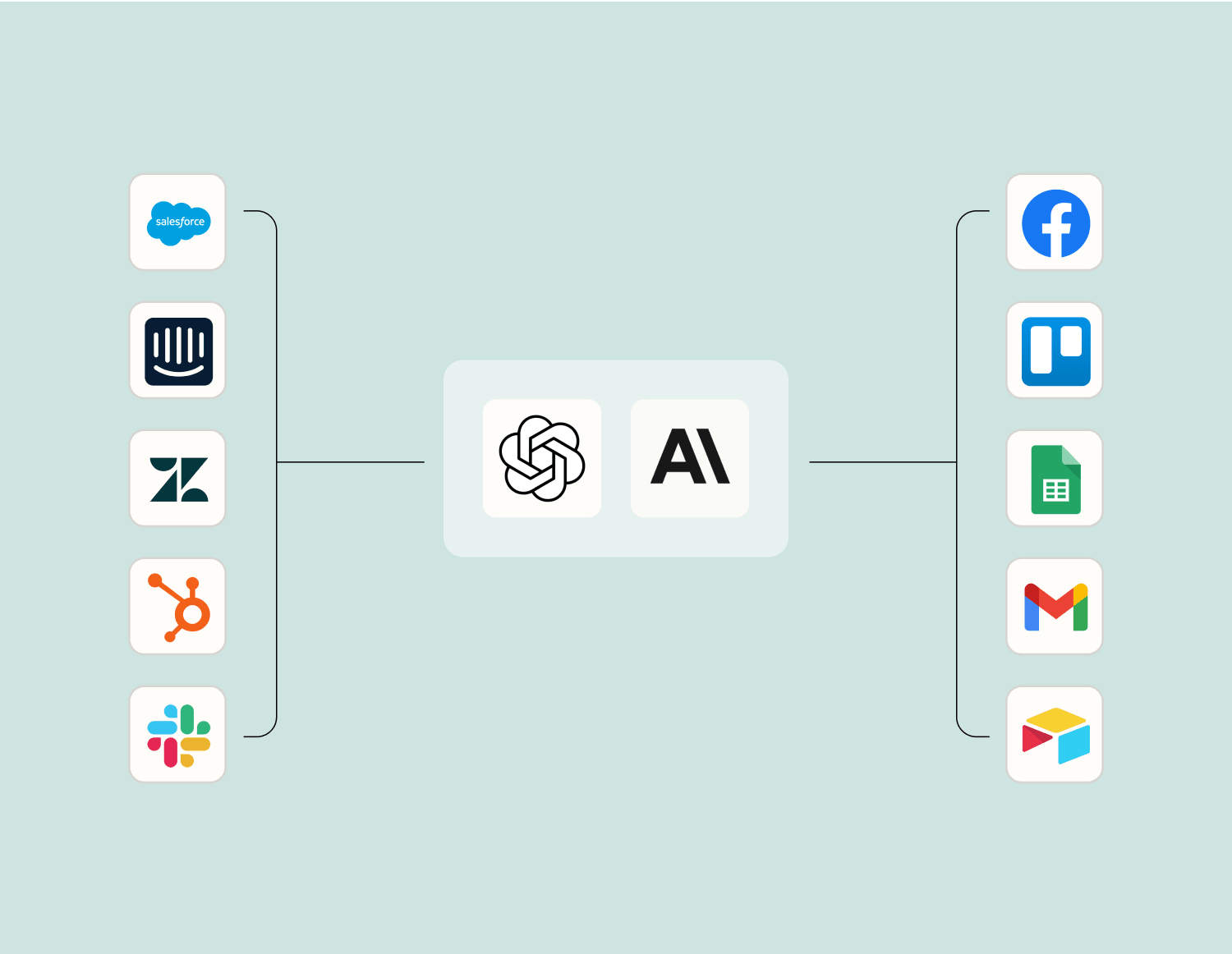
Level up your Google Sheets to Google Tasks integration with AI. Extract, summarize, and transform your integration data with leading AI models like OpenAI, Anthropic, and more.
Frequently Asked Questions about Google Sheets + Google Tasks integrations
New to automation with Zapier? You're not alone. Here are some answers to common questions about how Zapier works with Google Sheets and Google Tasks
How can I automatically create Google Tasks from new rows in Google Sheets?
You can set up an automation that triggers whenever a new row is added to your Google Sheets. This trigger will then prompt the creation of a new task in Google Tasks. Make sure to map the column data correctly to fill in the task details such as title, due date, and notes.
Is it possible to update a Google Task when information in a Google Sheet changes?
Yes, by setting up a 'Updated Row' trigger for your spreadsheet, we can automatically update an existing task in Google Tasks. You'll need to specify how the spreadsheet data corresponds with your task's attributes so changes are accurately reflected.
Can I create recurring tasks in Google Tasks using information from Google Sheets?
While you can create tasks from spreadsheet data, recurring tasks aren’t directly supported through this integration. However, you might consider adding reminders manually or setting up separate automations for recurring entries.
What should I do if my tasks aren't being created even though my trigger event occurs?
First, check that the integration configuration accurately maps spreadsheet columns to task fields. Verify that trigger conditions are set correctly and examine our platform's logs for any errors during the execution process.
How do I select which columns from my Google Sheet are used in creating tasks?
During setup, you'll be prompted to select which sheet columns correspond with specific task details like title and due date. This ensures only relevant information is passed on when creating each task.
Can I assign tasks created through this integration to specific people within Google Tasks?
Our integration allows you to populate details within new tasks but currently does not support assigning these tasks directly within Google Tasks; assignments would need manual processing post-creation.
Is there a limit on how many rows can trigger task creation at once?
There is no hard limit imposed by our service; however, keep in mind that processing a large number of rows simultaneously may incur delays or rate limits on Google's API side.
About Google Sheets
Create, edit, and share spreadsheets wherever you are with Google Sheets, and get automated insights from your data.