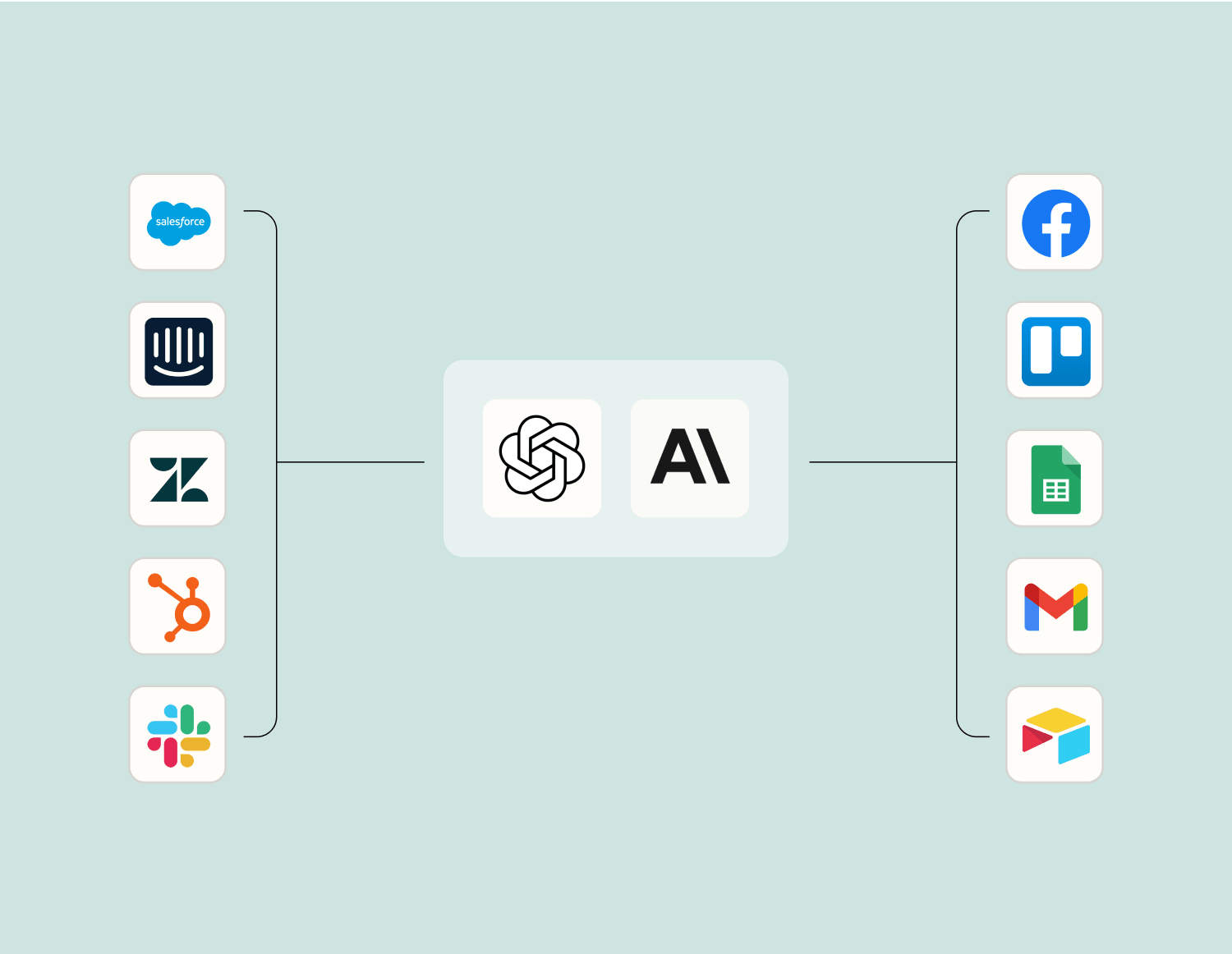
Top companies trust Zapier to automate work that solves their unique business problems—no coding required.
How Zapier works
Zapier makes it easy to integrate Canny with Notion - no code necessary. See how you can get setup in minutes.
100%
Help
Canny
Canny
1. Choose trigger event
Notion
Notion
2. Choose action
1. Select the event
Setup
Test
Canny
Choose a trigger event
Choose a trigger
A trigger is the event that starts your Zap—like a "New Comment" from Canny.
Add your action
An action happens after the trigger—such as "Add Block to Page" in Notion.
You’re connected!
Zapier seamlessly connects Canny and Notion, automating your workflow.
Supported triggers and actions
Zapier helps you create workflows that connect your apps to automate repetitive tasks. A trigger is an event that starts a workflow, and an action is an event a Zap performs.
Create a new record or update an existing record in your app.
Page
Required
Comment
Required
Action
This is an event a Zap performs.
Write
Create a new record or update an existing record in your app.
Parent_page
Required
Title
Content
Icon
Cover
Action
This is an event a Zap performs.
Write
Create a new record or update an existing record in your app.
Item ID
Required
Action
This is an event a Zap performs.
Write
Create a new record or update an existing record in your app.
Data Source
Item
Required
Content
Content Format
Action
This is an event a Zap performs.
Write
Create a new record or update an existing record in your app.
File_upload_note
Data Source
Required
Item
Required
File Property
Required
File
Required
Action
This is an event a Zap performs.
Write
Create a new record or update an existing record in your app.
Stop on error
Required
HTTP Method
Required
URL
Required
Query string parameters
Additional request headers
Body
Action
This is an event a Zap performs.
Write
Create a new record or update an existing record in your app.
Retrieve a Page
This action retrieves a specific page from Notion using its ID. The page id can be a normal page or a database item.
Action
This is an event a Zap performs.
Write
Create a new record or update an existing record in your app.
Page
Required
Action
This is an event a Zap performs.
Search
Find existing data in your app
Block ID
Required
Action
This is an event a Zap performs.
Search
Find existing data in your app
Page ID
Required
Action
This is an event a Zap performs.
Search
Find existing data in your app
Title
Required
Exact_match
Required
Action
This is an event a Zap performs.
Search
Find existing data in your app
Data Source
Advanced Query (JSON)
Action
This is an event a Zap performs.
Search
Find existing data in your app
Data Source
Template Mode
Action
This is an event a Zap performs.
Search or write
Find existing data in your app, or create a new record if no data is found
For AI agents & developers
Use Canny and Notion with AI agents and code
Beyond Zap workflows. Call Canny and Notion actions directly from your AI client or your codebase, using the same 9,000+ app integrations Zapier already runs.
No code
Connect via Zapier MCP
Expose Canny and Notion actions as tools in any MCP client. Authenticate once, then call them in natural language.
Example actions on this page
Change Post Status
Add Block to Page
Works with
Claude · ChatGPT · Cursor · any MCP-compatible client
There is no Python package yet. SDK is TypeScript-only (@zapier/zapier-sdk). The MCP server URL is personal to your account; get it at zapier.com/mcp.
Zapier is the automation platform of choice for 87% of Forbes Cloud 100 companies in 2023
93%
Customers who say using Zapier has made them better at their job
25m
Customers have created over 25 million Zaps on the platform
6 mins
The average user takes less than 6 minutes to set up a Zap
Practical ways you can use Canny and Notion
Track Canny post statuses in Notion
When a post status is updated in Canny—like a feature being marked as 'in progress'—Zapier updates the corresponding item in a Notion database. This ensures business owners have a centralized view of progress, aiding transparency and planning.
Log new Notion database items into Canny for feedback
When a new item is created in a designated Notion database, Zapier automatically posts it to Canny as a new post. This ensures engineers have a structured way to collect and act on user feedback or suggestions captured in Notion, reducing oversight.
When a new post is created in Canny, Zapier logs it as a new item in a specific Notion database. This keeps project managers informed about new feedback or feature requests and organizes everything in one place. It improves tracking user needs and prioritizing tasks.
Level up your Canny to Notion integration with AI. Extract, summarize, and transform your integration data with leading AI models like OpenAI, Anthropic, and more.