Top companies trust Zapier to automate work that solves their unique business problems—no coding required.
How Zapier works
Zapier makes it easy to integrate Google Sheets with Unbounce - no code necessary. See how you can get setup in minutes.
100%
Help
Google Sheets
Google Sheets
1. Choose trigger event
Unbounce
Unbounce
2. Choose action
1. Select the event
Setup
Test
Google Sheets
Choose a trigger event
Choose a trigger
A trigger is the event that starts your Zap—like a "New Spreadsheet Row (Team Drive)" from Google Sheets.
Add your action
An action happens after the trigger—such as "API Request (Beta)" in Unbounce.
You’re connected!
Zapier seamlessly connects Google Sheets and Unbounce, automating your workflow.
Supported triggers and actions
Zapier helps you create workflows that connect your apps to automate repetitive tasks. A trigger is an event that starts a workflow, and an action is an event a Zap performs.
Use Google Sheets and Unbounce with AI agents and code
Beyond Zap workflows. Call Google Sheets and Unbounce actions directly from your AI client or your codebase, using the same 9,000+ app integrations Zapier already runs.
No code
Connect via Zapier MCP
Expose Google Sheets and Unbounce actions as tools in any MCP client. Authenticate once, then call them in natural language.
Example actions on this page
Create Spreadsheet Column
API Request (Beta)
Works with
Claude · ChatGPT · Cursor · any MCP-compatible client
There is no Python package yet. SDK is TypeScript-only (@zapier/zapier-sdk). The MCP server URL is personal to your account; get it at zapier.com/mcp.
Zapier is the automation platform of choice for 87% of Forbes Cloud 100 companies in 2023
93%
Customers who say using Zapier has made them better at their job
25m
Customers have created over 25 million Zaps on the platform
6 mins
The average user takes less than 6 minutes to set up a Zap
Practical ways you can use Google Sheets and Unbounce
Sync Unbounce data with spreadsheets
Easily manage landing page performance metrics. When there's a new form submission from Unbounce, Zapier automatically records it in a Google Sheet. This keeps your lead and performance metrics organized for better decision-making.
Stay on top of new lead captures. When a new form submission occurs on an Unbounce landing page, Zapier automatically logs the details into a Google Sheet. This makes tracking, sorting, and analyzing your lead data much simpler, ensuring you never miss a lead.
Streamline your project intake process. When a new form submission is captured using an Unbounce landing page, Zapier creates a detailed record in Google Sheets, giving project managers a clear overview of tasks and requirements.
Learn how to automate Google Sheets on the Zapier blog
Learn how to automate Unbounce on the Zapier blog
Make work flow with AI
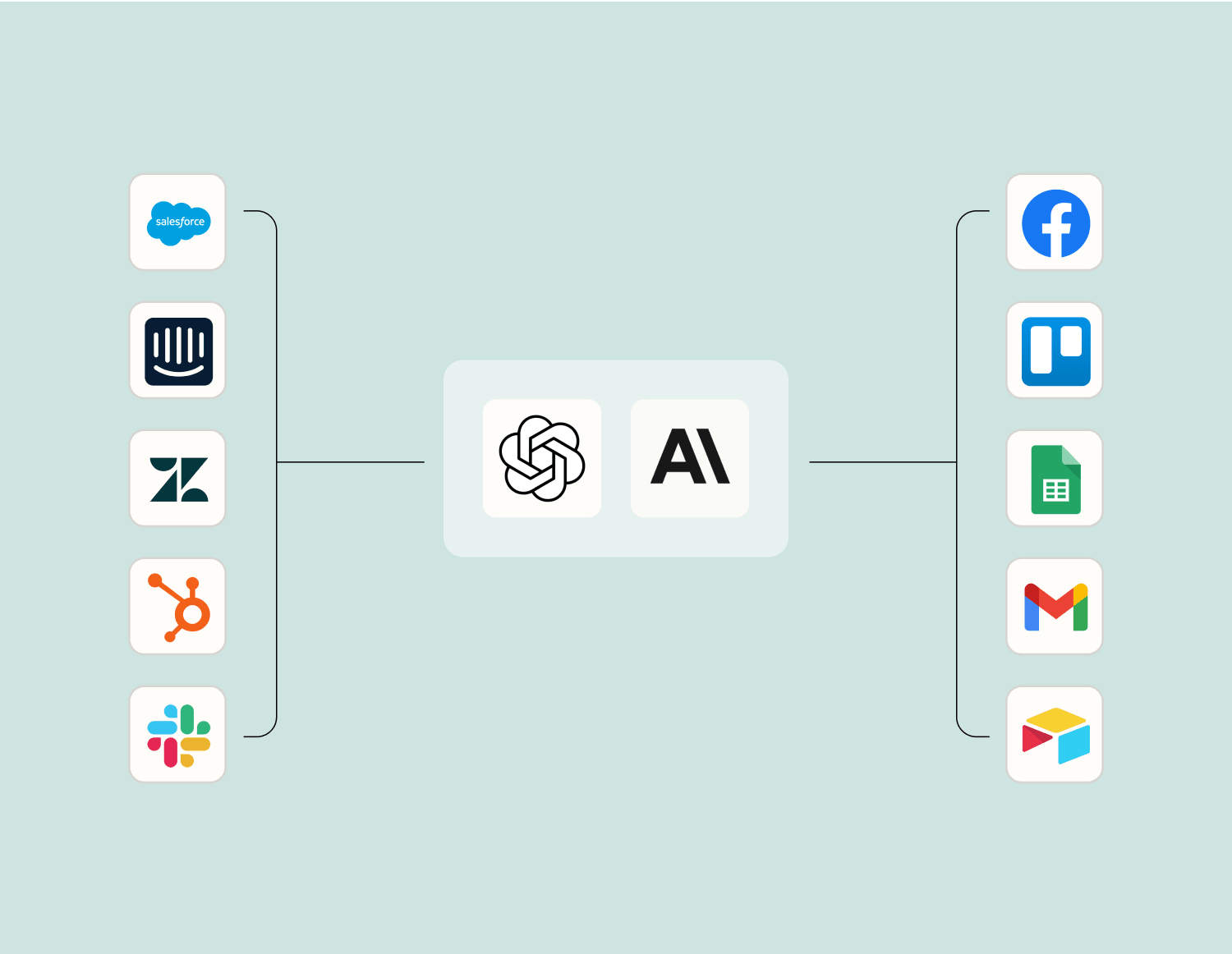
Level up your Google Sheets to Unbounce integration with AI. Extract, summarize, and transform your integration data with leading AI models like OpenAI, Anthropic, and more.
Frequently Asked Questions about Google Sheets + Unbounce integrations
New to automation with Zapier? You're not alone. Here are some answers to common questions about how Zapier works with Google Sheets and Unbounce
How can I connect Google Sheets with Unbounce?
You can connect Google Sheets with Unbounce through our automation platform. Begin by setting up a new Zap where Unbounce is your trigger app and Google Sheets is your action app. Authorize both applications to allow data flow between them.
What triggers are available for Google Sheets and Unbounce integration?
For integrating Google Sheets with Unbounce, we support triggers such as a new form submission on Unbounce. This means whenever a form is submitted, it will automatically send the data to your specified Google Sheet.
Can I update existing rows in my Google Sheet when there is a new submission in Unbounce?
Yes, you can update existing rows in your Google Sheet. Set the action in the automation to find and update an existing row or create one if it doesn't exist whenever there's a new submission from Unbounce.
Is it possible to create multiple rows in Google Sheets from one form submission in Unbounce?
Currently, each form submission in Unbounce creates one row within your connected Google Sheet. If you require multiple rows per submission based on certain conditions, custom scripts may be needed outside provided automations.
How are errors handled during the data transfer between Unbounce and Google Sheets?
In case of errors during data transfer between Unbounce and Google Sheets, we log these events for you to review later. You'll receive notifications if an action fails so that you can address any issues promptly.
Can I schedule when the data transfers from Unbounce to my Google Sheet takes place?
While our automations typically run instantly after a trigger event, you have options to delay actions if needed by using specific filters or timed delays built into our platform.
Will the integration affect the performance of my live pages on Unbounce?
The integration generally operates independently of your live page's performance on Unbounce. Data transfer processes run server-side, ensuring they do not impact page load times or user experience directly.
About Google Sheets
Create, edit, and share spreadsheets wherever you are with Google Sheets, and get automated insights from your data.
Unbounce is a landing page platform that helps you convert more visitors into leads, sales, and customers. Unbounce Conversion Intelligence™ is AI powered-functionality that works with your marketing intuition to ensure the best campaign performance every time.