Top companies trust Zapier to automate work that solves their unique business problems—no coding required.
How Zapier works
Zapier makes it easy to integrate Shopify with Zoho Inventory - no code necessary. See how you can get setup in minutes.
100%
Help
Shopify
Shopify
1. Choose trigger event
Zoho Inventory
Zoho Inventory
2. Choose action
1. Select the event
Setup
Test
Shopify
Choose a trigger event
Choose a trigger
A trigger is the event that starts your Zap—like a "New Blog" from Shopify.
Add your action
An action happens after the trigger—such as "Create Contact" in Zoho Inventory.
You’re connected!
Zapier seamlessly connects Shopify and Zoho Inventory, automating your workflow.
Supported triggers and actions
Zapier helps you create workflows that connect your apps to automate repetitive tasks. A trigger is an event that starts a workflow, and an action is an event a Zap performs.
New Blog
Triggers when a new blog is added to your Shopify store.
Create a new record or update an existing record in your app.
Organization
Required
Item Name
Required
Sku
Required
Unit
Required
Item Type
Product Type
Rate
Required
Purchase Rate
Required
Action
This is an event a Zap performs.
Write
Create a new record or update an existing record in your app.
Api_docs_info
Stop on error
Required
HTTP Method
Required
URL
Required
Query string parameters
Additional request headers
Body
Action
This is an event a Zap performs.
Write
Create a new record or update an existing record in your app.
For AI agents & developers
Use Shopify and Zoho Inventory with AI agents and code
Beyond Zap workflows. Call Shopify and Zoho Inventory actions directly from your AI client or your codebase, using the same 9,000+ app integrations Zapier already runs.
No code
Connect via Zapier MCP
Expose Shopify and Zoho Inventory actions as tools in any MCP client. Authenticate once, then call them in natural language.
Example actions on this page
Add Line Item to Order
Create Contact
Works with
Claude · ChatGPT · Cursor · any MCP-compatible client
There is no Python package yet. SDK is TypeScript-only (@zapier/zapier-sdk). The MCP server URL is personal to your account; get it at zapier.com/mcp.
Zapier is the automation platform of choice for 87% of Forbes Cloud 100 companies in 2023
93%
Customers who say using Zapier has made them better at their job
25m
Customers have created over 25 million Zaps on the platform
6 mins
The average user takes less than 6 minutes to set up a Zap
Practical ways you can use Shopify and Zoho Inventory
Sync paid Shopify orders to Zoho Inventory.
When a new paid order is created in Shopify, Zapier automatically creates a new sales order in Zoho Inventory. This reduces manual data entry, ensures inventory is updated accurately, and streamlines order processing, improving order accuracy and delivery timelines.
When a new customer is added in Shopify, Zapier automatically updates the contact list in Zoho Inventory. This ensures synchronized and up-to-date customer data across systems, improving data integrity and enabling seamless customer-related workflows.
When a new order is created in Shopify, Zapier automatically generates a corresponding sales order in Zoho Inventory. This keeps project managers informed about product demand and inventory allocation, helping them align resources effectively and stay on track.
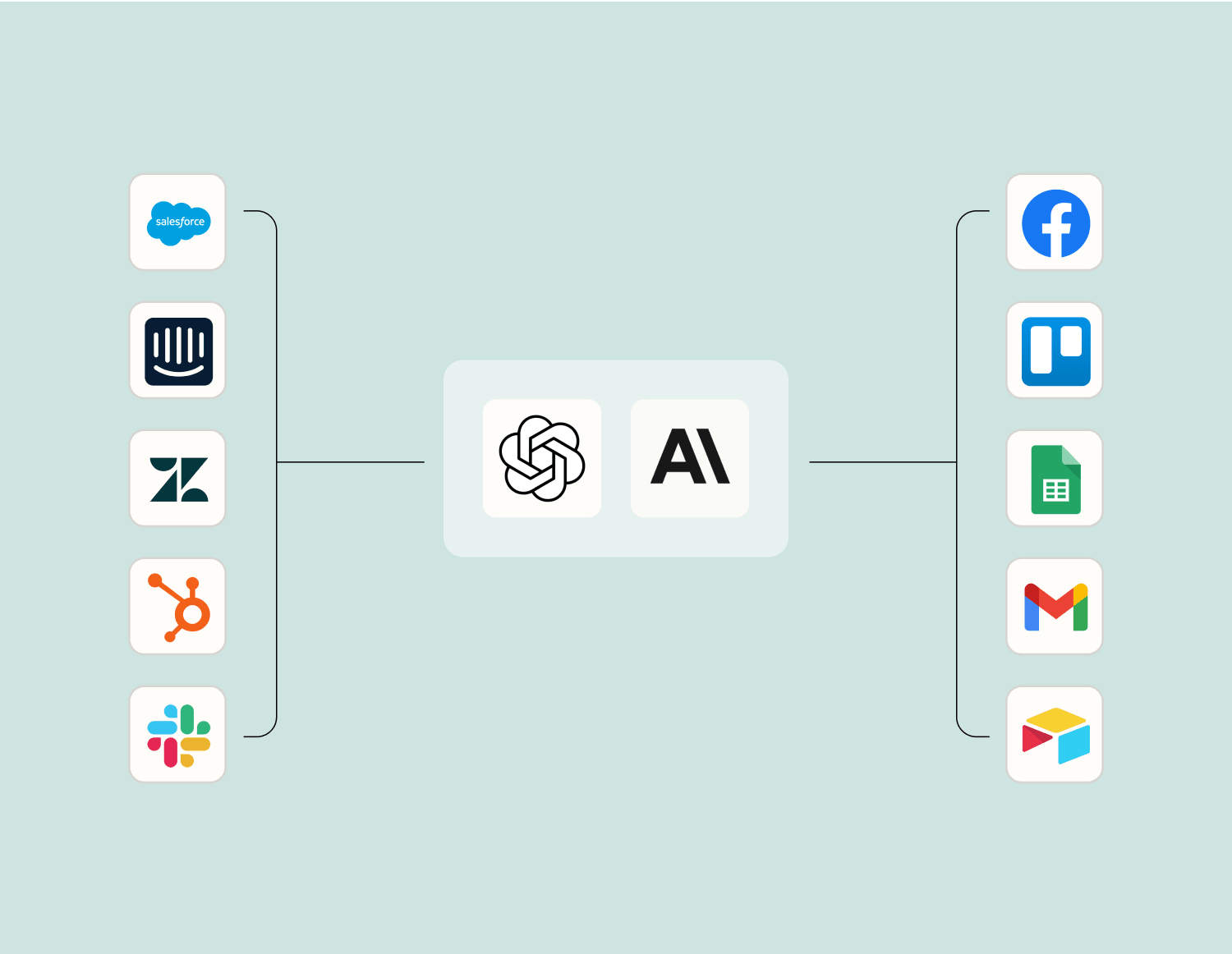
Level up your Shopify to Zoho Inventory integration with AI. Extract, summarize, and transform your integration data with leading AI models like OpenAI, Anthropic, and more.
Frequently Asked Questions about Shopify + Zoho Inventory integrations
New to automation with Zapier? You're not alone. Here are some answers to common questions about how Zapier works with Shopify and Zoho Inventory
Can I automatically update stock levels in Zoho Inventory when a product is sold on Shopify?
Yes, when a product is sold on Shopify, our integration allows you to automatically update the stock levels in Zoho Inventory. You'll need to set up triggers for new orders in Shopify, which will allow us to adjust inventory quantities in real-time.
How can I add new Shopify products to Zoho Inventory?
You can set up an action for adding new products whenever they are created in Shopify. Our integration listens for new product triggers on your Shopify store and transfers the product details to Zoho Inventory.
What happens if an order is updated or canceled on Shopify?
When an order is updated or canceled on Shopify, our system detects these changes through triggers and updates the order status or inventory levels accordingly in Zoho Inventory.
Is it possible to sync customer information from Shopify with Zoho Inventory?
Yes, by setting up triggers for new customers or customer updates in Shopify, their information can be synchronized with Zoho Inventory automatically with every change.
Can I manage refunds across both platforms seamlessly?
Refunds processed in Shopify can trigger actions that update the corresponding transactions within Zoho Inventory, ensuring your records remain consistent across both platforms.
Do pricing updates in Zoho Inventory reflect in my Shopify store?
With our setup, changes made to product prices in Zoho Inventory can trigger updates that will automatically adjust prices for those products listed on your Shopify store.
How often does data sync between Shopify and Zoho Inventory using this integration?
Our integration generally performs real-time synchronizations based on events triggered by actions performed either on your Shopify store or within Zoho Inventory, ensuring instant updates.
About Shopify
Shopify is a simple way to create an online store to list products, collect credit card payments, and ship your goods.
Zoho Inventory is inventory management software for growing businesses to increase the sales and keep track of every unit with powerful stock management, order fulfillment, and inventory control.