Top companies trust Zapier to automate work that solves their unique business problems—no coding required.
How Zapier works
Zapier makes it easy to integrate Linear with Toggl Track - no code necessary. See how you can get setup in minutes.
100%
Help
Linear
Linear
1. Choose trigger event
Toggl Track
Toggl Track
2. Choose action
1. Select the event
Setup
Test
Linear
Choose a trigger event
Choose a trigger
A trigger is the event that starts your Zap—like a "New Customer" from Linear.
Add your action
An action happens after the trigger—such as "Create Client" in Toggl Track.
You’re connected!
Zapier seamlessly connects Linear and Toggl Track, automating your workflow.
Supported triggers and actions
Zapier helps you create workflows that connect your apps to automate repetitive tasks. A trigger is an event that starts a workflow, and an action is an event a Zap performs.
Create a new record or update an existing record in your app.
Organization
Required
Emails
Required
Skip email
Workspace
Required
Action
This is an event a Zap performs.
Write
Create a new record or update an existing record in your app.
Workspace
Required
Labor cost
Manager
Project
Required
Rate
User
Required
Action
This is an event a Zap performs.
Write
Create a new record or update an existing record in your app.
Workspace
Required
Project
Required
Task Name
Required
Task Status
Action
This is an event a Zap performs.
Write
Create a new record or update an existing record in your app.
Organization
Required
Workspace
Required
User
Required
Action
This is an event a Zap performs.
Write
Create a new record or update an existing record in your app.
Workspace
Required
Time entry
Required
Action
This is an event a Zap performs.
Write
Create a new record or update an existing record in your app.
Workspace
Required
Project member
Required
Labor cost
Manager
Rate
Action
This is an event a Zap performs.
Write
Create a new record or update an existing record in your app.
Workspace
Required
Billable
Clients
Description
Start date
Required
End date
Required
Grouped
Order by
Projects
Action
This is an event a Zap performs.
Search
Find existing data in your app
Workspace
Required
Project Name
Required
Action
This is an event a Zap performs.
Search
Find existing data in your app
Workspace
Required
Task name
Required
Task status
Action
This is an event a Zap performs.
Search
Find existing data in your app
Workspace
Description
Before
After
Action
This is an event a Zap performs.
Search
Find existing data in your app
Workspace
Required
Project filter
User filter
Action
This is an event a Zap performs.
Search
Find existing data in your app
Workspace
Required
Client Name
Required
Client Status
Action
This is an event a Zap performs.
Search or write
Find existing data in your app, or create a new record if no data is found
Workspace
Required
Tag Name
Required
Action
This is an event a Zap performs.
Search or write
Find existing data in your app, or create a new record if no data is found
Workspace
Required
Time entry description
Before
After
Start
Required
Duration
Required
Billable
Project
Task
Tags
User
Action
This is an event a Zap performs.
Search or write
Find existing data in your app, or create a new record if no data is found
For AI agents & developers
Use Linear and Toggl Track with AI agents and code
Beyond Zap workflows. Call Linear and Toggl Track actions directly from your AI client or your codebase, using the same 9,000+ app integrations Zapier already runs.
No code
Connect via Zapier MCP
Expose Linear and Toggl Track actions as tools in any MCP client. Authenticate once, then call them in natural language.
Example actions on this page
Add Label to Issue
Create Client
Works with
Claude · ChatGPT · Cursor · any MCP-compatible client
There is no Python package yet. SDK is TypeScript-only (@zapier/zapier-sdk). The MCP server URL is personal to your account; get it at zapier.com/mcp.
Zapier is the automation platform of choice for 87% of Forbes Cloud 100 companies in 2023
93%
Customers who say using Zapier has made them better at their job
25m
Customers have created over 25 million Zaps on the platform
6 mins
The average user takes less than 6 minutes to set up a Zap
Practical ways you can use Linear and Toggl Track
Track time for updated Linear issues.
When an issue is updated in Linear, Zapier can start or stop a time entry in Toggl Track. This automation helps engineers monitor how much time they're spending on different issue updates, making it easier to assess workload and improve time management. It saves manual time entry, enhancing project time efficiency.
When a new issue is created in Linear, Zapier automatically creates a corresponding time entry in Toggl Track. This allows IT teams to keep a balanced, accurate record of their time spent on addressing or resolving these issues, boosting transparency and resource allocation.
Learn how to automate Toggl Track on the Zapier blog
Make work flow with AI
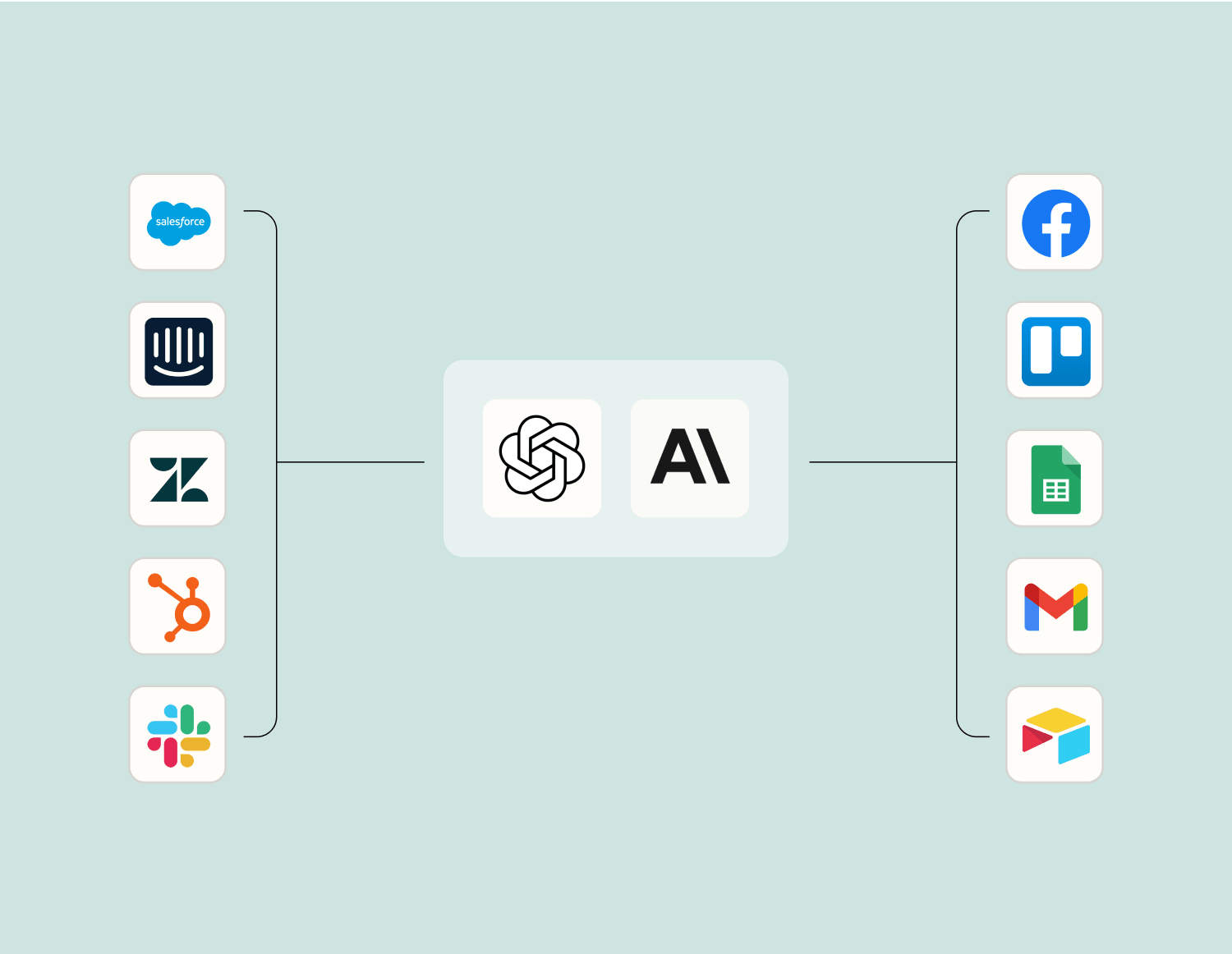
Level up your Linear to Toggl Track integration with AI. Extract, summarize, and transform your integration data with leading AI models like OpenAI, Anthropic, and more.
Frequently Asked Questions about Linear + Toggl Track integrations
New to automation with Zapier? You're not alone. Here are some answers to common questions about how Zapier works with Linear and Toggl Track
How do I set up a Linear to Toggl Track integration?
To set up an integration between Linear and Toggl Track, you'll need to create a zap that triggers on events in Linear, such as a new issue or updated issue, and then specify actions in Toggl Track like starting a time entry or updating a project. Our platform guides you through the connection process between these two systems.
Can I track time automatically in Toggl Track when an issue is created in Linear?
Yes, you can automate time tracking in Toggl Track when an issue is created in Linear by setting up a zap where the creation of a new issue in Linear is the trigger and starting a time entry in Toggl Track is the action.
Is it possible to update a Toggl Project whenever an issue is updated in Linear?
Absolutely! You can configure a zap that triggers when an issue is updated in Linear and carries out actions such as updating corresponding projects or tasks within Toggl Track, ensuring your data stays synchronized.
How often does data sync between Linear and Toggl Track?
Data between Linear and Toggl Track syncs based on triggered events. When an event occurs (e.g., creating an issue), it immediately triggers the action you have set up (e.g., start time entry), thus automating the update process per each event.
Do I need coding skills to integrate Linear with Toggl Track?
No coding skills are needed. Our platform provides an intuitive interface where you can connect triggers from Linear with actions in Toggl Track without writing any code.
What kind of support do you offer if I face issues during integration?
We provide comprehensive support through guides and live chat for troubleshooting any issues faced during setup or execution of the integration. Our team also ensures that all steps are clearly documented for your ease.
Can I customize which fields from Linear affect actions within Toggl Track?
Yes, our platform allows customization of fields so that specific details from your Linear issues can influence what happens on the Toggl side. You can map specific fields to ensure precise control over how information flows between both applications.
About Linear
Linear helps you manage software development processes.