We independently review every app we recommend in our best apps lists. When you click some of the links on this page, we may earn a commission. Learn more.
Forget Dunkin'—the world runs on automation. Well, at least marketing teams with tons of assets to manage and campaigns to run. If the marketing agency I work for didn't automate some of our more tedious tasks, we'd waste a lot of time doing things that software could take off our hands.
There are tons of marketing tools out there that enable you to build automated workflows, but some shine above the rest. After some extensive testing, here are my choices for the best marketing automation software.
The best marketing automation software
Zapier for building safely with AI
Brevo for an affordable all-in-one solution
HubSpot for a premium all-in-one solution
Omnisend for eCommerce
ActiveCampaign for AI campaign building
Klaviyo for user-friendliness
Customer.io for powerful workflow automations
Mailchimp for automating email marketing
Adobe Marketo Engage for enterprises
What are marketing automation tools?
A marketing automation tool is software that automates the repetitive parts of marketing, like scoring leads, moving contacts across lists, and sending drip email sequences.
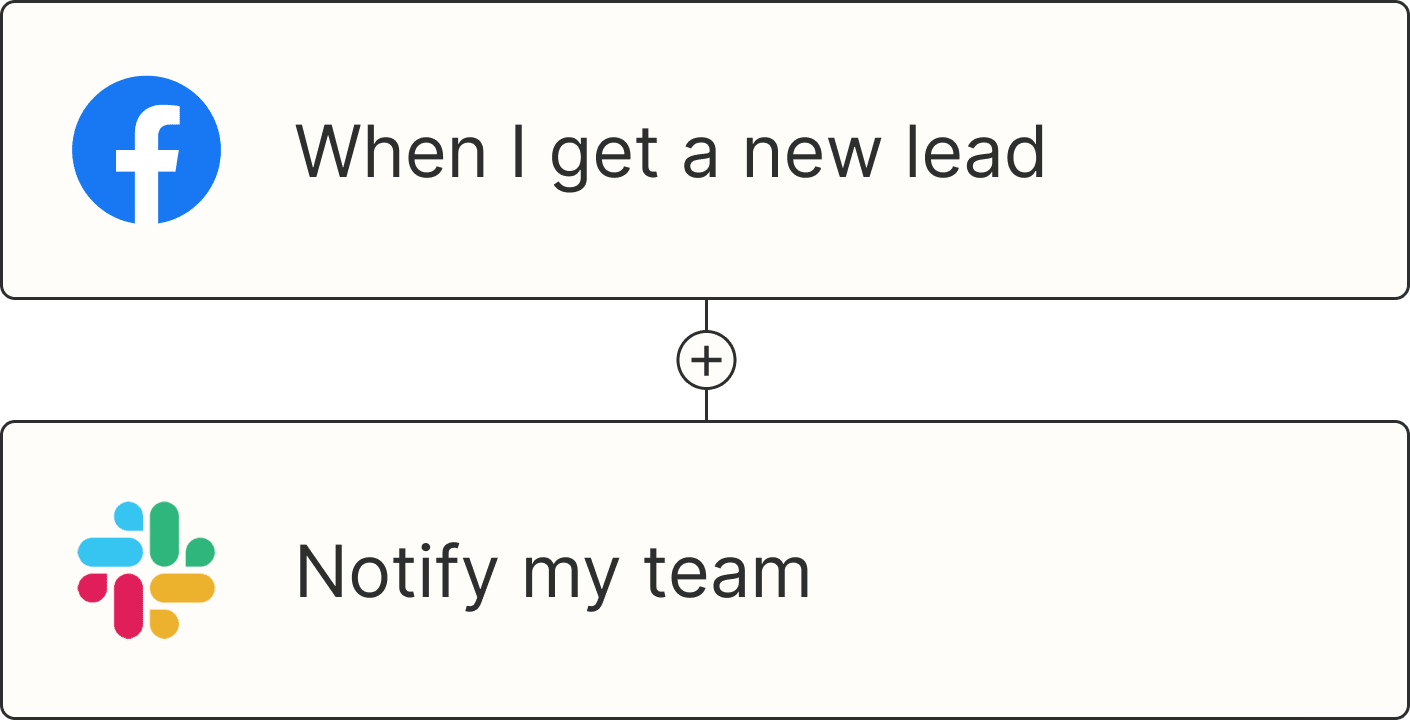
Marketing automation software works using triggers and actions: a trigger (e.g., a new contact, a new purchase, a tag added to a lead) kicks off an automation that has one or more actions (e.g., add the contact to a list, send the purchaser a follow-up message, notify the marketing team).
Most marketing automation tools have a visual builder, where you can set up workflows with filters and branching logic. A lot of them have also added AI to the mix, doing things like automatically detecting duplicate contacts.
What makes the best marketing automation tool?
How we evaluate and test apps
Our best apps roundups are written by humans who've spent much of their careers using, testing, and writing about software. Unless explicitly stated, we spend dozens of hours researching and testing apps, using each app as it's intended to be used and evaluating it against the criteria we set for the category. We're never paid for placement in our articles from any app or for links to any site—we value the trust readers put in us to offer authentic evaluations of the categories and apps we review. For more details on our process, read the full rundown of how we select apps to feature on the Zapier blog.
Confused yet? Great! Now we need to get even more pedantic to define what makes a good marketing automation tool. Here are the criteria I stayed laser-focused on to determine which apps qualified as "marketing automation software" and which ones went above and beyond in the category:
Automation capabilities. Every platform I tested (and hence every platform that made this list) automates at least two of the following marketing mediums: email, SMS/text, digital ads, and social media. I paid especially close attention to each app's workflow builders, testing how intuitive it was to automate tasks that apply to the customer journey.
Integrations and functionality. You probably rely on a handful of different tools to execute the monster that is "marketing" at your organization—systems for customer relationship management (CRM), content management, pipeline management, and more. Marketing automation software that integrates with these tools (or, better yet, has them built in) reduces workflow complications as you get all your tools to work together.
Price to value. Frankly, I was shocked by how much these kinds of apps can vary in price—they range from "free forever!" to the ominous "custom pricing, but never less than $1,000 per user per month." The main thing here is that each app offers a lot of value for the price.
Ease of use. A learning curve is natural, but being bombarded with a million "how do you…" and "this isn't working" messages from employees three months into using a tool doesn't have to be. Great marketing automation tools have excellent customer support or are so easy to use that you shouldn't even need to rely on support.
Reporting and analytics. A marketing platform needs data analytics. If I stumbled upon an app that didn't, it went straight to my "nope" pile. The best platforms offer reports that cover all the metrics a marketing team should pay attention to, as well as customizable and user-friendly dashboards to visualize that data and use it to inform future strategy.
Connected follow-up. Zapier's survey of sales and marketing managers found that 37% of respondents regularly saw leads get stuck between marketing tools and the CRM or during the marketing-to-sales handoff. More than half (51%) wanted better integrations, so strong marketing automation should update the CRM, assign an owner, and trigger the next action automatically.
I tested each marketing automation platform where I could by signing up for an account, generating or importing sample data, creating custom automations, generating reports, and exploring the nooks and crannies (sorry) of each app's interface. I also pored over user reviews, demos, and help documentation wherever it made sense. Based on those inputs and my own takeaways from testing tools in this category, I selected nine apps that will help you execute impactful automated marketing campaigns.
The best marketing automation software at a glance
| Best for | Standout feature | Pricing | Website |
|---|---|---|---|---|
Building safely with AI across your tech stack | Connects to 9,000+ apps, plus Zapier MCP for giving AI tools like Claude direct access to your marketing stack | Offers a free plan; from $19.99/month | ||
An affordable all-in-one solution | Also includes a CRM and meeting scheduler | Offers a free plan; from $9/month | ||
A premium all-in-one solution | Extensive marketing features and CRM integration | From $890/month | ||
eCommerce | Very extensive free plan and inexpensive upgrades | Offers a free plan; from $16/month | ||
AI campaign building | Tons of multilingual workflows with integrated AI tools | From $15/month | ||
User-friendliness | Drag-and-drop implemented everywhere | Offers a free plan; from $20/month | ||
Powerful workflow automations | Large selection of marketing channels to automate | From $100/month | ||
Automating email marketing | Integrates third-party customer acquisition channels | Offers a free plan; from $13/month | ||
Enterprises | Conversational AI interface | By request |
Best marketing automation software for building safely with AI
Zapier (Web)

Zapier pros:
Purpose-built for automation
Connects to 9,000+ apps
SOC 2 Type II, SSO, SCIM, and centralized access controls
Zapier cons:
No native email marketing, SMS, advertising, or social media features
Zapier is a little different from the other apps on this list. Instead of serving as an email, SMS, social media, or ads server, it connects to all the other apps you use for those channels—and automates every aspect of those workflows. In short: it helps you get the most from your existing marketing tech stack.
Zapier connects with over 9,000+ apps, from CRMs and ad platforms to email marketing tools and spreadsheets, so you can turn a set of disjointed tools into a cohesive, automated system. That makes it particularly useful for marketing teams managing multi-channel campaigns across multiple platforms—think Facebook Lead Ads, HubSpot, Mailchimp, and Google Sheets, all talking to each other without manual data entry.
Zapier also stands out as an AI orchestration platform, making it easy to layer AI into your marketing workflows. You can add agentic steps into your workflows to handle tasks that traditionally require manual effort or siloed tools. For example, you could use AI to draft email copy tailored to each lead segment, summarize campaign performance data from multiple sources into digestible insights, or classify incoming leads based on open text fields like job titles or form responses. AI can also clean and enrich contact data by standardizing names, detecting duplicates, or appending missing information like company size or industry—all in real time as new data flows in.
And if your team is already using AI assistants like Claude or ChatGPT, Zapier MCP lets those tools take action across your marketing stack directly from the chatbot—pulling campaign data, updating contacts, or even triggering workflows—without exposing credentials or requiring a developer to wire it up.
Zapier's value lies in its flexibility: it helps marketing teams unify fragmented tools, reduce context switching, and unlock personalization and real-time reporting across the marketing tech stack. It's ideal for teams looking to scale personalized, AI-driven marketing efforts across multiple channels and apps. And yes, this is the Zapier blog, so I suggest seeing what our customers say so you can have a second opinion.
Zapier pricing: Free plan available; paid plans from $19.99/month
Best marketing automation software for an affordable all-in-one solution
Brevo (Web, iOS, Android)

Brevo pros:
CRM-meeting scheduler-marketing automation hybrid
Automates 4+ marketing channels
Offers a free plan
Brevo cons:
Relatively simple and inflexible
Some key functionality is paywalled behind higher tiers
Initially, I wondered if I was impressed by Brevo just because it was the first app I tested and I didn't have anything better to compare it to. But looking back after testing loads of apps, I can honestly say Brevo gives you bang for the buck.
For one, even on its free plan, it automates email, SMS, and WhatsApp—more mediums than some paid marketing software. The app's workflow builder also offers a ton of options, including conditions like delays and A/B splits (splitting contacts 50/50 into two groups), and actions like webhooks and CRM updates. Brevo's AI, Aura, can automate any of the above features with agents that build campaigns, enrich customer profiles, and create deals.
The platform isn't just a marketing workflow builder—it's also a CRM and meeting scheduling tool. The CRM is pretty simple compared to dedicated CRMs, but it's a nice bonus to the automation features. (Whereas most CRMs have basic automation sequences but more complex sales funnel capabilities.)
The biggest downside for Brevo is its scalability. Users looking to get the most out of its two lower-cost tiers will hit some roadblocks as they grow. Free plans come with a limit of 300 emails per day and have Brevo branding. You'll need to pay hundreds of dollars per month for Professional or Enterprise for features that aren't that advanced, like custom objects or added marketing channels like Facebook Ads and pop-ups.
With Zapier, you can automate Brevo even further by connecting other marketing platforms, form builders, and thousands of other tools to Brevo. Plus, you can add Zapier MCP to your favorite AI tool to start your marketing automations straight from the chat window. Learn more about how to automate Brevo.
Brevo price: Offers a free plan; from $9/month for the Starter plan
Best marketing automation software for a premium all-in-one solution
HubSpot Marketing Hub (Web)

HubSpot pros:
Marketing Hub integrates seamlessly with HubSpot's CRM, CMS, customer service, and other solutions
Extensive yet very easy to use
HubSpot cons:
Very expensive
Only limited chatbot and email automations are available at free level
May need a separate Hub for the automations you want
When it comes to marketing software, HubSpot is a real heavy hitter. The platform has a ton of uses, but its omnichannel enterprise-style automation requires an upgrade to Marketing Hub Professional. Heads up—it's really expensive, and therefore probably not the best option for startups and small businesses.
For Free and Starter plan users, you do technically get some marketing automation in the form of custom chatbots and a whopping ten email automation actions per month. Meanwhile, Sequence automations (read: scheduled outreach campaigns) are only available for Sales Hub Professional and Service Hub Professional users, and automated surveys are only available for Service Hub Professional users.
Despite the app's depth and complexity, HubSpot certainly invests in user experience. When I explored its workflow builder, I found it easy to choose triggers and actions; if you don't feel the same, you can also build with an AI prompt or template. My favorite touch is the toggle to only see workflow templates that work with your subscribed plans, so you know exactly what your HubSpot setup can actually automate.
HubSpot's workflow builder is really powerful. It offers a large set of categorized actions, including internal and external communication, ads management, integrations with lots of other apps, and even enrollment in another workflow. You can also choose AI steps that call an agent to perform a task, like qualifying leads, formatting data, or drafting copy. Those agents come together in HubSpot's new Agent Hub, where you can activate pre-made options or create your own.
HubSpot has added a suite of AI features, too, under the Breeze moniker, including an AI assistant, Breeze Agents for augmenting workflows, content generation tools, and AI-powered data enrichment.
The platform also offers stellar analytics for campaigns. You can generate custom reports, pull insights into dashboards, and customize those dashboards however you like using drag-and-drop.
HubSpot offers 2,000 native integrations. But in the event that these integrations don't enable you to automate everything you hoped, you can use Zapier to automate HubSpot. That lets you connect it to thousands more apps, so you can build AI-powered automated systems for your work and kick off workflows across your entire tech stack directly from your AI chat window. Learn more about how to automate HubSpot with Zapier.
HubSpot price: From $890/month, billed annually, for Marketing Hub Professional
Best marketing automation software for eCommerce
Omnisend (Web)

Omnisend pros:
Excellent support; offers an entire academy of resources for learning how to use the app
Free plan comes with extensive features
Omnisend cons:
Narrowly focused on eCommerce
Brevo's free plan is impressive, but the app is pretty simple. Omnisend, on the other hand, enables significantly more flexibility, and its free plan provides access to many features that other apps would consider premium.
I wasn't able to test many of Omnisend's features firsthand because you need to connect a live eCommerce site (which I don't have) for it to function properly. But based on what I was able to test, plus pre-recorded demos and other online resources, I was able to get a feel for the platform.
Omnisend automates email, push notifications, and SMS, allowing you to choose from a large selection of pre-built categorized workflows that span the customer journey, or build your own custom ones. The workflow builder is intuitive—just drag and drop conditions and actions wherever you want them.
The platform's marketing features also impressed me. It offers creative, professional, and fully customizable email templates with a user-friendly editor, A/B testing for your emails, and even an AI assistant to help you segment them. Omnisend's AI can also build forms, predict churn, find high-value customers, and assist with market research. You even get unlimited access to advanced features like segmentation, forms, and customer profiles at the free level.
As the cherry on top, Omnisend offers 24/7 email and live chat support with its free plan, in addition to Omnisend Academy—an extensive library of well-produced demos and courses to help you get the most out of the app.
Its 280+ native integrations aside, Omnisend integrates with Zapier to serve as an orchestration hub for your AI-powered workflows. That means you can coordinate tasks across your entire stack—for example, importing new subscribers from your website builder, enriching their profiles with AI, and adding them to Omnisend, all without manual intervention. Learn more about how to automate Omnisend.
Omnisend price: Offers a free plan; from $16/month for the Standard plan
Best marketing automation software for AI campaign building
ActiveCampaign (Web, iOS, Android)

ActiveCampaign pros:
Huge library of multilingual workflow automations
AI functionality for automation building and autonomous agents
ActiveCampaign cons:
Doesn't offer templates for form creation
May be overkill for basic users
Predictive AI sending is limited to two highest tiers
Most marketing automation software offers a jumping-off point for workflows via pre-built automations, but ActiveCampaign goes several steps further. First, its pre-built automation library is massive, covering industry-specific workflows as well as both internal and external communications like deal win updates and re-engagement campaigns.
It also offers workflows in Czech, Dutch, English, French, German, Hungarian, Indonesian, Italian, Polish, Portuguese, Brazilian Portuguese, Russian, Slovenian, and Spanish. So if your organization markets to a global audience, ActiveCampaign has you covered.
Drawbacks to ActiveCampaign are few and far between—it's solid software with lots of features and a pretty fair pricing model. As a true CRM, similar to HubSpot, it's got quite a bit of functionality beyond marketing process automations that bridge sales functionality, so it's possible it'll have more features than you need as you scale up its tiers.
No matter what you use ActiveCampaign for, its AI tools have become a huge perk. When you create an account, its marketing AI builds a custom campaign workflow based on your marketing needs and website, and you can prompt a chatbot to build even more workflows. Using the chatbot, all you've got to do is describe the workflow or marketing campaign you want to build, and it'll do the rest, drafting the entire automation sequence, setting up trigger conditions, creating personalized email content, and configuring follow-up actions based on customer behavior and engagement patterns. Plus, ActiveCampaign's AI agents will flag performance snags and build campaigns to improve relevant metrics.
With ActiveCampaign's Zapier integration, your customer data and engagement workflows stay in sync across platforms. For example, you can coordinate AI-driven actions that update contacts based on signals from your scheduling tools, payment processors, or other systems, ensuring timely and personalized outreach without manual effort. Learn more about how to automate ActiveCampaign.
ActiveCampaign price: From $15/month, billed annually, for the Starter plan
Best marketing automation software for user-friendliness
Klaviyo (Web, iOS, Android)

Klaviyo pros:
Large library of high-quality, customizable templates
Good price-to-value
Klaviyo cons:
Somewhat eCommerce-focused
If there's one app on this list that wins the "drag-and-drop" award, it's Klaviyo. Nearly everything, from workflows to dashboards to forms, can all be created and customized by dragging elements around wherever you want them to go. At least in my experience, this flexibility lends to a really positive user experience.
The interface is also very clean—not incredibly feature-rich like HubSpot, but also not overly simple or lacking in any tools I'd want in marketing automation software. Plus, Klaviyo MCP lets you fetch and analyze your workflow performance data from your AI tool, which means less context switching.
Klaviyo also provides several jumping-off points for workflows—use one of its 60+ pre-built options to prevent lost sales, nurture subscribers, build customer loyalty, remind customers to purchase, encourage repeat purchases, update customers on their order status, and more. Or you can enter the broad idea of your workflow into Klaviyo's AI to have it build for you.
While it's plenty useful for just about any marketing workflow need, eCommerce users will probably get the most bang for their buck with Klaviyo. Account creation prompts a Shopify integration, with multiple other eCommerce platform options as alternatives. You can still create everything from forms to workflows to reports for non-eCommerce-specific needs, so I wouldn't necessarily count it off if you're, say, a SaaS company. But eCommerce users will have extra love for incorporating their campaigns and workflows into their sales sites.
In addition to 350+ integrations, Klaviyo connects with Zapier as part of a powerful orchestration layer for your AI-driven marketing workflows. Instead of just syncing contacts, you can coordinate actions across your entire stack—for example, turning website form submissions into enriched subscriber profiles, then routing them into your Klaviyo audience or ad platforms for personalized campaigns. Read more about how to automate Klaviyo.
Klaviyo price: Offers a free plan; from $20/month for the Email plan
Best marketing automation software for powerful workflow automations
Customer.io (Web)

Customer.io pros:
Automates a wide variety of marketing channels
Customizable—you can use as much or as little code as you'd like to customize messages, and you can use Liquid to personalize messages
Customer.io cons:
Relatively expensive
A lot of marketing apps market themselves as automation-centric when really they're just simple CRMs with relatively weak automation features. But Customer.io is unabashedly an enterprise-level marketing automation point solution, and it fulfills this use case very well.
Through its Journeys platform, you can automate email, SMS, Slack, push notifications to apps, Twilio, and more—covering the most marketing channels of any app I tested. The workflow builder allows you to create webhooks, multi-split branches for customer journeys, trigger campaigns by segments, and more. I also found this workflow builder very easy to use, allowing you to drag and drop actions and triggers into your builder and even save workflow templates. It also offers the option for AI to build your initial workflow based on a plain-language description.
To help users create the most bespoke automations possible, just about every feature on Customer.io's dashboard can be integrated into workflows. You can build newsletters and messaging campaigns within its intuitive CMS or create high-performing, brand-specific emails using its transactional messaging API. You can add the usual CRM elements like people, audience segments, and imported data fields or create your own custom objects like events, classes, and accounts that fit right into your automated workflows.
Another feature of the app that impressed me was its A/B testing capabilities—you can set up a test right in the workflow builder. Plus, Customer.io's platform-wide AI agent can do things like suggest segments, analyze emails, and draft messages from templates. It remembers your branding and preferences for future conversations so you can build new campaigns and workflows more quickly.
Customer.io also integrates with Zapier to help you unify customer data and engagement across channels. You can do things like automatically capture leads from landing pages or social platforms and add them to Customer.io campaigns—all without manual effort. And if you connect Zapier MCP, you can update your Customer.io data directly from your preferred AI tool. Learn more about how to automate Customer.io.
Customer.io price: From $100/month for the Essentials plan
Best marketing automation software for email
Mailchimp (Web, iOS, Android)

Mailchimp pros:
Can be used to create, manage, and automate multiple content formats
Integrates with other apps for automating email across customer acquisition channels
Mailchimp cons:
Pricing scales by number of contacts
Can be just as expensive as CRMs with similar automation tools
You might think of Mailchimp purely as an email newsletter platform, but it checks all the boxes to be considered marketing automation software. While its focus is still decidedly on email marketing, it's also got the automation chops, content management tools, reporting capabilities, and lead tracking features to approach light-use CRM-style functionality.
Mailchimp's automation flow builder is available at the Essentials tier in a basic capacity—you'll be relegated to a pretty lackluster four-step limit until you upgrade. But once you bump up to the Standard tier, you'll get perks like multiple starting points and branching points.
The flow builder itself is really intuitive (though not drag-and-drop). Just click the touchpoints to open up actions like sending new emails and texts, scheduling messages, initiating Google Analytics tracking, adjusting tags, and changing acquisition channels. You can even integrate other apps in your sales funnel like Shopify and Facebook ads to grow your trigger conditions and start new customer journeys at the point of sale or ad engagement.
Mailchimp is clearly invested in becoming a more general-purpose automation tool. You can even use the platform to build websites, create digital assets with an AI creation wizard, manage creative assets, and design forms and surveys.
As a general-purpose marketing tool, Mailchimp still isn't as modular as higher-end marketing automation tools. It still pretty clearly leans toward email automation, and many of its automation triggers are dedicated to messaging. And if you're hoping for much in the way of AI automation, you're out of luck. But there's a plus to its relative simplicity. It's easy to pick up and start using, is perfectly designed to make lead management more actionable with messaging campaigns, and integrates with many of the top marketing tools to grow its functionality.
You can extend Mailchimp beyond email by connecting it with Zapier as part of your orchestration layer. Instead of handling campaigns in isolation, you can coordinate how subscriber data, AI-driven insights, and marketing actions flow across your entire stack so the right message reaches the right audience at the right time. Learn more about automating Mailchimp with Zapier.
Mailchimp pricing: Free for up to 250 contacts; scales by number of contacts starting at $13/month for Essentials
Best enterprise marketing automation software
Adobe Marketo Engage (Web, iOS, Android)

Adobe Marketo Engage pros:
Conversational AI interface
Data quality agents for better automation functionality
Adobe Marketo Engage cons:
Overly complicated for small and midmarket businesses
If the other apps on this list are your coworker whose resume reads like a tour du startups, Marketo is the one who just got hired at Adobe and is already in board meetings. It works best for enterprise marketing automation involving complex campaigns, like a long-term deal with multiple stakeholders that'll take months to close. I couldn't get my hands on the tool to try it myself, but I did read reviews, pore over help docs, and watch demo videos to soak up everything I could.
Adobe Marketo Engage definitely puts that enterprise money to work with its agentic AI experience. The conversational interface lets you describe what you want, like building a list of everyone who attended your webinar and didn't convert, then creating a re-engagement campaign to send to them. Meanwhile, marketing ops agents work in the background to perform QA on your marketing programs, reducing the risk of an automation misfire.
And if you'd like to make any adjustments to your AI-created campaign, you can still use a good ol' reliable drag-and-drop interface. You can even zoom out to see how different flows and campaigns interconnect in the engagement map, which comes in handy for designing complex campaigns or explaining how those campaigns work to stakeholders.
The one catch here is price. Like other high-level, B2B marketing automation platforms, Adobe Marketo Engage doesn't have public pricing or a free trial, so you need to talk with sales to learn how much you'd have to pay for it. Generally, hidden software costs translate to expensive costs, so be prepared for a high price tag if you request a demo.
Adobe Marketo Engage integrates with hundreds of apps of the Adobe and non-Adobe variety, including Zapier. With Zapier, you get an AI orchestration layer that works securely across your tech stack. Plus, Zapier MCP lets you work with Adobe Marketo Engage data directly from your favorite AI assistant.
Marketo pricing: By request
Which marketing automation tool should you choose?
If you don't want to overanalyze nine different tools, start with this marketing automation platform comparison. Your company size, sales model, and marketing complexity will usually point you to the right category—and the right tool.
Startups
If you're early-stage, you need something affordable, quick to implement, and flexible enough to grow with you. Try one of these apps:
Brevo
Mailchimp
ActiveCampaign
They balance price and functionality, with enough automation to scale without overwhelming your team. And they all connect to Zapier, so you can use them with the rest of your tech stack.
eCommerce
eCommerce lives and dies by segmentation, timing, and personalization, and you need a solution that's built specifically for that. The two obvious choices:
Omnisend
Klaviyo
Both are built specifically for online stores, with pre-built flows for abandoned carts, post-purchase, and retention. And you can connect them with Zapier for complete eCommerce automation.
B2B mid-market
At this stage, you need stronger lead management, CRM alignment, and multi-channel orchestration. Your best picks are:
Zapier
HubSpot
ActiveCampaign
Customer.io
These tools connect marketing to sales pipelines and support more complex journeys.
Large enterprises
Enterprise teams need flexibility, scalability, and the ability to orchestrate across many systems. Here are the tools you should look at:
Zapier
HubSpot
Customer.io
Adobe Marketo Engage
These platforms offer advanced segmentation, analytics, and customization, along with enterprise-grade security.
Orchestrate your marketing campaigns with Zapier
When choosing marketing automation software, it's ok to be picky. This will be your go-to tool for your marketing campaigns, ensuring they successfully generate and nurture leads without requiring your team's constant involvement. Once set up, it should do the heavy lifting for you so that you can focus on higher-level strategy.
But even powerful tools like these need some love from other software your business uses, whether that be a separate CRM, customer service solution, CMS, what have you. Zapier can connect to all of these and build them into workflows that orchestrate your marketing process from start to finish. And if you're already using AI tools like Claude or ChatGPT, Zapier MCP lets those assistants take direct action across your marketing stack—so the AI doing your analysis can also update your CRM, trigger a campaign, or route a lead. You'll be freeing up more time than you know what to do with.
Learn more about how to use Zapier for marketing automation.
Zapier is the most connected AI orchestration platform—integrating with thousands of apps from partners like Google, Salesforce, and Microsoft. Use forms, data tables, and logic to build secure, automated, AI-powered systems for your business-critical workflows across your organization's technology stack. Learn more.
Related reading:
This article was originally published in April 2022 by Chris Hawkins and has also had contributions from Luke Strauss and Bryce Emley. The most recent update, with contributions from Melissa King, was in September 2026.