We independently review every app we recommend in our best apps lists. When you click some of the links on this page, we may earn a commission. Learn more.
I once let a gym membership quietly renew for two years because canceling required a phone call, and I am a millennial who would rather pay $20 a month than speak to another human being on the phone. This is not a personality trait I'm proud of. It's just reality.
Point is, how businesses communicate with customers matters enormously—perhaps more than the actual product itself. Most customers are one slow reply, one weird handoff, or one "can you repeat that?" away from disappearing into the mist.
Customer engagement software is what (ideally) prevents that. It helps you respond faster, personalize outreach, keep context from getting lost between channels, and follow up in a way that feels helpful instead of clingy.
In this post, I'll break down the best customer engagement apps, what each one is best at, and how to choose the right fit for your team.
The 8 best customer engagement tools
Zapier for AI orchestration
HubSpot for all‑in‑one sales and marketing
Salesforce Agentforce for enterprise‑scale B2B sales
Klaviyo for eCommerce marketing
Apollo for lead discovery and outreach
Hootsuite for social engagement
ActiveCampaign for campaign building and automation
Intercom for AI‑first customer service
What makes the best customer engagement platform?
How we evaluate and test apps
Our best apps roundups are written by humans who've spent much of their careers using, testing, and writing about software. Unless explicitly stated, we spend dozens of hours researching and testing apps, using each app as it's intended to be used and evaluating it against the criteria we set for the category. We're never paid for placement in our articles from any app or for links to any site—we value the trust readers put in us to offer authentic evaluations of the categories and apps we review. For more details on our process, read the full rundown of how we select apps to feature on the Zapier blog.
Customer engagement software is less a single product category and more a sprawling ecosystem of tools that, in theory, help you have better conversations with customers. Depending on what you need, that might mean a help desk, live chat, a shared inbox, a chatbot, a CRM, a social inbox, or some cursed Frankenstack that contains all of the above and is now lurching toward you, asking for an API key.
Which is why the best platform isn't defined by some universal feature checklist—a myth marketers cling to in the same way medieval cartographers clung to sea monsters—but by fit. The right choice depends on where your customer conversations happen (email, chat, phone, social), how complex your workflows are, and what problem is most urgent: support volume, proactive outreach, lifecycle marketing, or the chronic organizational dysfunction of keeping sales and service aligned.
This list reflects that reality. Instead of crowning one magical winner, it highlights strong options across the spectrum, so you can choose the tool (or a combination of tools) that matches your channels, team structure, and goals.
To keep it fair, I evaluated each pick using the same set of criteria:
Omnichannel and personalization: These tools support multiple customer communication channels and enable personalized engagement based on behavior or segments.
Automation and AI: The apps on this list incorporate automation or AI features that meaningfully improve engagement, such as automated workflows, predictive analytics, or AI-powered communications.
Integration and data: The tools I chose integrate cleanly with other systems (like CRM, marketing automation, support, and analytics) so customer data isn't scattered across tools like lost luggage.
All of these apps have been vetted and tested by the Zapier team.
The best customer engagement software at a glance
Best for | Standout feature | Pricing | |
|---|---|---|---|
AI orchestration | No-code automation connected to 9,000+ apps, plus built-in AI tools | Free plan available; paid plans from $19.99/month | |
All‑in‑one sales and marketing | Seamless integration across sales, marketing, and service tools | Free plan available; paid plans from $15/seat/month | |
Enterprise‑scale B2B sales | Highly customizable and deep AI integration | Free plan available; paid plans from $25/user/month | |
eCommerce marketing | Deep customer profiles with real-time analytics and A/B testing | Free plan available; paid plans from $20/user/month | |
Lead discovery and outreach | Massive B2B database with 275+ million contacts | Free plan available; paid plans from $59/user/month | |
Social engagement | Complete social media management in one place | From $249/user/month | |
Campaign building and automation | AI automation builder that uses natural language to generate custom workflows | From $15/month (billed annually) | |
AI‑first customer service | Advanced AI agent capabilities across chat, email, and voice | From $39/seat/month |
Best customer engagement software for AI orchestration
Zapier (Web)

Zapier pros:
Connects 9,000+ apps into unified customer engagement workflows
No-code automation accessible to non-technical teams
Built-in AI agents and data management tools
Zapier cons:
Not a standalone customer engagement tool (requires other apps to connect)
If I'm being honest, putting Zapier on a list of customer engagement software feels a little like putting "electricity" on a list of kitchen appliances. It isn't customer engagement software in the usual sense. It won't replace your help desk, solve your backlog, or run a full customer support operation end-to-end. What it will do is make the customer engagement tools you already use work together so your customer success, support, and sales systems behave less like a pile of apps and more like a system.
With 9,000+ integrations, Zapier lets you share data and trigger actions across apps without requiring a developer to build custom integrations. Say a customer fills out a support form on your site. In a normal universe, that submission becomes a small administrative pilgrimage: someone copies the details into a help desk, then into a CRM, then pings Slack, then remembers to send a follow-up, then forgets to log it anywhere.
With Zapier, that single submission can set off a chain reaction that can:
Create a ticket in your help desk
Add or update the customer in your CRM (with support history attached)
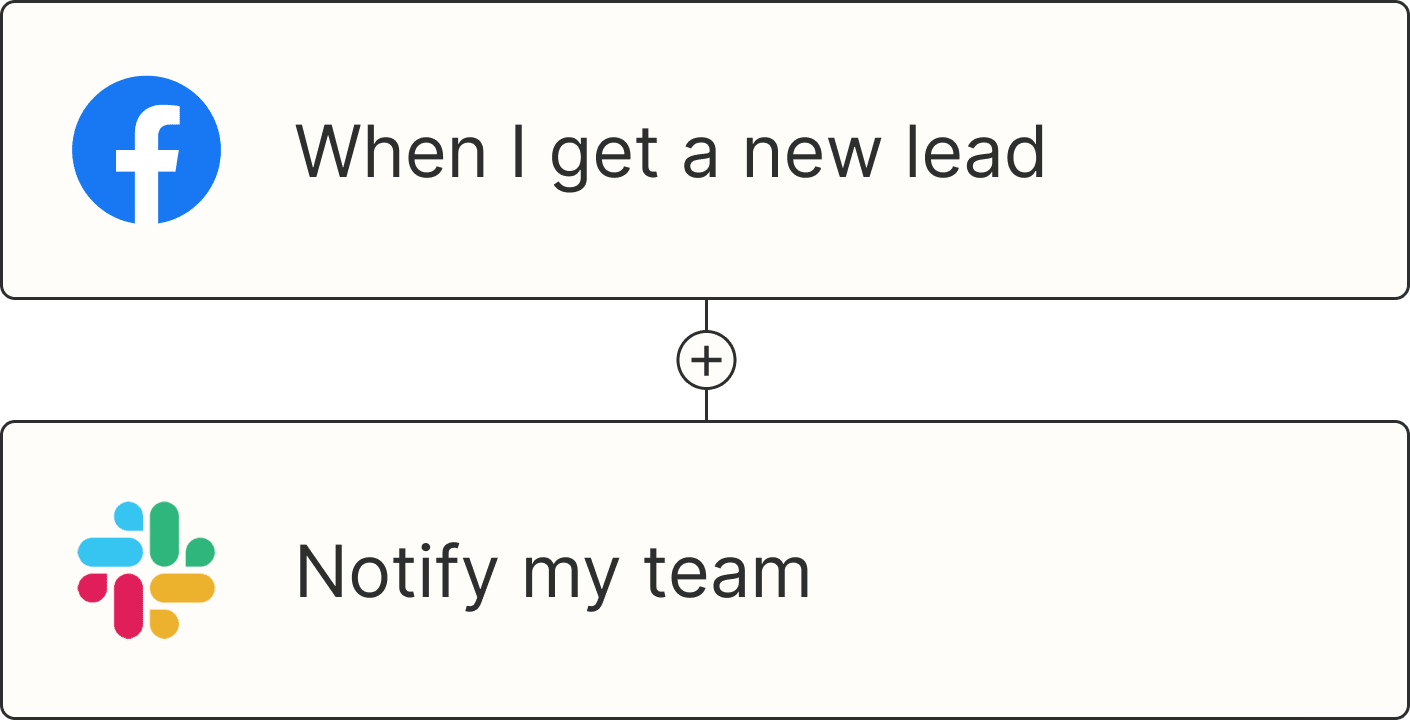
Alert the right team in Slack based on issue type
Kick off a personalized follow-up email sequence
Log the interaction in your reporting tool
All while eliminating the copy/paste work that quietly consumes entire afternoons.
Where Zapier gets especially useful for customer engagement is as an AI orchestration layer, allowing you to build multi-step workflows that change behavior based on what's happening. For example, you can create a workflow that uses AI to analyze incoming tickets, tag them by urgency and sentiment, route high-priority issues to senior agents, and escalate unresolved cases after a set timeframe. If you're working in an AI assistant like Claude or ChatGPT, Zapier MCP lets you take action across those same 9,000+ apps straight from your chat window, without switching tabs or rebuilding your workflows from scratch.
Beyond that, Zapier gives you a set of building blocks you can layer in depending on what you need. Store and act on your data with Tables, a lightweight database that can maintain engagement signals or trigger automations without turning your team into reluctant data engineers. Use Forms to create intake flows that go beyond just collecting info: they start workflows, routing support requests based on issue type and auto-assigning tickets by your own rules. And if your workflows get complex, Canvas lets you map and troubleshoot them visually, so you can see what's connected to what without relying on intuition.
Put it all together, and Zapier becomes the orchestration engine behind a more responsive, personalized customer experience, without forcing you to rip out your existing support stack and start over.
Now, Zapier does require you to have other apps to connect, so if you're starting completely from scratch with no tools at all, you'll need to pick a core customer engagement platform first (like one of the others on this list). But if you're like most businesses drowning in disconnected tools that don't talk to each other, Zapier is the orchestration layer that makes everything actually work.
You can start with pre-built templates for common customer engagement scenarios—like syncing support tickets with your CRM, routing high-value leads to sales, automating follow-ups, or consolidating customer data—or build intelligent workflows tailored to your specific needs. Learn more about getting started with Zapier, or dive in to start building customer engagement workflows.
Zapier pricing: Free plan available; advanced features start at $19.99/month
Best customer engagement software for all‑in‑one sales and marketing
HubSpot (Web, iOS, Android)

HubSpot pros:
Generous free plan with extensive features
Intuitive, user-friendly interface
Powerful AI capabilities with Breeze
HubSpot cons:
Advanced features require expensive tier upgrades
Pricing structure can be confusing
My first encounter with HubSpot gave me that familiar sensation of walking into Costco—aisle after aisle of possibilities, each promising to improve your life, all of them demanding you choose a direction. The feature volume is immense, yet the platform is not as punishing as it could be. The interface is intuitive, the onboarding is thoughtful, and everything is logically grouped by capability. Once you get a feel for the layout, navigating between your support inbox and marketing campaigns feels seamless, rather than like switching between entirely different apps that happen to share a login.
HubSpot erodes the classic disconnect between customer support, sales, and marketing teams. When a customer reaches out with an issue, your support agent can see which emails they opened, what content they downloaded, and where they sit in the sales pipeline. The customer, mercifully, doesn't have to repeat their entire history because someone, somewhere, failed to share a note.
HubSpot's got a whole suite of AI features called Breeze AI (which sounds like what I'd name a dispensary if I ever pivoted careers). Breeze Copilot acts as an in-app assistant that can help draft responses, summarize customer conversations, and build workflows. Then there's Breeze Agents, which are essentially AI specialists tasked with specific jobs: the Social Agent writes social media posts in your brand voice (or whatever voice you pretend to have on LinkedIn), the Content Agent helps with blog posts and landing pages, the Prospecting Agent researches leads and automates outreach, and the Customer Agent answers support questions using your knowledge base.
HubSpot has one of the most generous free plans around, with basic features across all its Hubs and unlimited CRM contacts (ok, technically capped at one million contacts, but if you have a million contacts and you're still on the free plan, we need to have a different conversation about your business model). You can get surprisingly far without paying anything.
But when you need to upgrade, the pricing page is like a choose-your-own-adventure book written by someone who hates you. You can upgrade individual Hubs (sales, marketing, customer service, content management, operations, and commerce) separately, or you can buy bundles. There are different tiers (Starter, Professional, Enterprise), and before you know it, you're in a spreadsheet trying to calculate whether you need Marketing Hub Professional or if you can get away with Starter but add on Sales Hub Professional and maybe Service Hub Starter? It's a whole thing.
That said, for teams that want their customer engagement efforts connected to every other part of the customer journey, HubSpot delivers in a way few other platforms can match. It also has over 2,000 apps in its marketplace. And if that's somehow not enough, you can connect HubSpot to Zapier to automate even more workflows, connecting HubSpot to every app in your tech stack. Learn more about automating HubSpot.
HubSpot pricing: Free plan available; paid plans from $15/seat/month for the Starter plan
Best customer engagement software for enterprise‑scale B2B sales
Salesforce Agentforce (Web, macOS, Windows, iOS, Android)

Salesforce Agentforce pros:
Comprehensive pipeline visibility and forecasting
Highly customizable for complex sales processes
Deep AI integration with Einstein
Salesforce Agentforce cons:
Steep learning curve
Requires dedicated admin resources for optimal configuration
Salesforce Agentforce (formerly Sales Cloud) dominates the CRM conversation for a reason. It's not for the faint of heart, nor for anyone who believes that a tool should reveal itself in full after a pleasant afternoon of clicking around. But if you can tolerate the seriousness of the undertaking, it delivers customer engagement capabilities at scale that are tough to match.
The platform's 360-degree customer view pulls interactions, purchase history, and support tickets into a single workspace, so your team isn't forced to reconstruct a customer's journey like a detective with a corkboard and too much string. Instead, they can see the whole relationship in one place and deliver personalized engagement at each touchpoint.
The collaboration features here are seriously impressive. Salesforce Chatter creates conversation threads directly on opportunity, account, and lead records, so discussions remain tethered to the thing they are about, rather than dissolving into email chains that become archaeological sites within a week. Teams can post updates, share files, and @mention colleagues to loop them into specific conversations and contexts.
I was also pleasantly surprised by the forecasting capabilities. Managers can adjust and comment directly on team forecasts, making the process feel less like a ceremonial spreadsheet exchange and more like a live strategy session with real feedback loops. Shared dashboards pull live numbers from across the organization, giving everyone a common view of pipeline health, deal progression, and revenue projections. For enterprise teams juggling complex B2B relationships, where one account can involve multiple stakeholders, timelines, and nuanced dynamics, this kind of visibility becomes a major advantage.
Then there's Einstein AI, which is threaded throughout the entire platform. It can automatically prioritize leads by likelihood to close, suggest next steps that the entire team can see, generate personalized outreach, and summarize calls, so your team spends less time on admin work. Einstein Case Classification automatically routes inquiries, and Service Replies generate tailored responses based on real-time data from conversations and your knowledge base.
But let's not pretend this is effortless. Salesforce is a commitment. The sheer number of features and customization options imposes a significant learning curve, and many businesses require ongoing admin support to realize its full potential. In exchange, you get a system designed for enterprise-scale engagement, where sales, marketing, and service aren't separate universes but entangled parts of a single customer relationship. If your reality includes complexity—multiple teams, shared accounts, layered workflows, high-stakes coordination—Agentforce is built to hold that weight.
Salesforce Agentforce also integrates with Zapier, letting you extend its capabilities even further by connecting it with thousands of other apps. You can automate AI-powered workflows between your customer engagement processes and your entire business toolkit. Learn more about how to automate Salesforce with Zapier.
Salesforce Agentforce pricing: Free plan available; from $25/user/month for the Starter Suite
Best customer engagement software for eCommerce marketing
Klaviyo (Web, iOS, Android)

Klaviyo pros:
Powerful personalization and segmentation features
Excellent eCommerce integrations, especially with Shopify
Strong automation for lifecycle marketing
Klaviyo cons:
Marketing channels are limited to email and SMS
Pricing scales quickly as your contact list grows
If you're running an eCommerce business and you're not using some kind of marketing automation, you're basically leaving money on the table while also working way harder than you need to. It's like hand-washing dishes when you have a perfectly good dishwasher right there. Why are you like this?
If your customer engagement strategy revolves around eCommerce, Klaviyo deserves serious consideration. It's designed specifically for shops that want to turn casual browsers into repeat customers without having to personally stalk everyone who abandons their cart.
What sets Klaviyo apart is how it centralizes customer data—site activity, purchases, engagement history, consent preferences, custom properties—into individual profiles. You can use all of that juicy behavioral data to kick off eCommerce automations or serve as conditions inside them. For instance, any time someone views a product, hits a date-based milestone, crosses a spending threshold, or abandons their cart (cowards), it can trigger an email, text, or offer to appear automatically, without you needing to remember that time is passing and customers are doing things.
The drag-and-drop interface is notably intuitive. Nearly everything—from workflows to dashboards to forms—can be created and customized without feeling like you've wandered into a configuration panel designed to punish curiosity. And if you've ever stared at a blank automation canvas with the hollow dread of being asked to invent "a lifecycle strategy" from scratch, Klaviyo generously provides over 60 pre-built workflows for preventing lost sales, nurturing subscribers, building customer loyalty, and encouraging repeat purchases.
One thing to note: Klaviyo's channel options are limited to email and SMS. You won't find landing pages, social publishing, or ad management here. That narrowness is partly why it's so good at what it does, but it does mean you'll need other tools if you want a broader campaign surface area.
Klaviyo integrates with Zapier, letting you connect your customer engagement workflows with the rest of your tech stack. Automatically sync contacts, trigger campaigns from external events, or push data wherever it needs to go. Learn more about how to automate Klaviyo.
Klaviyo pricing: Free plan available for up to 250 active profiles; from $20/month for the Email plan
Best customer engagement software for lead discovery and outreach
Apollo (Web, iOS, Android)

Apollo pros:
Massive B2B database of 275+ million contacts and 65+ data points
AI-powered email personalization
End-to-end sales engagement functionality
Apollo cons:
Can be complex for smaller teams
Advanced analytics are locked behind premium plans
If your customer engagement problem begins at the very beginning—that is, simply finding the right people to talk to in the first place—Apollo does a nice job of combining lead discovery, contact enrichment, and outreach automation in one place.
The centerpiece is its B2B database (Apollo very dramatically calls it a "Living Data Network"). According to Apollo, it includes 275M+ contacts with dozens of fields—things like job titles, company details, and buying intent signals—and is continuously updated via a contributor network. In my testing, importing an existing contact list triggered the sort of practical magic you love to see: Apollo automatically filled in data gaps and updated contact info. I did, quite literally, nothing, which is the highest compliment most software can earn.
Once you've got your list of prospects, Apollo makes it super easy to start engaging with them through multichannel sequences. Email, phone calls, LinkedIn connection requests—you can automate all of it in one workflow. The AI writing tool can personalize cold emails using prospect data, then generate follow-up messages based on how the conversation progresses.
Email sequences are fast to get off the ground, largely because Apollo doesn't pretend that everyone wants to begin with a blank page and a trembling cursor. When you start building a new sequence, you're greeted with an optional tutorial video and a button to generate the entire sequence using AI. If you'd rather keep AI on a short leash, there are pre-built templates so you're not forced to reinvent the concept of "follow-up."
Pricing-wise, the free plan is generous for testing. You can run two active email sequences and get access to a good chunk of the core functionality without committing to a subscription. The trade-off is that advanced analytics, like detailed reporting on sequence performance, team analytics, and custom dashboards, are locked behind premium tiers. Additionally, the all-in-one nature can feel like a lot if you just need a lightweight tool to send a few campaigns.
You can also connect Apollo with Zapier to integrate it with your CRM, automatically add new contacts to other tools, or trigger follow-up actions across your entire stack. Learn more about how to automate Apollo, or get started with a pre-made template.
Apollo.io pricing: Free plan available; from $59/user/month for the Basic plan
Best customer engagement software for social engagement
Hootsuite (Web, iOS, Android)

Hootsuite pros:
Best-in-class X (Twitter) integration
Advanced analytics with competitive benchmarking
Consolidated inbox for all social accounts
Hootsuite cons:
Expensive compared to other social tools
Can feel overwhelming with so many features
Customer engagement doesn't occur exclusively inside support software. A great deal of it happens in the unruly public square of social media, showing up in comments sections, DMs, and tagged posts when someone is mad and feeling theatrical. If your team is managing multiple social accounts and trying not to miss anything important, Hootsuite pulls your social channels into one dashboard, with a consolidated inbox for replies and message management.
Its social media monitoring capabilities are legitimately useful if you're the type of person who lies awake at night wondering what people are saying about your brand when you're not looking (guilty). You can set up streams to monitor specific keywords, hashtags, or mentions, so you can jump into conversations, address complaints, or just see what your competitors are up to. The sentiment analysis feature then tells you if people are happy or furious, which is useful because reading emotions through text is famously difficult. (Sometimes "ok" means ok, and sometimes it means you've ruined someone's entire week.)
The analytics suite was the other standout. You get detailed performance metrics for all your posts and campaigns, which is standard, but Hootsuite also pulls in data from similar businesses in your industry so you can see how you stack up against the competition.
Hootsuite also bakes in AI with OwlyWriter AI, which can repurpose your top-performing content (because if something worked once, why not beat that dead horse?), brainstorm fresh ideas, draft captions, generate responses to common customer questions, and even offer tips on improving what you've already written. It's among the more polished AI offerings I ran into, and it includes some handy copywriting formula starting points like AIDA and PAS to give your posts more structure.
Channel-wise, Hootsuite supports Facebook, YouTube, Instagram, LinkedIn, TikTok, X, Threads, WhatsApp, Pinterest, and Bluesky. It's one of the pricier options in this category, but if social is a major customer touchpoint (and revenue driver) for your business, the features justify a serious look.
Hootsuite integrates with Zapier, so you can do things like automatically create new messages directly from a spreadsheet or RSS feed, or route incoming DMs to your support platform. Learn more about automating Hootsuite and then start building AI-powered workflows to improve your customer engagement.
Hootsuite price: Free 30-day trial; Standard plan for $249/user/month includes 10 social accounts and unlimited post scheduling
Best customer engagement software for campaign building and automation
ActiveCampaign (Web, iOS, Android)

ActiveCampaign pros:
Huge library of pre-built workflow automations
Integrated CRM functionality
Advanced segmentation and behavioral targeting
ActiveCampaign cons:
Generative AI features are limited to premium tiers
Can feel like overkill for teams with basic needs
If Hootsuite is the "engagement happens in public" option, ActiveCampaign is the "engagement happens on purpose" option. It's best suited to campaign building and automation: nurturing leads, running segmented journeys, and keeping customers engaged through targeted messaging that adapts based on behavior. It calls itself a customer experience automation platform, and after testing it, that's not an unreasonable description.
I'm not easily impressed by AI features, but ActiveCampaign's AI (called Active Intelligence) surprised me. The template generator can pull brand elements (like colors and your logo) straight from your website. You can easily swap in a different brand kit with a URL or upload your own assets, but as a default experience, it saves real time.
The generative AI can help draft subject lines, write email copy, and personalize content based on a contact's data and behavior. There's also predictive sending, which uses AI to determine the best time to send emails to each individual contact based on when they typically engage. This is the kind of feature that sounds gimmicky but actually improves open rates, so I begrudgingly approve.
The platform comes with hundreds of pre-built automation recipes, but the real fun begins when you build your own workflows with the automation builder. It uses a visual drag-and-drop interface that looks kind of like a flowchart, which I found intuitive once I got past the initial "what am I looking at?" phase. Triggers can be basically anything—form submissions, website visits, email opens, CRM deal stage changes, or custom product events. And the conditional logic is quite deep: you can fork paths based on lead score, purchases, engagement level, or data from your integrated apps.
There's also an AI builder that lets you describe what you're trying to build in natural language. It won't replace learning the platform, but it can shorten the ramp-up time when you're building your first few automations.
You can also connect ActiveCampaign to Zapier to orchestrate workflows that tie your business systems together. For example, leads from any channel can be enriched with AI, routed into ActiveCampaign for targeted campaigns, and synced with your CRM for attribution tracking. Learn more about how to automate ActiveCampaign.
ActiveCampaign pricing: Free 14-day trial; Starter plan for $15/month (billed annually) for up to 1,000 contacts
Best customer engagement software for AI‑first customer service
Intercom (Web, iOS, Android)

Intercom pros:
Advanced AI agent capabilities across chat, email, and voice
Intuitive and flexible custom bot builder
Polished inbox with powerful agent-assist features
Intercom cons:
Can be expensive at scale with per-resolution AI fees
Some basic features are locked behind higher pricing tiers
A lot of customer engagement tools have added AI the way people add a standing desk: technically present, spiritually unused. Intercom is different. Here, AI isn't a decorative add-on where the word "intelligence" does all of the heavy lifting; it's embedded directly into the product experience.
The main attraction is Fin, Intercom's AI agent that handles complete customer conversations from start to finish. It can answer almost any question, regardless of language, format, or complexity—and it does so by pulling from your knowledge base and connected data sources.
What separates Fin from the usual menagerie of chatbots is its multimodal capabilities. Fin Vision can analyze images, so customers can upload screenshots of error messages or photos of damaged products, and Fin understands what it's looking at. Fin Voice extends the same intelligence to phone support, conducting natural conversations that don't feel like you're talking to a robot.
Intercom's inbox deserves its own moment due to its thoughtfully designed user interface. Everything you need is one shortcut away—macros, custom triggers, tags, multilingual support (including automatic AI translation in real time), and even emojis and GIFs for adding performative warmth to responses. The sidebar provides all the customer and ticket context you could ask for without cluttering the main interface.
The chatbot builder is similarly strong—and notably more sophisticated than the usual decision-tree bots that crumble the moment a customer goes off-script. Intercom lets you create conversational experiences with branching paths, rich media (images, videos, GIFs), and triggered workflows based on user actions. The visual builder makes complexity feel approachable, and you can test your bot in real time as you build it.
All of that, plus solid reporting and a large collection of integrations, makes Intercom a strong pick if you want AI to handle meaningful support volume. Plus, Intercom integrates with Zapier, so you can automatically route tickets to the right teams, add customers to your CRM, or use AI to analyze conversations and enrich leads. Learn more about automating Intercom.
Intercom pricing: Free 14-day trial; Essential plan for $39/seat/month; Fin AI Agent billed at $0.99 per resolution
Elevate your customer engagement with intelligent orchestration
The best customer engagement doesn't come from any single app. It comes from how well your tools work together. That's why building your customer engagement strategy on an automation and AI orchestration platform like Zapier makes so much sense. You can connect your favorite tools from this list and build intelligent workflows that eliminate the gaps between them.
The result is less busywork for your team, faster, personalized support for customers, and a customer engagement system that grows and adapts with your business.
Build your AI-powered customer engagement workflows with Zapier—connecting your favorite tools from this list to build intelligent workflows that eliminate the gaps between them. The result is less busywork for your team, faster and more personalized support for customers, and a customer engagement system that grows and adapts with your business.
Related reading: