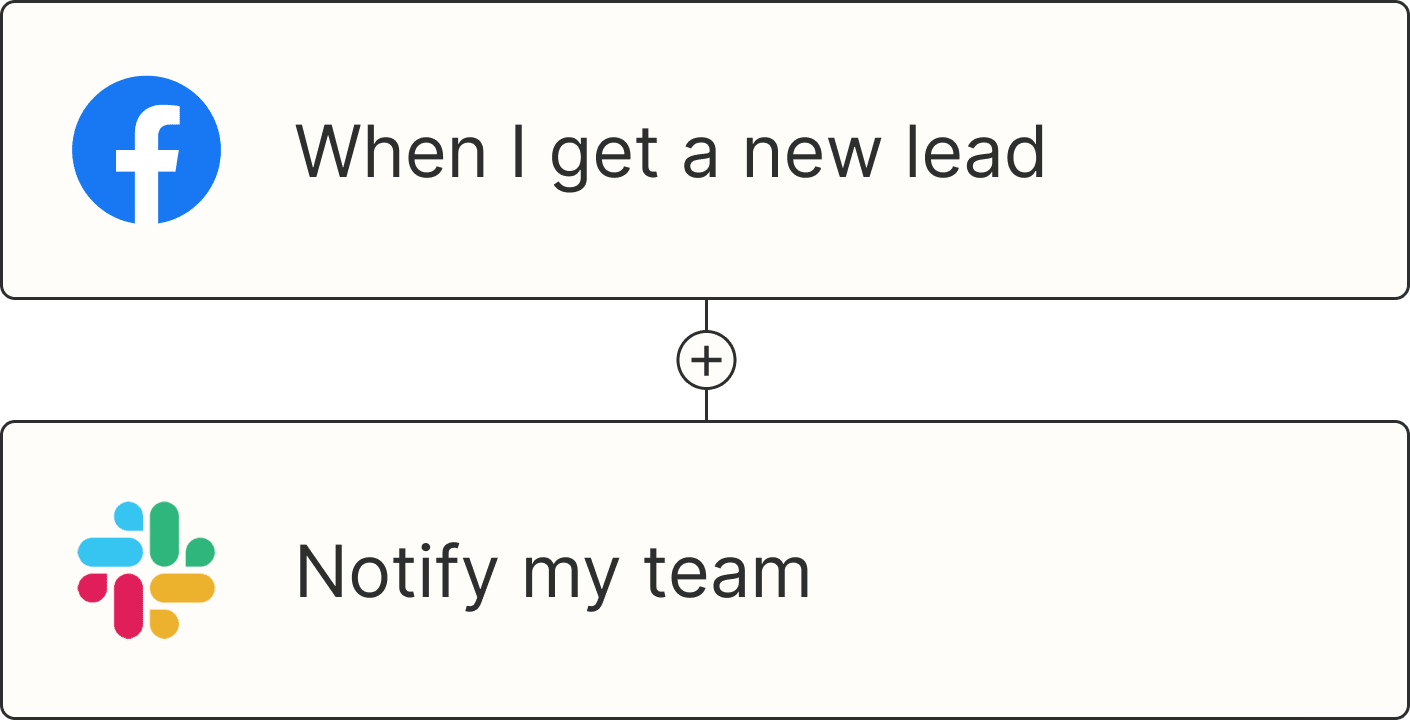
Social media used to be its own little island. Other sales and marketing folks considered it a fluffy nice-to-have, and it certainly didn't work well with other channels. Now, in addition to giving those teams a smug told-you-so, you can connect your social media efforts to everything else you do.
When you integrate your social media platforms with your CRM, eCommerce tools, and other systems, angry comment-section rants can become support tickets, your posts can become shoppable storefronts, and lead ad data can create new deals.
If that sounds a world away from how you use social today, welcome. You're in the right place. This guide will show you how to connect social to the rest of your business, so it starts feeding your systems and decisions.
Table of contents:
What is social media integration?
Social media integration is the process of connecting social media and social collaboration platforms with other business systems, so that data, activity, and actions flow between them. Think: connecting Facebook, X, LinkedIn, TikTok, YouTube, Slack, or Discord with your core business software like HubSpot, Shopify, and Salesforce.
These integrations allow you to:
Sync data between social platforms and other apps
Trigger actions based on social activity
Centralize reporting across channels
Route messages, leads, or mentions to the right team
Coordinate multi-step workflows across systems
You can connect social and other systems through either native or third-party integrations.
Native integrations are built directly into the software, letting you connect it to another tool without any extras. For example, Salesforce has a built-in integration with the LinkedIn Sales Navigator, so teams already using both can connect them directly from within Salesforce.
Third-party integrations connect systems that don't integrate natively—or to build more powerful workflows than you could do in native integrations alone. Zapier connects 9,000+ apps across your tech stack, including hundreds of social media tools, allowing you to build end-to-end workflows without writing a single line of code. So instead of being limited to what two tools can do together natively, you can chain together Facebook, your CRM, Slack, and more, all in one workflow.
Social media integration vs. social media automation

Social media integration connects two or more systems; it's essentially a communication layer that helps the apps talk to each other. Social media automation uses those connections to trigger actions automatically, so work happens without anyone having to lift a finger. In most cases, integration and automation go hand in hand.
For example, integrating Facebook with your email marketing tool means the two systems can share data. Automating that connection means that whenever someone fills out a lead form on Facebook, they're automatically added to a welcome email sequence, their information is added to your CRM, and one of your team members gets a ping on Slack. Once you build an automation, it can get work done without human interaction.
Here are a few examples to show you what it looks like in practice:
Create LinkedIn posts with Claude and post to LinkedIn


Create or update HubSpot contacts from new Facebook Lead Ads leads


Zapier is the most connected AI orchestration platform—integrating with thousands of apps from partners like Google, Salesforce, and Microsoft. Use forms, data tables, and logic to build secure, automated, AI-powered systems for your business-critical workflows across your organization's technology stack. Learn more.
Benefits of social media integration
Social media generates a constant stream of leads, messages, mentions, and performance data, but without integration, most of it ends up in the virtual ether. Here's what changes when you connect it to the rest of your stack:
Faster response times: When a customer DM or comment automatically becomes a support ticket, your team can respond in minutes instead of hours.
Less manual work and fewer errors: Copy-pasting data—like transferring LinkedIn lead data into your CRM—is slow and error-prone. Integrations let you move that data automatically, so no one on your staff turns into a robotic, data-moving zombie.
Better visibility across teams: Marketing, sales, and support often work in silos, each with a partial view of the customer. Integrations give everyone access to the same real-time social data, so handoffs are smoother and sales cycles are shorter.
Cleaner attribution and reporting: Connecting social platforms with your business intelligence tools or CRM makes it much easier to trace revenue back to specific campaigns, posts, or channels. Unless you'd rather keep guessing.
More consistent customer records: When social data flows directly into your CRM, every lead and customer profile stays up to date, regardless of where the interaction happened.
Easier scaling: Manual processes break down as social activity grows. Automated integrations scale with you, handling more volume without adding headcount.
The benefits you actually see will depend on which systems you connect—so let's get into that.
What systems should I connect to social media?
You could connect just about any system to social media, but these six are where I'd start.
CRM and lead management tools
Social integrations can keep your CRM and lead management tools up to date, no matter where your leads come from. You can automatically sync data from lead forms, lead ads, and DMs into tools like HubSpot, Salesforce, and Pipedrive, ensuring every lead gets added quickly and without errors.
For example, this unified lead capture template from Zapier allows you to collect leads from multiple sources like Facebook, TikTok, or LinkedIn, standardize the data, and add it to your CRM. Workflows like these can improve your speed to lead and centralize your information without having to check every platform separately.
Email marketing and marketing automation tools
The longer you wait to follow up with a lead, the less likely they are to convert. Integrations help speed up that process by automatically adding contacts from lead ads as email subscribers or triggering welcome sequences in tools like Mailchimp. That way, leads hear from you while you're still top of mind.
Customer support and help desk tools
Your support team can't monitor social media 24/7, but your customers want fast responses. Integrations help you keep everyone satisfied. By connecting socials with support tools, you can automatically route social messages, comments, and mentions that require follow-up to the right people.
Team communication and project management tools
Integrating socials with project management tools—such as Asana, Trello, or ClickUp—lets you automatically turn new lead form submissions, comment threads, or mentions into tasks, so nothing falls through the cracks. You can also connect socials with tools like Slack to ping your team when a campaign goes live, when a post hits a performance threshold, or when a customer complaint needs immediate attention.
Spreadsheets, databases, and reporting tools
Managing social data manually—exporting CSVs, copying metrics, updating dashboards—is the kind of work that eats hours and still ends up out of date. By connecting tools like Google Sheets, Airtable, or your BI tool of choice, you can automatically sync all that data, including your content calendar, publish confirmations, and post-level performance metrics.
eCommerce and order systems
Social media integration is especially powerful for eCommerce brands. Without it, a customer who sees your product on Instagram has to navigate to your profile, click through to your site, hunt down the product, and then find checkout—and a lot of them don't make it that far.
By integrating social with tools like Shopify, your posts can take customers straight to the checkout page. And on the backend, new orders from social can automatically update your inventory, trigger fulfillment workflows, and log to your reporting tools—no manual entry required.
Social media integration use cases
So now you've connected the tools. Here's what that actually unlocks across the business.
Marketing
Integrating social media tools with the rest of your marketing tech stack can streamline everything from lead capture and audience syncing to reporting and content workflows.
For example, Superhuman used Zapier to automatically route leads from LinkedIn, enrich data, and manage sync limits. This helped their marketing team transfer leads at scale and reduce errors by 87%.
Sales
Social integrations can streamline qualified lead routing, CRM updates, and rep notifications.
For example, when a new lead comes in through a LinkedIn lead form, you could automatically create a CRM record, enroll them in a welcome email sequence, ping the assigned rep in Slack, and tag the record by campaign source.
Need something more real-world? Veo used Zapier to automatically migrate leads from Instagram and Facebook to their CRM. It also automatically sorts each lead into one of the dozens of tailored email journeys and updates the lead's data, saving thousands of hours of manual work.
Customer support
Most customers won't submit tickets the way you want, like going through the help desk. Instead, they'll comment on your posts, send DMs, and very publicly complain on social.
Social integrations help you catch these events and kick off ticketing, alert, and follow-up workflows automatically. For example, you could:
Auto-convert comments, reviews, and DMs into tickets in Zendesk, Intercom, or a similar tool.
Flag high-priority mentions.
Assign cases based on keywords and sentiment.
You could automatically monitor socials for escalation signals like "refund," "lawyer," or "scam," convert them into tickets, and route them to your most senior support agent for resolution.
Ops and leadership
Ops and leadership often spend too much time manually transferring and crunching numbers—logging ad data to spreadsheets, updating dashboards on a schedule, and combining social data with sales metrics. Integrating social media tools with reporting software streamlines these processes.
Zapier makes this easier by acting as the medium between your social tools and your reporting stack. When a lead comes in through a Facebook or LinkedIn ad, for example, that event can automatically log to Google Sheets, update a HubSpot record, or trigger a Looker Studio refresh, so your reporting stays current without anyone manually moving data around.
Content operations
Social integration makes the most difference when it connects multiple tools at once. Content operations is one of the best examples: the moment something gets published, a whole chain of downstream work kicks off: scheduling, notifying stakeholders, repurposing assets across formats. Doing that manually across platforms is a full-time job, but connecting the tools makes it automatic.
For example, you could:
Publish a post in Webflow, have Zapier automatically schedule social versions in Buffer, and push it to your Beehiiv newsletter list.
Fire a Slack message to your marketing channel the moment content goes live so the team can engage right away.
Pass published copy to Canva to auto-generate social graphics sized for each platform, ready to drop into your content scheduler.
String enough tools together, and your content operations run themselves.
How to build a social media integration strategy
Here's how to integrate social media into your business, step by step.
1. Choose one or two high-impact use cases first
Instead of trying to connect everything at once, start where integrations matter the most.
To do this, consider what each integration could actually do for you:
What tools need to share information regularly?
Where do you find yourself doing the most manual data entry?
What do you wish your social media platform could do that it can't?
What workflow would the integration automate?
For most teams, the best starting points are integrations that connect your social media platforms to your CRM and customer support tools.
2. Standardize data before it spreads
Standardize the data you want to capture before it spreads through your systems. Otherwise, your workflow will still require significant human intervention. A lead that comes in without a source tag, a required field, or a clear owner is a lead your team will waste time cleaning up later.
Source tagging refers to labeling where the data comes from, like LinkedIn, YouTube, Bluesky, or Slack.
Required fields are the specific pieces of information that must be captured for a workflow to trigger. If they aren't, the action may produce incomplete results, get flagged for manual review, or not happen at all.
Naming conventions are rules for how you label and format values, like how you categorize service types or structure record names.
Record ownership refers to automatically assigning records to specific people, often based on some conditions. This is especially important for workflows that require human handoff, like lead follow-up or content production.
In Zapier, you can also use a built-in utility tool, Formatter, to automatically adjust values like dates and times to a different standard. For example, by adding a Formatter step to a Zap, your workflow will automatically convert international dates pulled from one app to US dates that another app expects.
3. Map your workflow
Before you build, sketch out what the integration actually needs to do. What event kicks it off: a new DM, a lead form submission, a comment? What should happen next, and where does the result need to land? Getting specific here saves a lot of backtracking later.
With that picture clear, setting up your workflow becomes straightforward. In Zapier, you can even give this information to Copilot, and have the AI build the workflow for you in Zapier Canvas for you to review before launching.
4. Test with real scenarios
Before rolling out your workflow at full scale, experiment with a few low-stakes real-world scenarios. You want to know if it works in the wild, not just under perfect conditions.
For example, you could try submitting a test lead from each social platform you've connected. Check that it lands in the right tool, with the right fields populated, assigned to the right owner, and formatted consistently with everything else in your CRM or support queue.
In Zapier, you can test each step individually, all steps at once, or all untested steps at once. Your Zap will create test records you can compare against the app data.
5. Review and improve over time
Track whether your integrations are adding value or just adding noise. If it's the latter, you might need to edit them or find a better use case. Zapier makes this easier with built-in activity logs that show you exactly when your workflows ran, what data moved, and where errors occurred, so you can troubleshoot and improve without guesswork.
Integrate your social channels with Zapier
Social media doesn't exist in a vacuum, and neither should your data. Every lead form, DM, comment, and conversion is a signal that your business can act on, but only if it actually reaches the right system.
Zapier can connect to 9,000+ apps across your tech stack, including social media platforms, marketing tools, and CRMs, so you can build end-to-end workflows that feed off your social media data. Build in a visual editor, or access your social data—and act on it—straight from your favorite AI tools.
Related reading: