You've set up a Facebook lead ad to find new customers, but how will you know when those new leads come in? Sure, you can download your leads at the end of your campaign, giving you a comprehensive list of all those leads in one place. But if you want real-time updates—so you can nurture those new leads right away—you should send yourself (and your team) a customized email notification when a new lead comes in.
Here's how to set up an email alert with your Gmail account when you get a new lead from Facebook Lead Ads. If you're not a Gmail user or prefer to qualify leads first, scroll down to see other alert options.
Zapier is the most connected AI orchestration platform—integrating with thousands of apps from partners like Google, Salesforce, and Microsoft. Use forms, data tables, and logic to build secure, automated, AI-powered systems for your business-critical workflows across your organization's technology stack. Learn more.
Send an email with Gmail when a new lead comes in
Zapier is an AI orchestration platform that lets you streamline your work by connecting your work apps into automated workflows. These workflows are called Zaps, and they can do lots of common tasks for you—including sending notifications. You can create your own Zap from scratch without any coding knowledge, but there are also lots of pre-built templates to help you get started quickly.
We've included a template for Facebook Lead Ad notifications below. Click it to be taken to the Zap editor to finish setting up your Zap. If you don't already have a Zapier account, you'll need to create one. Then just follow the directions below to set up your Zap.
Send emails in Gmail for new leads in Facebook Lead Ads


Set up your Facebook trigger
First, you'll need to set up your trigger step, which is the event that starts your Zap. Search for and select Facebook Leads Ads for your trigger app and New Lead for your trigger event. If you're using the Zap template, these will already be selected for you.
Next, you'll need to sign in to your Facebook Lead Ads account if you haven’t already—and click Continue.

Next, select which page your lead ad is running on—and which form is collecting the responses. Once you've selected the correct page and form, click Continue.

Before you set up your action step, you'll need to test your trigger to make sure everything is working correctly. When you click Test trigger, Zapier will find a recent result in your Facebook Lead Ads account for the lead ad and form you selected earlier. This will be used to set up the rest of your Zap. If you don't have any lead data, you'll need to create a sample lead to test your Zap.
Once Zapier has successfully found the latest leads, select one to use and then click Continue with selected record.

Set up your Gmail action
Now it's time to customize the action step. An action is the event a Zap performs after it is triggered, and Zaps can have more than one action—meaning a single Zap can do multiple tasks.
In this case, Gmail is your action app, and Send Email is your action event. Once again, if you're using the Zap template we shared above, these will both be selected for you. Just like in the trigger step, you'll need to connect your Gmail account (if you haven't already) and click Continue.

Then you'll need to customize the email notification itself. If you want to receive notifications for new leads yourself , add your email address to the To field. If you want other people to get this email alert as well, add their email addresses in either the To, Cc, or Bcc fields. You can also choose to send notifications to a Google Contacts group or label.

Next, you'll need to set up who the email will be from. Select your email in the From field. You can change the "From Name" to whatever will be most helpful for you. In this case, we'll use the page name so we can see at a glance where the notification is from.

Now it's time to customize your alert email by pulling in the lead data you want to see.
Enter the email subject line you want to see for your alert email. If you want to add data from the previous Facebook Lead Ads step—like the lead name or Ad ID— click the plus sign (+) in the email subject line field and select the data you'd like to use from the modal.
In this example, we'll use a bit of text plus the Campaign Name and the Form Name, so we can immediately see some details about where the lead is coming from.

Then it's time to set up the body of your email notification. Keeping the Body Type "plain" will make sure there's no special formatting, like different fonts, font sizes, bold font, or italics.
You can enter your own body text or pull in data from your previous Facebook Lead Ads step, just like when we set up the email subject line.
In this case, we'll use a mix of plain text and fields mapped from the trigger step that give us some basic details about the lead—but you can use whatever Facebook Lead Ads information you choose. Just click the plus sign (+) in the Body field and select the data you want to use from the modal.

After you've customized the body of your new lead alert email, you can add your email signature if you want; Zapier will automatically pull it in based on what you have set up in your Gmail account.
If you're sending this to your own team email address, you can also assign it a Label or Mailbox for easy sorting, as well as add Attachments. Once you're done, click Continue.

Pro tip: Create a label in your Gmail account for this FBLA campaign and then select it here. This will help keep your inbox organized.
Finally, it's time to test your action. When you click Test step, Zapier will send an email to your Gmail account according to how you set up your email earlier.
It's a good idea to test your Zap so you can check whether your email looks as expected. If you'd rather skip the test, just click Skip Test instead. Here's how our email looks.

Once everything looks good, you're now ready to use your Zap. Click Publish to turn it on. Now, you'll get emails every time a new lead rolls in!
More ways to set up Facebook Lead Ads alerts
We used Gmail in our example above, but that's not your only option! If you don't have a Gmail account, you can use Email by Zapier instead. Use this Zap template to get started:

Email by Zapier can send only 10 emails per hour. If you're expecting a high volume of leads, you can set up a digest email instead. With a digest email, Zapier will automatically send you a roundup of all of your new leads on a daily, weekly, or monthly basis.
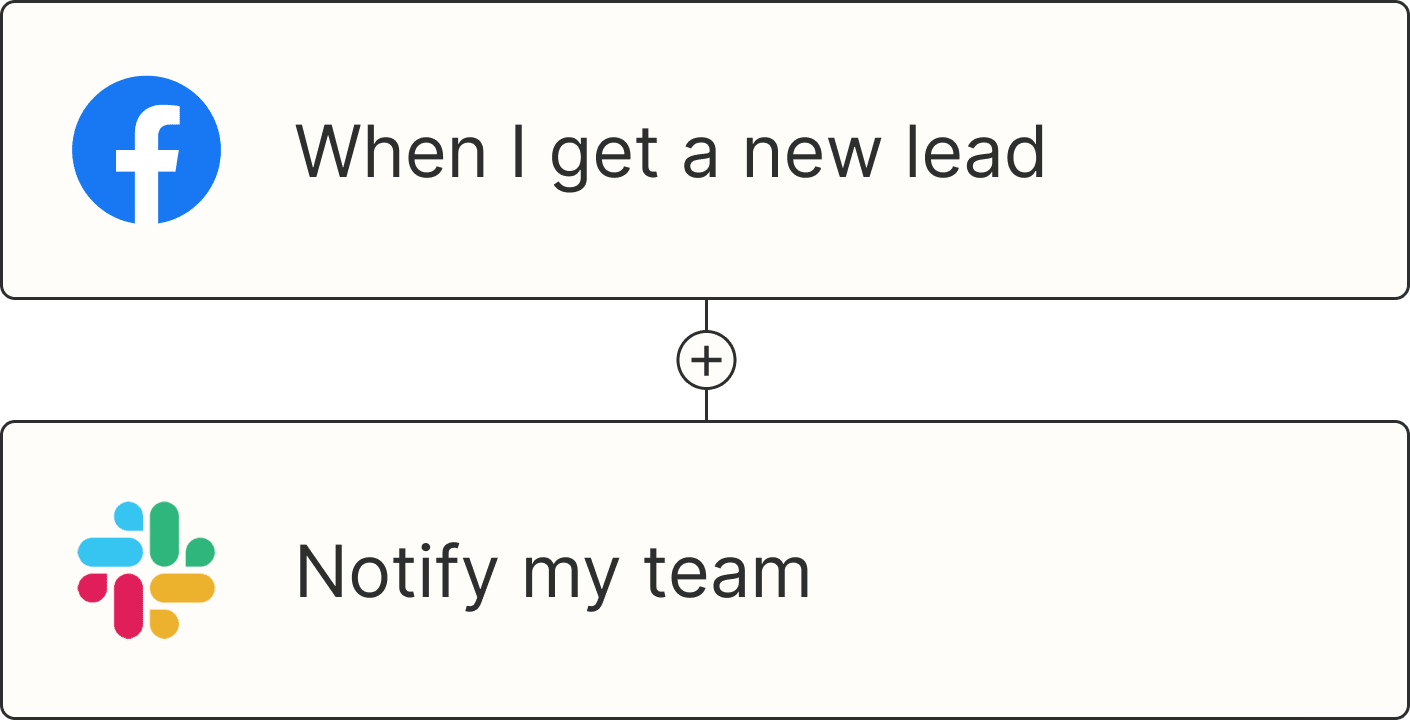
Not a big email user? You can get lead notifications in other apps, like Slack or via SMS instead. Here are some Zap templates to get you started.
Send SMS messages for new leads from Facebook Lead Ads

Get Slack messages with new Facebook Lead Ads leads

And if you want to receive notifications just for qualified leads, you can add a filter step that sends you an email, text, or Slack ping only if your criteria are met.
Send Gmail notifications for qualified Facebook Lead Ads leads

Get Slack notifications for qualified Facebook Lead Ads leads
Receive text messages for qualified Facebook Lead Ads leads
Stay on top of new leads from Facebook Ads
With Zapier, you don't have to worry about missing out on leads ever again. These Zaps let you make the most of each lead you generate by turning prospects into sales.
Related reading:
This article was originally published in April 2019, written by Justin Pot, with further contributions from Ellie Huizenga and Khamosh Pathak. It was most recently updated in February 2026 by Hannah Herman.