Operations automation is the practice of using software to run repeatable business processes automatically without someone having to push every button along the way. It connects the tools your teams already use and sets rules for what should happen when certain conditions are met.
In the Survivor game of life, working in operations is like building a shelter out of whatever detritus your tribe members throw your way, while hungry, in a heavy rainstorm, and simultaneously diffusing multiple arguments across your alliance.
Operations teams sit at the center of the business. You're responsible for keeping processes efficient and teams aligned across IT, sales, marketing, HR, and support. But as companies scale, manual work piles up fast: copying data between tools, chasing approvals, reconciling reports, and fixing errors after the fact. Operations automation removes that friction by making workflows run in the background, the same way every time.
In this guide, I'll break down what operations automation is, why it matters, and how to decide what to automate first. Then, I'll walk through real-world use cases across departments to show how operations automation can help you build processes that work as hard as your teams do (without being asked to go without food or access to a shower).
Table of contents:
What is operations automation?
Operations automation is the practice of using software to run repeatable business processes automatically without someone having to push every button along the way. It connects the tools your teams already use and sets rules for what should happen when certain conditions are met.
When a trigger occurs (like a form being submitted, a deal moving stages, or a ticket being created), an automated workflow instantly kicks off the next steps, like updating records, routing requests, notifying stakeholders, or enriching data.
It's also important to distinguish operations automation from task automation. Task automation focuses on individual actions (like sending a message or creating a record). Operations automation, on the other hand, looks at the bigger picture: how work flows across teams, systems, and departments from start to finish.
When done well, operations automation goes beyond saving time to create more reliable processes, reduce risk, improve visibility, and give operations teams the leverage they need to support growth without constantly adding more headcount.
Why you need operations automation
I set a reading goal every year, and I dutifully make sure to buy new books whenever I can. But despite my overflowing bookshelves, I usually still manage to fall short of my reading goal. (It's true what they say: buying books and reading them are two separate hobbies.)
Similarly, most operations teams don't struggle because they don't have enough tools. The problem is often the opposite. Instead of a single platform, most companies run on dozens of tools that weren't designed to talk to each other. Too much critical work still happens manually, across too many systems, with too many handoffs, and very little margin for error.
Without automation, that complexity gets pushed onto people. With automation, it gets absorbed by systems. Here's what that unlocks:
Fewer errors and less rework. Manual processes are error-prone by default—especially when they involve copying data between tools or relying on people to remember what comes next. Automation applies the same rules every time, which reduces inconsistencies and downstream cleanup.
Faster, more predictable execution. When workflows run automatically, work moves as soon as the right conditions are met. That means fewer delays waiting on handoffs, quicker response times, and more reliable outcomes across teams.
More time for higher-impact work. Operations teams are often pulled into tactical busywork—routing requests, fixing data, chasing updates—when their real value is in improving systems and strategy. Automation handles the repetitive parts so teams can focus on optimization instead of maintenance.
Better visibility across the business. Automated workflows create cleaner data and clearer signals. Instead of piecing together what's happening across multiple tools, teams can trust that information is flowing where it needs to go, in real time.
How to know what to automate
One of the biggest mistakes teams make with automation is starting with solutions instead of problems. Just because something can be automated doesn't mean it should be—and automating the wrong process can just help you move inefficiency faster.
A better approach is to look for patterns in how work actually gets done today:
Pay attention to repeatability. If a task happens the same way every time—especially on a daily or weekly basis—it's a strong candidate for automation. This might include routing requests, updating records across systems, or sending follow-ups when a status changes.
Look for manual handoffs between tools or teams. Any time work requires copying data from one app to another, or checking multiple systems to know what to do next, automation can usually step in to keep things moving.
Volume and scale matter. A process that feels manageable at low volume can quickly become a bottleneck as the business grows. If something works for now but clearly won't hold up in six months, it's often worth automating sooner rather than later.
Pay attention to error-prone or high-risk steps. Processes that rely on perfect data entry, strict timing, or consistent compliance rules are good candidates for automation because software is better at doing the same thing the same way every time.
Listen to your teams. Repeated complaints like "this takes forever" or "I have to check three tools to do this" are strong signals that a process is ripe for automation. (Other complaints like "Nicole talks about her dog too much" have to be solved by other means. Sorry not sorry.)
A good rule: if a process is frequent, manual, cross-functional, and easy to get wrong, it's probably worth automating. Start there, test and iterate, and let real operational pain (not novelty) guide your automation strategy.
Key business operations areas to automate
Operations automation looks different across teams, but the underlying goal is the same everywhere: reduce manual work, improve consistency, and keep processes moving without constant oversight. Here are some of the most common business operations areas where automation delivers outsized impact, from IT and revenue operations to HR and customer support.
IT operations automation

IT operations teams keep systems secure, services running, and users productive. But when everyday tasks like provisioning accounts and responding to tickets are done manually, it ties up IT's time and introduces risk. Instead, IT automation software can take care of the routine technical work so your IT team can focus on strategic, high-impact projects instead.
IT Ops automation can do things like:
Incident and ticket management. Instead of waiting for someone to create or route tickets manually, automated workflows can listen for incoming system alerts or form submissions and automatically create tickets in tools like Jira or Zendesk. That gets issues into the right queue immediately, reducing response times and ensuring critical issues aren't delayed by manual handoffs.
Account provisioning and access management. When a new hire is added to the HR system, automation can trigger the creation of user accounts, assign permissions, and grant access to software.
System monitoring and alerting. You can set up workflows that watch for outages, security flags, or failed backups and send notifications or trigger remediation steps without an admin watching screens all day.
The IT team at Remote, a global HR platform, transformed their help desk by combining AI and automation to intake, triage, and even resolve common support tickets across their communication platforms. Now, they automatically close more than a quarter of help desk tickets and save hundreds of hours each month. This shift allowed Remote to keep its IT team small but impactful, while saving roughly $500,000 in hiring costs.
Take a look at this template to see how it might work for you.

Improve your IT support with AI-powered responses, automatic ticket prioritization, and knowledge base updates.
Read more: Your guide to IT automation
RevOps automation

If revenue operations (RevOps) can be found at the chaotically busy intersection of sales, marketing, and customer success, there's plenty of opportunity for the information equivalent of a ten-car pileup. Instead of having data and workflows scattered across teams and tools, RevOps automation brings everything together so information flows smoothly and customers get cohesive experiences from first touch to renewal.
For example, automated workflows can do things like:
Pull context from sales calls and support tickets into a centralized place. Do things like alert reps in Slack when a high-value lead comes in, or push AI-generated summaries of a customer's interactions right before a call, so your teams get the timely information they need to act confidently.
Boost alignment across go-to-market teams. Because RevOps sits between departments, it's in a unique position to smooth handoffs and make sure everyone works from the same data. Automate lead routing and status updates, send cross-team notifications for new opportunities or support tickets, and create tasks for the right teams without anyone lifting a finger.
Keep your data clean and usable. Messy or inconsistent data is one of the biggest barriers to truly customer-centric operations. With workflows that sync contact information across tools, push new feedback from support into CRM profiles, and consolidate metrics into unified dashboards, automation helps ensure your teams make decisions based on reliable, up-to-date signals.
Ready to try RevOps automation for yourself? Learn how real RevOps professionals are using AI and automation to streamline their work, or get started with one of Zapier's pre-built templates.
Read more: Automation for RevOps teams
Marketing operations automation

Marketing operations is the engine that keeps campaigns firing and audiences engaged. But between lead capture, data cleanup, cross-channel coordination, and reporting, manual work can quickly overwhelm even the most organized teams. Marketing operations automation takes care of those behind-the-scenes processes so marketers can focus on strategy, creativity, and driving results instead of shuffling spreadsheets and chasing updates.
For instance, your marketing ops team might use automation for:
Getting leads from every channel into the systems that make them actionable. Instead of downloading form responses or exporting lists manually, automated workflows can create or update CRM contacts from ad leads, add form submissions straight into Salesforce or HubSpot, or send LinkedIn Lead Gen results to the right place the moment they arrive.
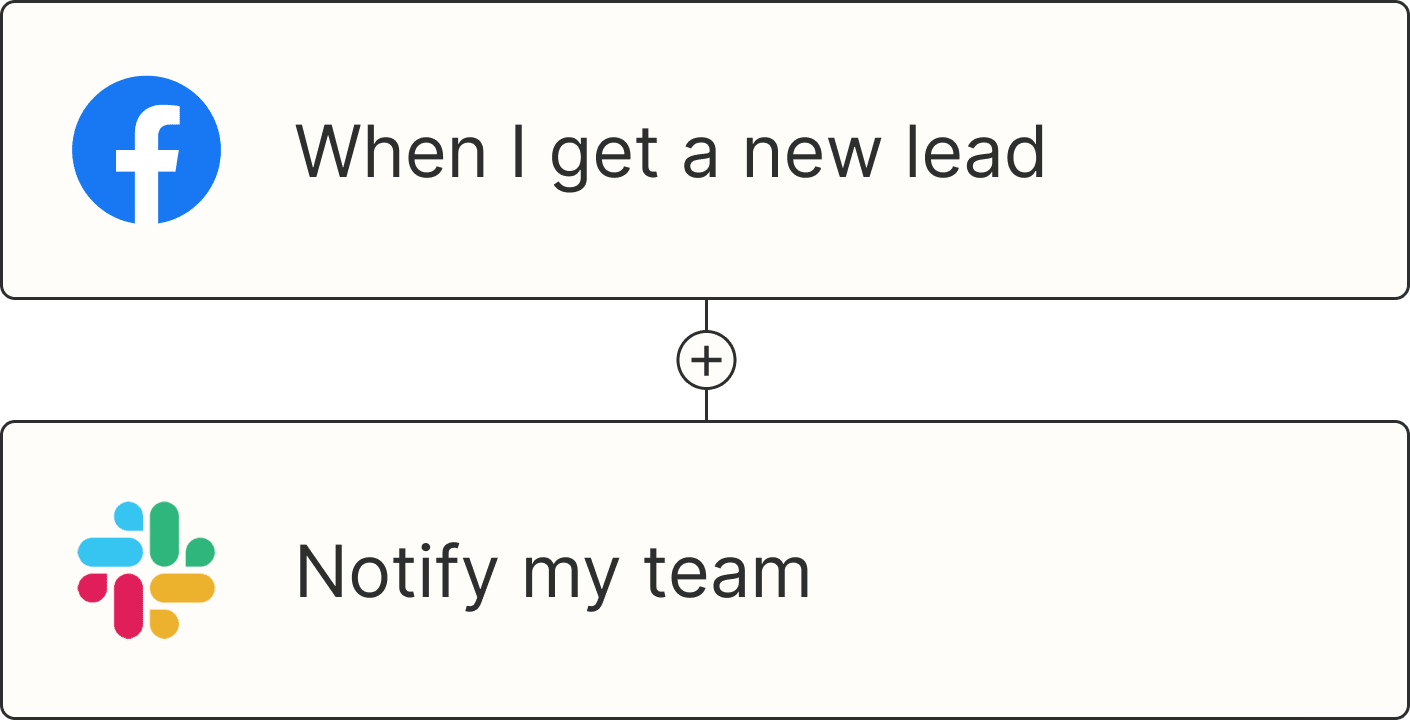
Lead tracking and analytics. An automated workflow can log new Facebook Lead Ads entries to a shared spreadsheet or trigger a webhook that pushes data into your reporting dashboards, giving you real-time insights into campaign performance without manual data wrangling.
Lead nurture and targeted outreach. Lead nurture workflows can subscribe new leads to an email list, add contacts to ActiveCampaign workflows based on ad behavior, or trigger personalized messaging when someone takes a key action. That means prospects move through your funnel consistently and quickly, even when your team is focused elsewhere.
Across all of these use cases, the theme is the same: remove repetitive steps so your team spends less time on busywork and more time crafting campaigns and turning data into growth. The goal of marketing operations automation is to scale your efforts and deliver the right message at the right time, without adding headcount or increasing complexity.
Ready to get started? Check out Zapier's collection of pre-made templates for marketing.
Read more: Automate your marketing operations and processes
Sales ops automation

Sales ops is all about removing friction from the selling process. If life were The Office, reducing that friction would be as simple as moving Dwight and Jim to separate desk clumps. But in real life, sales ops automation is the solution. It helps remove the manual, error-prone work that distracts sales reps from actually closing deals.
For example, sales ops automation software can:
Capture and centralize leads. Instead of manually pulling contact information from every form and ad channel, set up workflows to automatically send new leads into your CRM in real time. That way, reps see prospects the moment they come in, and nothing slips through the cracks. This gives your sales funnel more predictability and keeps pipeline data fresh without copying and pasting between tools.
Keep your database up to date. Sales teams often struggle with stale or inaccurate records, which leads to missed opportunities and bad forecasting. With automation, you can sync contacts across multiple apps, update deal stages when actions happen elsewhere, or flag changes automatically so your ops team doesn't have to do it by hand.
Improve communication and follow-up at scale. Automated workflows can send nurture emails or alerts when prospects take key actions, like opening a proposal or visiting pricing pages. This helps reps stay in lockstep with buyer behavior without monitoring every interaction manually. They're then freed up to focus on strategy and relationship-building instead of busywork.
Sales tracking and reporting. Workflows can push updates into dashboards, send performance summaries to Slack or email, and even trigger tasks for follow-ups or reminders. By automating these steps, your team gains visibility into pipeline health and rep activity in real time, which supports better decision-making and forecasting.
Sales ops automation removes repetitive manual tasks, reduces errors, and aligns your sales process so reps spend more time selling and less time managing systems. If you're ready to get started implementing sales ops automation, check out Zapier's library of pre-built templates.
Read more about how to automate your sales processes and using AI in sales.
HR operations automation

Human resources teams are responsible for the full employee lifecycle—from recruiting and onboarding to performance management and offboarding—and every one of those stages comes with a surprising amount of manual work. Sending offer letters, updating employee records, tracking time-off requests, and responding to basic HR inquiries can quickly fill up a day if you're doing them by hand. HR operations automation uses workflows to handle those repetitive tasks so HR pros can focus on what really matters: the people behind the processes.
A common area where automation shines is recruiting and candidate processing. Instead of manually copying applicant info from forms or your ATS into spreadsheets or calendars, automated workflows can instantly share applications with the right systems and stakeholders, trigger reminders for missing feedback, and even publish openings across channels. This ensures nothing slips through the cracks and keeps your candidate experience smooth from first touch to offer.
Once someone is hired, HR automation continues to add value through onboarding and employee setup. Automations can update HRIS records, send welcome emails with essential documents, create accounts in key tools, and assign training checklists automatically—all without someone manually juggling messages and lists. That not only saves time but makes new hires feel supported and well organized from day one.
Automation also helps with ongoing employee requests and policy tracking. Instead of HR team members repeatedly answering the same questions or manually routing inquiries, workflows can triage requests—routing them to the right team or even generating automated responses for common queries—so your team isn't stuck chasing emails or Slack threads.
A great example of this in practice comes from Alma, a growing organization that built an automated HR help desk powered by Zapier and Asana. Before automation, their people team was overwhelmed by a scattered HR inbox and repetitive support requests. By creating over 180 automated workflows, Alma reduced the number of tickets by 45%, saved roughly $50,000 by avoiding third-party help-desk tools, and consistently delivered fast, reliable resolutions with employee satisfaction ratings around 4.9 out of 5. Instead of sorting through noise, HR now gets the specific information they need to act—and employees know exactly what to expect at every step of the process.
Across recruiting, onboarding, requests, and record maintenance, HR operations automation helps teams eliminate manual data entry, reduce errors, and scale their processes without adding headcount. It doesn't just take work off your plate—it creates a more predictable, consistent employee experience that supports growth and retention.
Ready to try HR automation for yourself? Check out the pre-built templates in our human resources automation starter kit.
Read more: HR automation ideas to streamline your work
Customer support operations automation

As a millennial, nothing fills me with more dread than the idea of picking up the phone. And that goes double if there's a non-zero chance of an irate customer on the other end. Customer support professionals are just built differently—and I firmly believe that frontline work deserves some automated support. Any tasks that can be turned into reliable background workflows should be, so your support reps can reserve their energy for solving real problems and delighting customers.
At its simplest, customer support automation software captures inquiries where they happen and turns them into action. For example, it can:
Create tickets in your help desk. Whenever a customer submits a form, clicks a button in a chatbot, or triggers a webhook, automation can get that information where it needs to go. That means no more copying and pasting, no missed requests, and a faster path to resolution for every customer concern.
Enhance support tickets with context and AI-assisted insights. Automation can auto-summarize long messages or pull useful details into your ticket fields so agents have the right information up front. This makes each response faster and more personalized, even when your team is stretched.
Send prompt notifications. Let the right people know about support tickets right away, whether it's a Slack alert for a high-priority support issue, or an email to an on-call engineer when a critical bug report comes in.
Ticket hygiene, routing, and status updates. Automation can keep your support queue clean and accurate without someone manually monitoring every change.
Taken together, these sorts of automations make your entire support process more consistent and predictable, which leads to improved customer satisfaction and less burnout for your team. Automations bridge the gaps between tools and teams, so no matter where a question starts, it gets into the right workflow and into the right hands sooner.
Beauty and wellness brand IPSY uses automated workflows to monitor for rare but important support signals (like allergy-related mentions) and alert their team instantly when it matters most. And companies like Vector Media added AI to their customer service workflows to draft personalized responses for each support inquiry, which saves significant time per ticket and gives agents a head start on solving customer problems.
Across intake, triage, enhancement, and routing, customer support automation helps teams remove manual grunt work from high-volume processes and spend more cycles on human-centered support that builds loyalty without adding headcount. Here are a few pre-built templates to show you how.
Read more: Your customer support automation playbook
Business operations automation best practices
They say you eat an elephant one bite at a time (personally, I'd befriend the elephant and spend the rest of our days noshing on peanuts, but to each their own). Operations automation should use the same approach.
Don't automate everything at once; instead, build systems that are reliable, scalable, and actually make work easier for the people using them. These best practices can help you get there.
Start with the process, not the tool
Before you build an automation, get clear on how the work should flow. Map the current process, identify where it breaks down, and decide what "good" looks like. Automation should reinforce a well-designed process, not paper over a messy one.
Automate small, repeatable wins first
You don't need to start with a massive cross-department workflow. Look for high-volume tasks that follow clear rules—like routing requests, syncing records, or sending notifications. These quick wins build confidence and free up time you can reinvest in more complex automation later.
Design for humans over systems
Good automation supports people instead of surprising them. Make sure workflows are transparent, notifications are actionable (not noisy), and there's always a clear owner when something needs human judgment. If an automation creates confusion, it's not doing its job.
Build in guardrails and accountability
Governance matters as automation scales. Use naming conventions, documentation, and access controls so workflows are easy to understand and maintain. Monitor for failures, edge cases, and data quality issues—and revisit automations regularly as your business evolves.
Plan for change, not perfection
Tools change, processes shift, and teams grow. Treat automation as a living system you iterate on over time, not just a one-off project. The most successful ops teams revisit workflows often and improve them as new needs emerge.
Measure impact rather than activity
It can be tempting to focus on the number of workflows you build, but the real value of operations automation is the outcomes it drives. Track time saved, error reduction, response times, or team satisfaction to understand what's working and where to optimize next.
Making operations automation work for your business
As your business scales, complexity is inevitable. Friction doesn't have to be. By identifying high-impact workflows and automating intentionally, you can turn automation into a long-term advantage rather than a one-off project.
With the right approach to operations automation, you can build processes that support growth, empower teams, and keep your organization running smoothly. Instead of reacting to problems as they surface, operations teams can design processes that prevent issues in the first place.
Related reading: