Database automation is the process of managing and updating databases with minimal manual effort. Instead of manually importing data, running updates, or syncing records across systems, you can set up automations that handle backups and keep information consistent across your apps—which both ensures accuracy and saves time.
Databases are the foundation of your information ecosystem, letting you store, organize, and work with data in dynamic and powerful ways. These apps usually let you display information in various views (like boards, lists, calendars, and tables), create dashboards and reports, and more.
But manually managing your databases is a cumbersome task. Copying and pasting information from various sources is a time suck. And you might want to stay on top of important milestones, deadlines, and developments—but what if your database app doesn't send these notifications on its own?
Zapier's automated workflows (called Zaps) can make your database even more powerful. Automating your most repetitive tasks saves you time while giving you more control over how you use your data. Below, we've rounded up the six most popular ways to automate your database app.
Zapier is the most connected AI orchestration platform—integrating with thousands of apps from partners like Google, Salesforce, and Microsoft. Use forms, data tables, and logic to build secure, automated, AI-powered systems for your business-critical workflows across your organization's technology stack. Learn more.
Table of contents
To get started with a Zap template—what we call our pre-made workflows—just click on the button. It only takes a few minutes to set up. You can read more about setting up Zaps here.
What is database automation?
If you're an absolute weirdo like me, tinkering with spreadsheets and databases is your idea of a fun time. But most people would rather personally clean out their office's communal fridge than stare at an Airtable or MySQL dashboard any longer than necessary.
If you fall into the latter camp, database automation is your answer. It lets you use software to handle the repetitive, manual tasks involved in managing a database. Automating your databases means connecting them to the rest of your tech stack so your data flows exactly where it needs to go, in real time.
Think of it as putting your database management on autopilot. Processes like syncing customer data across apps, generating reports, and responding to system alerts happen reliably in the background. And instead of asking engineers to manually run scripts or perform maintenance, you can use automation tools to take care of those workflows automatically (and more consistently).
Database automation best practices
Database automation can save teams countless hours—but only if it's implemented thoughtfully. Here are a few best practices to keep in mind:
Start with high-impact, low-risk workflows. Automate routine, predictable tasks first—like backups or data syncing—before moving on to more complex processes.
Document your automations. Keep a record of what's automated and why. It helps with troubleshooting, audits, and scaling your automation strategy as your data needs grow.
Build in monitoring and alerts. Even automated systems need oversight. Set up notifications for failed runs or performance issues so you can catch problems early.
Prioritize data security. Use secure credentials and permissions, especially when automating actions that access or modify production data.
Review and refine regularly. As your database evolves, your automations should, too. Revisit workflows to optimize for speed, reliability, and cost efficiency.
It's also a good idea to use a database app that's built for automation, not just storage. Traditional spreadsheets and databases are fundamentally static, while Zapier Tables was designed as a hub for data to flow in and out of your other tools automatically. The app's more structured environment reduces the error-prone manual work that can come from custom formulas and fragile copy-pastes. You can also easily plug data-driven triggers and actions (like creating a row when a form is submitted or sending notifications when a key field changes) directly into a table.
Read more: Why you should ditch spreadsheets for Tables
How to automate your database apps
You don't need to be a database admin or know how to write complex scripts to start automating your workflows. With the right tools, you can connect your database to the rest of your tech stack and get your data flowing automatically between the apps you already use. That might mean updating your database when new leads come in, sending alerts when data changes, or keeping a spreadsheet in sync without touching a CSV file.
Here are a few examples of how to bring database automation to life, no matter which apps you rely on day to day.
Update your database from a form
Just because databases are the best way to organize information doesn't mean they're the fastest or easiest way to collect that data. You don't always have time to pull up your Airtable workspace, scroll to the bottom of a huge spreadsheet, and create a new entry from scratch.
Forms are a great alternative. They're like a front-end to your database, giving customers or inter-departmental collaborators the limited ability to create new entries without having access to (and potentially messing up) the entire database. Or, if you and your team update your database regularly, you can bookmark the URL in your browser for making quick additions without opening your database app.


Create Airtable records for new Webflow form submissions


Create records in Zapier Tables from new form submissions in Zapier Forms


Create Firebase / Firestore documents for new Typeform entries

Add new Jotform submissions to rows in SQL Server databases


Automatically adding data to your database is just the tip of the automation iceberg. Vector Media, for example, uses Zapier to automate their entire employee onboarding process. After a new hire submits their signature, their data is moved to a Zapier table. From there, a multi-step conditional flow creates passwords for the employee, gives them access to software, sends onboarding emails, and even assigns them hardware. Learn more about how they did it.
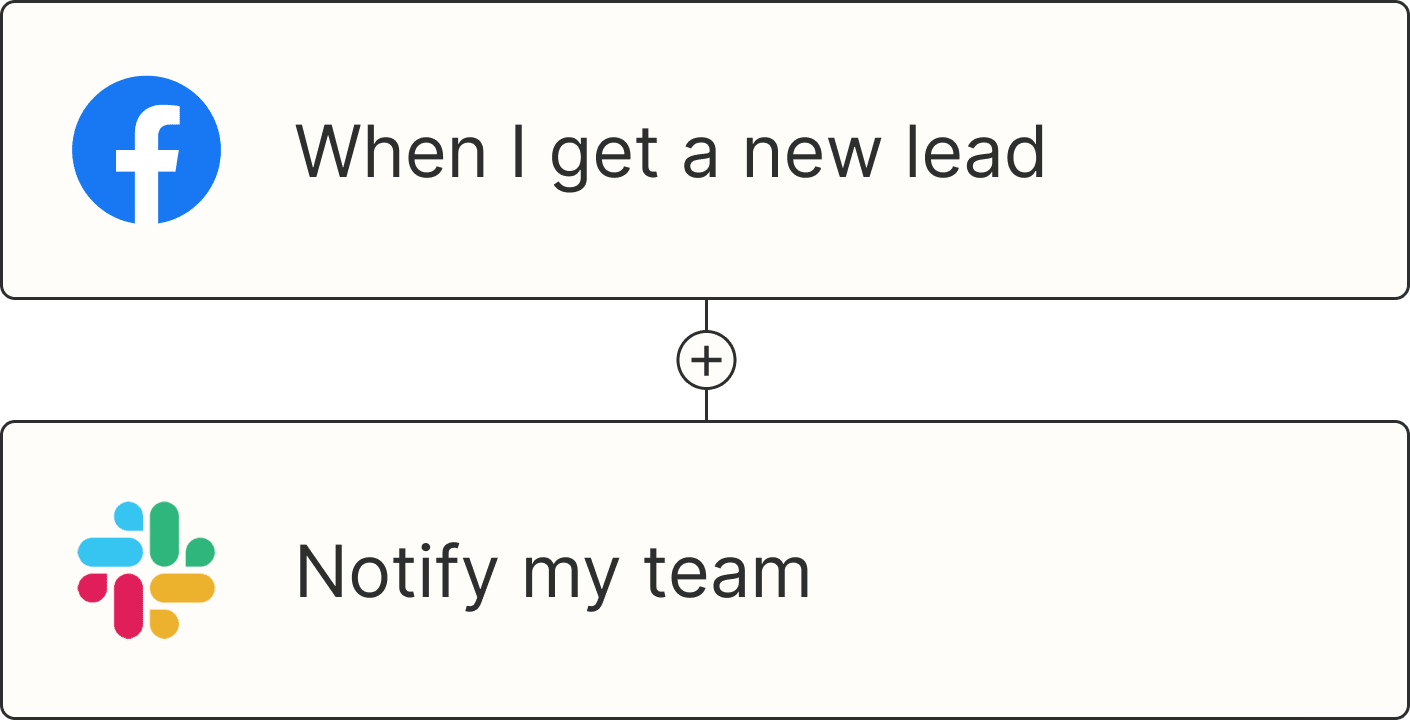
Add Facebook leads to your database app
When a prospective customer fills out a lead form on a Facebook ad, it's important to collect their information in an accessible and reliable place. You'll need to follow up quickly to ensure maximum engagement.
But manual data entry can take up most of your time, not to mention risk costly typos. Instead, use one of these Zaps to send new leads to your CRM database automatically—ensuring a dynamic sales pipeline and smooth customer experience from the start.
Add new Facebook Lead Ads respondents to your MySQL database

Send new Facebook Lead Ads leads to SQL Server rows
Add new Facebook Lead Ads leads to PostgreSQL as rows

Pro tip: Add a filter step to qualify leads before they ever hit your database. That way, only the submissions that meet your criteria—like verified emails, certain locations, or a minimum budget—move forward. It keeps your database clean and saves your team time while keeping everyone focused on the highest-quality prospects.
Send notifications for database updates
It's a safe bet your database isn't just collecting data in the background. You probably want to stay aware of changes to your database—whether it's a new status on a project or a new lead in your CRM. But manually checking your database app can get tedious.
Instead, use a Zap to send yourself (or your team) notifications of important updates. These automated workflows send you an email automatically anytime a new entry matching your specifications appears in your database of choice.
Send Gmail messages for new Airtable records in views

Share new MySQL rows from a custom query with a Gmail email
Send Gmail emails for new documents in a Firebase / Firestore collection
Send emails on Gmail for new custom query matches on PostgreSQL
Send emails in Gmail for new custom query rows in SQL Server
If your team is like most, you're very busy—and you're also overloaded with tools and browser tabs.
Instead of hoping each team member remembers to check your database for important updates, set up one of these Zaps. That way, your team will be notified automatically whenever a new entry matching your criteria is added to your database. Keep everyone on the same page without wasting time manually monitoring your central information hub.

Send Slack channel messages for new Firebase / Firestore documents in a collection
Get Slack messages for new custom query matches on PostgreSQL
Send Slack channel messages for new SQL Server rows with custom queries
You can also set up regular notifications to keep you updated on your database without logging into the app. For example, this workflow sends a daily summary of an Airtable base directly to your email.
Automate across your database apps
Databases are great at storing information—but they're even more powerful when they can talk to each other. Whether you're using Airtable, MySQL, or another database tool, keeping data consistent across systems and sheets can easily become a full-time job. Manually updating multiple records in multiple places is exactly the kind of monotonous, error-prone work automation was born to eliminate.
Zapier lets you sync data across your database apps automatically, so everything stays up to date without you having to chase it. For instance, you might update a record in Zapier Tables whenever a matching record changes in another Zapier Table, or create a new record in one Airtable base when another gets a new entry.
These types of automations help you maintain a single source of truth without duplicate data entry or out-of-sync information.
Update Zapier Tables records for updated records in Zapier Tables
Copy new Airtable records in views from one base to another
Create new MySQL rows for every new record in Zapier Tables
Connect Google Sheets with your database app
Just because you use a database to store and organize information doesn't mean you don't need a spreadsheet. Sometimes you need a backup for your backup—and nothing does a better job at backing up information than Google Sheets.
And while databases are packed with flashy features, sometimes you just need to present that data simply to non-technical users.
But manually entering data into two separate apps can waste valuable time, not to mention risk typos and inaccuracies across your records. Thankfully, Zaps let you send information from one app to another automatically.
These automations let you create an automatic backup for your database records in Google Sheets without lifting a finger. Whenever a new row is added to Airtable or your database app of choice, a new row will automatically be added to your Google Sheets spreadsheet.
Add new Airtable records in views to Google Sheets

Create Google Sheets rows for new documents in Firebase / Firestore collections
Create rows on Google Sheets for new custom query matches on PostgreSQL
Add new SQL Server rows to a Google Sheets spreadsheet
On the other hand, maybe you use a spreadsheet as your central data hub for your business. Google Sheets make a great foundation for data storage and setting up complex automated workflows across your tech stack.
If you collect information in a spreadsheet, it's easy to then set up automations to pass that information along to all your most-used apps (from databases to project management tools to CRM tools and beyond). You can be sure your information is consistent across your tech stack—all without repetitive, manual data entry.
Get started by connecting Google Sheets to your database app of choice. Then, get creative by adding more Zaps (or creating a multi-step Zap) to send information to the rest of your most-used apps.
Create Firebase / Firestore cloud documents for new or updated Google Sheet rows
Add new Google Sheets spreadsheet rows to a SQL Server database
Pro tip: Add a Delay or Schedule step to control how often data syncs so you don't overwhelm your sheet with updates. You can also include a lookup table to map internal database values (like "cust_type_3") to human-readable categories ("Enterprise customer") before syncing.
Use webhooks with your database
Databases are endlessly flexible tools for storing and using information. So it makes sense that you might want to automate your database in new and creative ways. If you need to pull data from apps that don't have a native Zapier integration, you can use webhooks.
Webhooks carry data from one tool to another whenever a specified trigger takes place. If you need to link your internal business apps to Airtable or MySQL, just set up a webhook to automatically extract data and create a new record in your database.

Streamline data management with automation
Databases are flexible and powerful tools for storing, organizing, and manipulating your most crucial business information. But they're even more powerful when you don't have to worry about manually moving data to or from your database.
Automation lets you create new database entries from various sources, including forms and social media ads. You can also set up automated notifications and create automatic spreadsheet backups.
And when you automate repetitive tasks, you save yourself valuable time while ensuring your database app is always up to date—and ready to support the rest of your information ecosystem.
Related reading:
This article was originally published in July 2020, written by Nick Moore. It was most recently updated in December 2025.