Not too long ago, AI voice agents sounded robotic and could offer limited help to requests from callers. Today, those same agents can recognize intent, extract key details, and pull data from your integrated systems. Plus, they sound like the real thing.
If you're already building AI voice agents with Synthflow AI, you know how powerful it is. But the real leverage comes from wiring it to the rest of your tools. With Zapier, you can trigger calls automatically and log outcomes when they’re complete. And you can build systems to update your AI voice agents as your business evolves, all without manual upkeep or expanding your team.
Keep reading for the most useful ways to automate Synthflow.
Table of contents
Trigger outbound calls from new leads and form submissions
Speed matters in sales. The faster you reach out to a new lead, the better your chances of reaching and converting them. Thankfully, Synthflow AI is built to act instantly. By connecting your lead capture tools to Synthflow with Zapier, you can trigger an AI-powered outbound call the moment someone fills out a form, books an appointment, or enters your pipeline.
The range of available triggers is broad enough to fit almost any workflow. A new Google Forms or Typeform submission can kick off a call automatically, as can a lead from Facebook Lead Ads or a new record in Airtable. If someone books time on your calendar through Calendly, Synthflow can reach out the moment that invitee is created to gather any intake details. Whatever tool sits at the top of your funnel, Zapier can wire it directly to Synthflow, so your AI agent is always ready to follow up.
Create Synthflow AI calls for new Google Forms responses


Create Synthflow AI phone calls for new Typeform entries

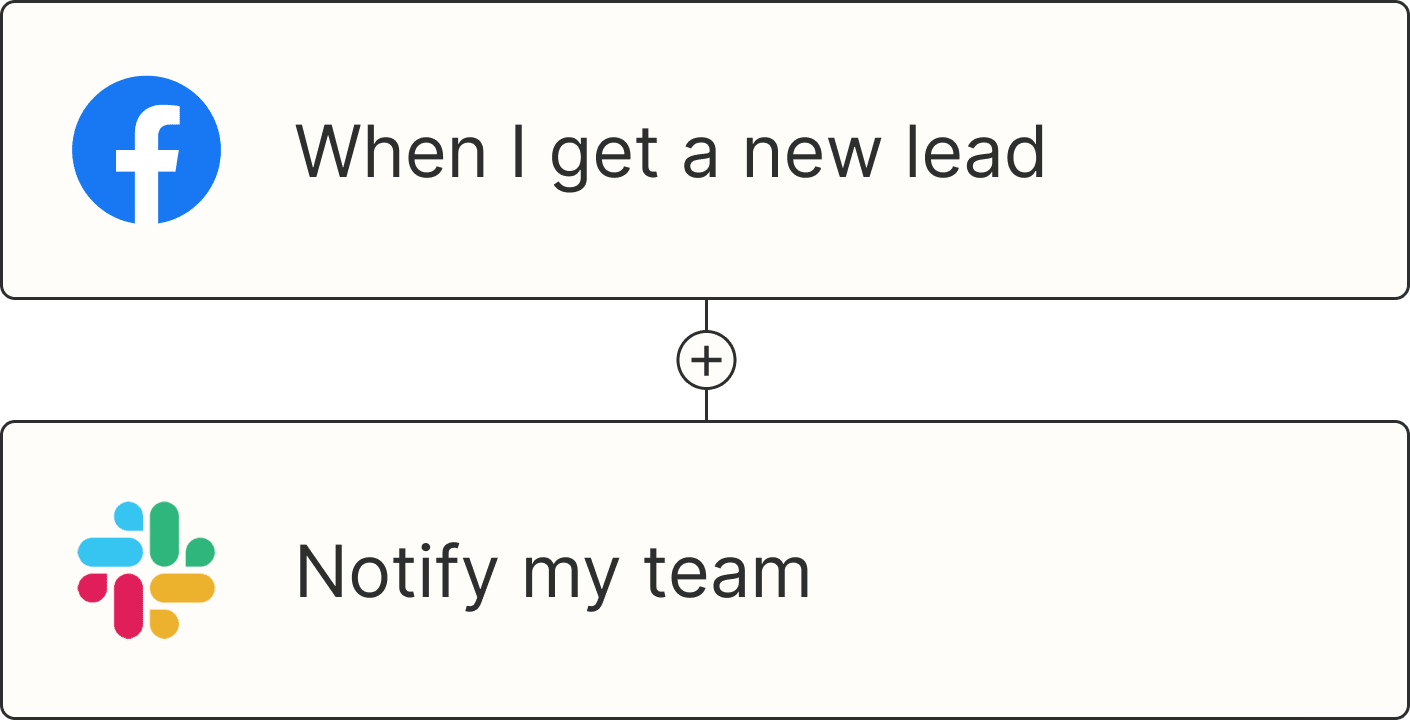
Create Synthflow AI calls for new Facebook Lead Ads leads

Create Synthflow AI calls for new Calendly invitees

Create Synthflow AI phone calls for new Airtable records

Log call outcomes and update your CRM or database
Every completed Synthflow call contains important details about what was said and how the conversation went. But that data is only useful if it ends up somewhere actionable. With Zapier, you can automatically log completed calls to a Google Sheet or an Airtable base. You can even push them directly to your CRM. This way, your team will always have the full picture of conversations without having to dig through Synthflow logs.
You can also layer in an AI step to make your Synthflow call data even more useful. Instead of pasting a raw transcript into your CRM, route it through AI by Zapier first to extract customer objections and interest levels. From there, Zapier can update a contact in HubSpot or create a new lead in Salesforce with informative context. Sales reps will be better prepared for the next call, while managers can easily gain visibility into reliable call logs.
Add completed Synthflow AI phone calls to Google Sheets as rows

Create Airtable records for completed Synthflow AI phone calls
Create or update HubSpot contacts for completed Synthflow AI phone calls

Analyze Synthflow AI call transcripts with AI and update HubSpot contacts

Analyze Synthflow AI call transcripts with AI and create Salesforce leads

Pro tip: Want to store and organize your Synthflow call data without a separate spreadsheet tool? Zapier Tables is a built-in database that comes with all Zapier plans. You can log completed calls directly to a table and use that data to trigger follow-up Zaps—like notifying your team when a call meets certain criteria, or routing high-intent leads to a specific pipeline stage. Learn more in our Zapier Tables feature guide.
Send alerts and follow-ups when calls are complete
With Zapier, you can automatically notify your team the moment a Synthflow call wraps up, whether that's a message in a Slack channel, a post in Microsoft Teams, or an email. No more checking the Synthflow dashboard. Instead, the right people get the information they need as soon as there's something to act on.
For more time-sensitive follow-ups, you can trigger an SMS with Twilio the moment a call ends. This is particularly useful for sending a prospect a link to the next steps or a reminder of what was discussed while the call is still fresh in their mind. Mix and match these notification channels however your team actually operates, and you've got a follow-up system that runs entirely on its own.
Send Slack channel messages for completed Synthflow AI phone calls

Send Microsoft Teams messages for completed Synthflow AI phone calls

Send Gmail emails for completed Synthflow AI phone calls

Send Twilio SMS messages for completed Synthflow AI phone calls

Keep Synthflow assistants up to date
Synthflow is a powerful tool, but it’s only as good as the information it’s working with. If your scripts, product details, pricing, or talking points change, you need a way to keep Synthflow in sync without constantly pushing updates. With Zapier, you can connect the tools where your team manages this content directly to Synthflow, so your assistant reflects the latest version of whatever it’s supposed to say.
The setup is flexible enough to fit how almost any team works. A sales ops team might maintain call scripts in a Google Sheet. You can easily set up a Zap that automatically refreshes the sales Synthflow assistant whenever an update occurs. Similarly, a content team working out of Notion could update a page with revised language for handling objections, and Synthflow would automatically incorporate the change. For teams that draft and version their assistant prompts in Google Docs, the same system applies. Edit the document, and the assistant updates to match the edits.
The broader benefit is that your voice assistant no longer needs to be managed separately from everything else. It becomes just another downstream destination for content your team is already maintaining, which means fewer gaps between what your assistant says and what's actually true.
Update Synthflow AI assistants when Google Sheets rows are updated
Update Synthflow AI assistants when Notion pages are updated

Update Synthflow AI assistants when Google Docs documents are updated

Pro tip: With Zapier Agents, you can build an AI assistant that monitors your content sources and handles Synthflow updates on your behalf. Give it access to your Google Sheets or Notion workspace, and it can detect when scripts or talking points change—then it'll update your Synthflow assistant automatically. Read our feature guide to learn about setting up agents and writing effective instructions.
Build a Synthflow system that runs itself
Synthflow AI is already doing the hard work of handling your calls at scale. This frees up hours that you or your team would otherwise need to spend yourselves.
With these simple Zaps in place, you'll drastically increase the value of your Synthflow system. Jump into the Zap editor to start building today.