In my early twenties, I worked at a severely mismanaged pub that hosted intimate concerts, like NPR Tiny Desk Concerts if the room was dimly-lit and smelly. Whenever a popular act played the pub and reservations sold out, the kitchen got busy, and several servers would abandon their sections to storm the kitchen and start chipping in to assemble their regulars' orders.
It drove me up the wall, partly because I lost out on tips as a new employee who didn't know how their "system" worked, and partly because I knew that clogging the kitchen was definitely not how a functioning restaurant should run.
That illogical, everyone-for-themselves approach is the reality of manual procurement. It slows down your team, invites rogue spending, and generally makes operations a nightmare. The best procurement software streamlines the process for employees to make requests and automates the busywork of chasing down approvals for every single subscription.
I pored over hundreds of user reviews, asked business leaders about their choices, and watched demos until my eyes glazed over to see which solutions actually deliver. Based on all that research and the hands-on experience of folks actually using these tools, here are the best procurement apps to keep your cash flow in check.
The 10 best procurement tools
Precoro for easy setup and P2P automation
Ramp for corporate cards and holistic spend management
Procurify for mid-market budget visibility
Vroozi for mobile-first e-procurement
Rippling Spend for employee-centric spend
Zip for intake-to-procure orchestration
Gatekeeper for vendor and contract lifecycle management
Icertis Contract Intelligence for AI enterprise contract intelligence
Coupa for cloud business spend management
SAP Ariba for global supply chains and supplier networks
What makes the best procurement tool?
If you're already paying for a massive enterprise suite like Workday or NetSuite, you might not need a standalone procurement tool. But if you're looking for something purpose-built, the options are overwhelming. A quick search for procurement software solutions will leave you up to your neck in corporate jargon. To separate the actual workflow-savers from the glorified spreadsheets, I spent time reviewing demos, testimonials, and feedback from real users.
Here's a breakdown of the ranking criteria I used to evaluate the best procurement tools:
Easy intake: Submitting a purchasing request needs to be incredibly easy. I looked for tools with user-friendly interfaces that encourage adoption so you don't have to waste time training people to use them.
Expansive workflow automation and visibility: Customizable approval routing lets you add or remove manual oversight from the process. I prioritized tools that can automate the busywork and give you clear visibility into where requests are sitting.
Streamlined vendor and contract management: Procurement is about managing relationships just as much as it is about the actual purchasing process. These platforms needed to handle vendor onboarding and contract storage smoothly.
Robust integration ecosystem: A tool that isolates your spend data from your accounting software is basically useless. Strong integrations were a non-negotiable.
Proactive budget control and payment functionality: I looked for tools that go beyond routing approvals to actually facilitate the spend. Does the platform offer virtual corporate cards, enforce budget limits before a purchase happens, and handle the actual payment to the vendor?
Actionable spend intelligence and reporting: Procurement's all about optimizing how money is spent. I checked whether these apps offer real-time visibility into company cash flow and AI-driven anomaly detection, like catching duplicate invoices.
I spoke with people who actually manage massive budgets to understand what happens when these procurement systems fail. Rowena Tulacz, President of R. Construction Solutions, manages procurement for commercial projects up to $500 million, and she quantified the danger of doing this stuff manually:
"When we didn't have structured software, we had multiple instances of emergency purchases that bypassed approval processes, leading to 15%–20% cost overruns," Rowena told me. "Proper procurement controls helped us reduce these emergency purchases by 80%, so we can now predict our costs within 3% accuracy."
You might not be building $500 million skyscrapers, but your budget still deserves that kind of pinpoint predictability. Here's a quick look at the tools that can stop budget overruns and give you the predictability you need.
The best procurement software at a glance
Tool | Best for | Standout feature |
|---|---|---|
Easy setup and P2P automation | Multi-level customizable approval routing | |
Corporate cards and holistic spend management | AI-powered automated receipt matching | |
Mid-market budget visibility | Real-time budget tracking against actuals | |
Mobile-first e-procurement | Consumer-like B2B mobile shopping catalogs | |
Employee-centric spend | HRIS-synced, role-based spend limits | |
Intake-to-procure orchestration | No-code cross-departmental intake orchestration | |
Vendor and contract lifecycle management | Kanban-style vendor onboarding workflows | |
AI enterprise contract intelligence | AI-driven contract risk scoring and metadata extraction | |
Cloud business spend management | AI spend benchmarking across a global user community | |
Global supply chains and supplier networks | Global B2B supplier Ariba Network |
Best procurement software for easy setup and P2P automation
Precoro (Web, iOS, Android)

Precoro pros:
Easy to implement compared to bulky legacy software
Customizable approval routing that adapts to your team's specific structure
Precoro cons:
Some advanced reporting requires exporting data to manipulate it
Deep ERP integrations can take a little extra effort to map correctly
Implementing new software usually means dragging your team kicking and screaming into a training seminar. Precoro is genuinely easy to set up and use, so you can let go of the fear of telling your team the need to spend time learning yet another tool. It handles the entire procure-to-pay (P2P) lifecycle without overdoing the menus or the setup complexity.
When your team needs to buy something, they just submit a request, and Precoro handles automated approvals based on the multi-level rules you've already defined.
The core features cover all the procurement basics, like handling invoices and keeping your vendor details organized. It also handles three-way matching and cross-checking purchase orders to eliminate overpayment. Plus, it offers native integrations with tools you probably already use, like QuickBooks Online, Xero, and Slack.
If you need an intuitive upgrade from manual spreadsheets and want more automated invoicing and procurement features, Precoro gets you up and running faster than almost any other tool I saw.
Precoro pricing: From $499/month (billed annually) for the Core plan with procurement basics like invoices and automated approvals, spend and vendor management, and integrations with QuickBooks Online, Xero, and Slack.
Best procurement software for corporate cards and holistic spend management
Ramp (Web, iOS, Android)

Ramp pros:
Virtual and physical corporate cards with built-in, un-bypassable spend limits
AI-powered receipt matching
Ramp cons:
You have to use their cards to get the full value of the platform
Focuses heavily on expense management rather than supply chain procurement
Corporate cards are great right up until someone buys an espresso machine for the break room without asking first. Ramp has a holistic approach to spend management that combines a corporate card with the software that polices it.
Ramp enforces budget limits before a transaction even happens. It embeds spend controls into the physical and virtual cards so that the rules run pre-authorization. And you can set up highly specific guardrails—like per-employee limits, merchant categories, department-level ceilings, or time-based budgets—and if employees try to exceed them, the card simply declines.
The AI-driven features are great, particularly automated receipt matching, which searches employees' inboxes for receipts and matches them to the exact card swipe. If you step up to a paid tier, you start to unlock serious muscle: things like AI-driven expense reviews, automated policy insights, and advanced intake and approval workflows. Ramp even offers automated purchase order (PO) creation to streamline the whole purchasing loop.
When I started putting feelers out to find the best procurement apps, more experts reached out to me to sing Ramp's praises than any other tool on this list. It's totally anecdotal evidence, sure, but it definitely says something about how passionate their user base is.
Eric Turney, Owner of The Monterey Company, told me why Ramp's pre-approval model is so critical: "In a growing business, rogue spend usually doesn't start as anything dramatic. It starts with small subscriptions, one-off purchases that nobody reviews. But Ramp has card controls that keep spending tied to actual business needs and limits."
Ramp pricing: Free plan available; from $15/user/month for the Plus plan with AI-driven expense reviews and policy insights, advanced intake and approval workflows, automated PO creation, and more.
Best procurement software for mid-market budget visibility
Procurify (Web, iOS, Android)

Procurify pros:
Real-time budget tracking that compares requests against actuals
Clean, consumer-grade shopping interface for employees
Procurify cons:
Might lack the ultra-niche modularity required by global enterprises
Some users report a learning curve when managing complex vendor punch-outs
So your team blew the budget three weeks after the money's already gone. Wish I couldn't relate, but Procurify is a procurement tool that puts budget visibility at the center to ease anxiety about what your teams can and can't spend.
When I heard from Mike Rolfe, the VP of Product at Outbuild, he told me this exact blind spot used to be a huge headache for his team.
"Before Procurify, we had situations where department leads didn't have a clear picture of committed spend until invoices started arriving, which created budgeting surprises," he said. "Once we centralized requests and tied them into our accounting workflows, we finally had visibility into planned versus actual spend in real time."
As soon as a team member submits a purchase request, the approver sees exactly how that specific request impacts the remaining budget in real time.
Procurify's interface is also heavily focused on creating a frictionless experience for employees, mimicking the feel of a standard online shopping cart, so there's no confusion about how to ask for a new laptop or a software license.
Procurify pricing: Contact Procurify
Best procurement software for mobile-first e-procurement
Vroozi (Web, iOS, Android)

Vroozi pros:
Streamlined mobile interface for on-the-go approvals
Provides a consumer-like B2B mobile shopping experience
Vroozi cons:
Not designed for complex, deep-tier manufacturing supply chains
Interface aesthetics can feel a little plain compared to startup SaaS
It feels like punishment to force a generation of workers who do 90% of their personal admin on a smartphone to log in to a clunky desktop portal to order office supplies. Vroozi embraces that reality for field-based teams with a mobile-first e-procurement approach.
Vroozi lets your team browse consumer-like B2B shopping catalogs from their phones so they can find what they need, submit a request, and get back to work, whether they're on a train or waiting for a meeting to start.
Behind that glossy, Amazon-like storefront is a robust procurement engine that integrates with ERPs like Oracle and SAP, so spend data captured on a mobile device syncs with your back-office ledger. And approvers also get a frictionless mobile experience to help trim bottlenecks. It's fast, agile, and effective at keeping purchasing out of the mud.
Vroozi pricing: Contact Vroozi
Best procurement software for employee-centric spend
Rippling Spend (Web, iOS, Android)

Rippling Spend pros:
Syncs with your HRIS data for organizational control
Role-based spend limits automatically update when someone is promoted or moves teams
Rippling Spend cons:
Makes the most sense if you've already bought into the broader Rippling ecosystem
Primarily focused on internal team spend rather than external supply chain logistics
Tying your procurement management software directly to your HR software might sound a bit intense, but think about it: Rippling Spend uses your company's existing data to automate how spend policies are enforced. Meaning if you keep tidy employee records, adopting this procurement solution is fairly effortless.
When I heard from Teresa Tran, COO at LaGrande Marketing, she explained exactly why this HR-to-operations pipeline works well when you're scaling fast: "Every time a new hire started, someone on our senior staff had to manually set up every system for each person before they could start working. It was a huge time sink. Once we set up triggers with Rippling, all that manual work went away, and our team started getting back hours every month."
Because it's HRIS-synced, Ripping Spend knows exactly who everyone is, who their manager is, and what department they belong to. Role-based spend limits are automatically applied without requiring IT to configure anything manually. If someone gets promoted from a junior designer to an art director, their purchasing power and approval capabilities shift to align with their new title, keeping everything perfectly aligned with your actual org chart.
Rippling Spend pricing: Contact Rippling
Best procurement software for intake-to-procure orchestration
Zip (Web)
Zip pros:
No-code orchestration that connects cross-departmental workflows
Provides a single, clear front door for any employee to make a purchase request
Zip cons:
Might be overkill for small teams with simple purchasing needs
Setting up the initial cross-departmental logic requires up-front planning
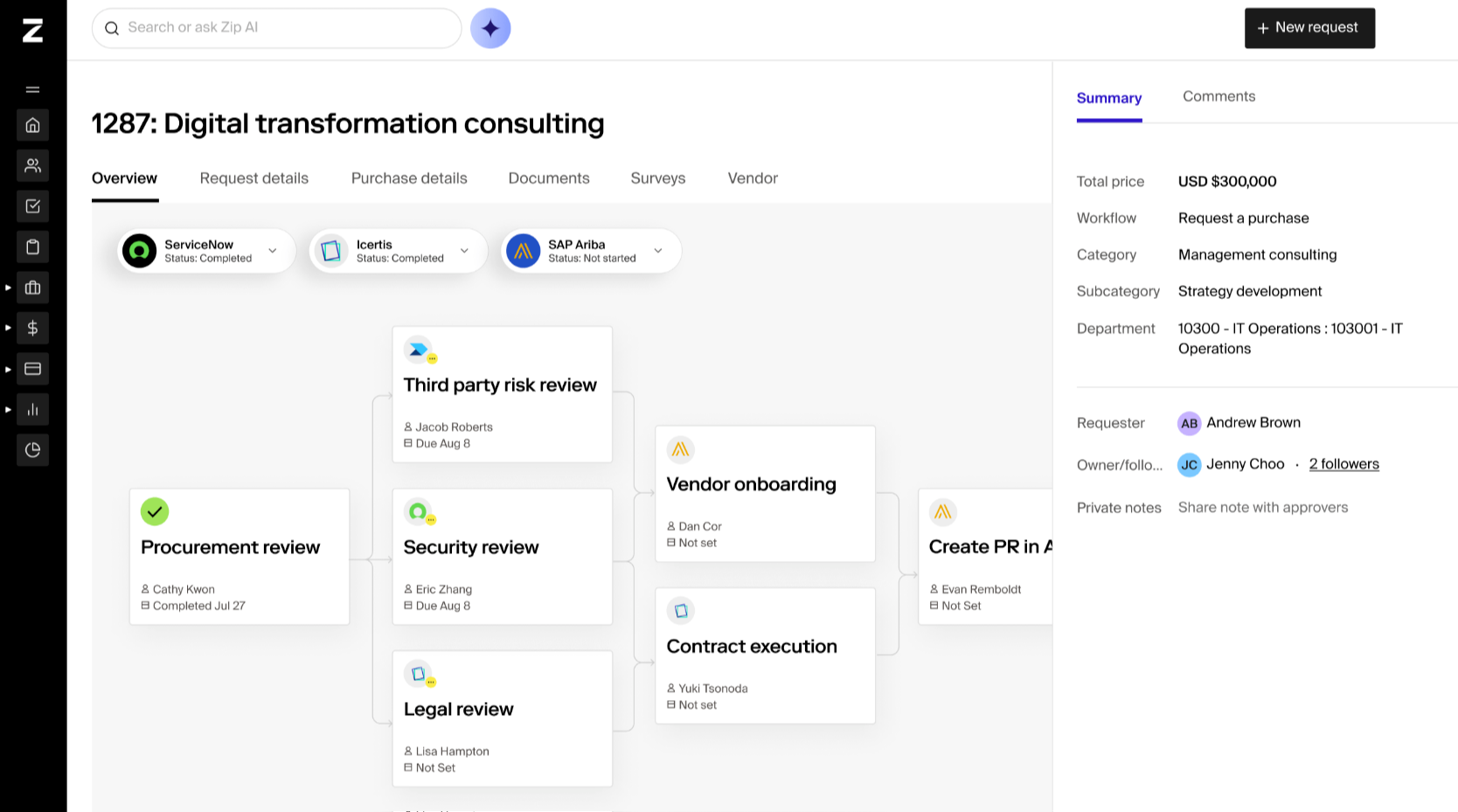
The biggest problem with procurement is often the chaotic process of obtaining permissions from multiple departments. Legal needs to review the contract, IT needs to check security compliance, and finance needs to approve the budget. Zip orchestrates the entire intake-to-procure mess pretty seamlessly.
Zip has a single, unified interface, a front door where an employee can ask for what they need. From there, Zip uses no-code logic to automatically route the request to every relevant stakeholder across the company simultaneously.
I heard from Bogdan Condurache, the CPO and co-Founder of Brizy, and he explained why this unified intake matters so much: "A lot of procurement systems are designed for finance departments first and everyone else second. Zip felt different because product managers, marketers, and team leads actually used it correctly without needing constant training."
It's a transparent workflow that stops any confusion about who needs to sign off on what, and more importantly, is easy for the non-finance folks to actually use.
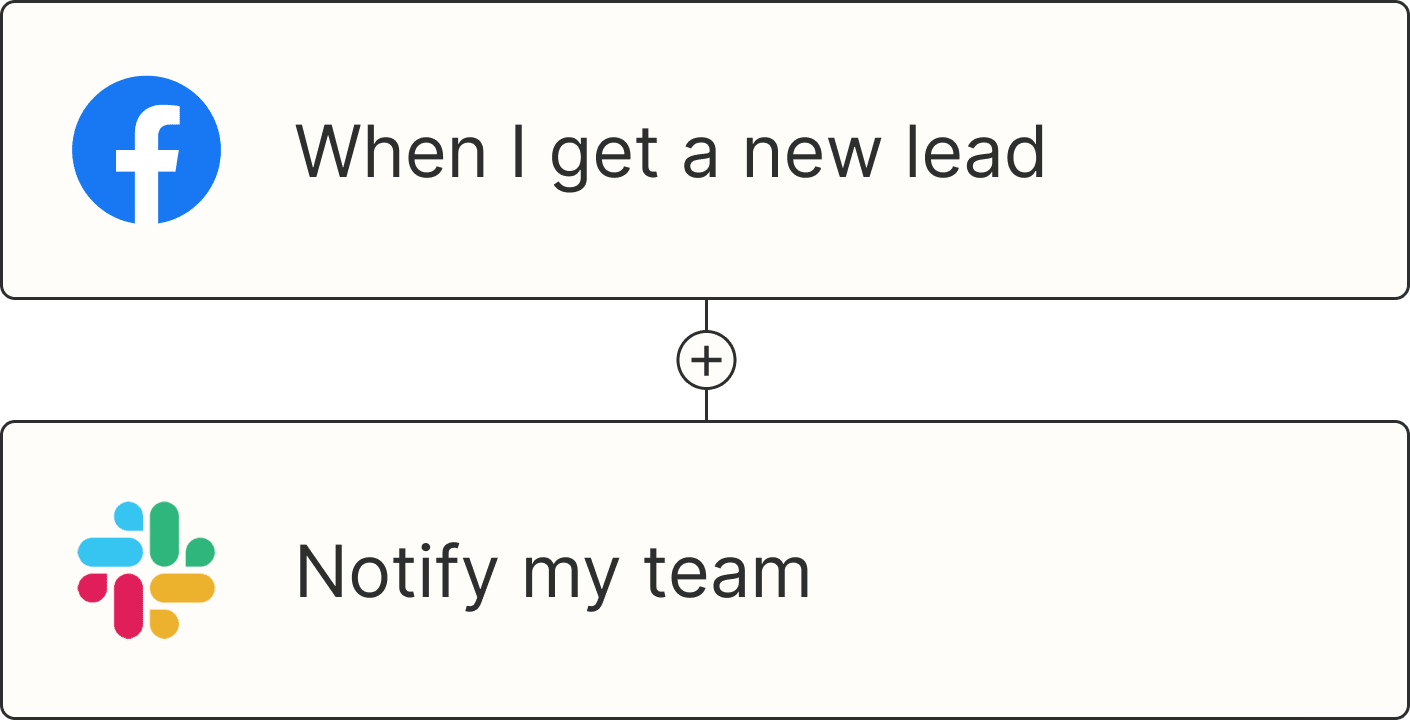
Also, Zip connects with Zapier, so you can rope it into the rest of your toolstack without any code. You can set up workflows to automatically notify a Slack or Teams channel the moment a purchase request status changes, or to log completed requests to a spreadsheet for spend reporting. It's an easy way to keep finance, IT, and operations in sync across the tools they already live in without anyone having to babysit Zip for updates.
Zip pricing: Contact Zip
Best procurement software for vendor and contract lifecycle management
Gatekeeper (Web)
Gatekeeper pros:
Visual Kanban-style workflows for managing vendor onboarding
Useful repository for keeping track of contract renewals and obligations
Gatekeeper cons:
Focused on the contract and vendor relationship rather than day-to-day employee purchasing
Can be complex to configure if your vendor compliance needs are unique
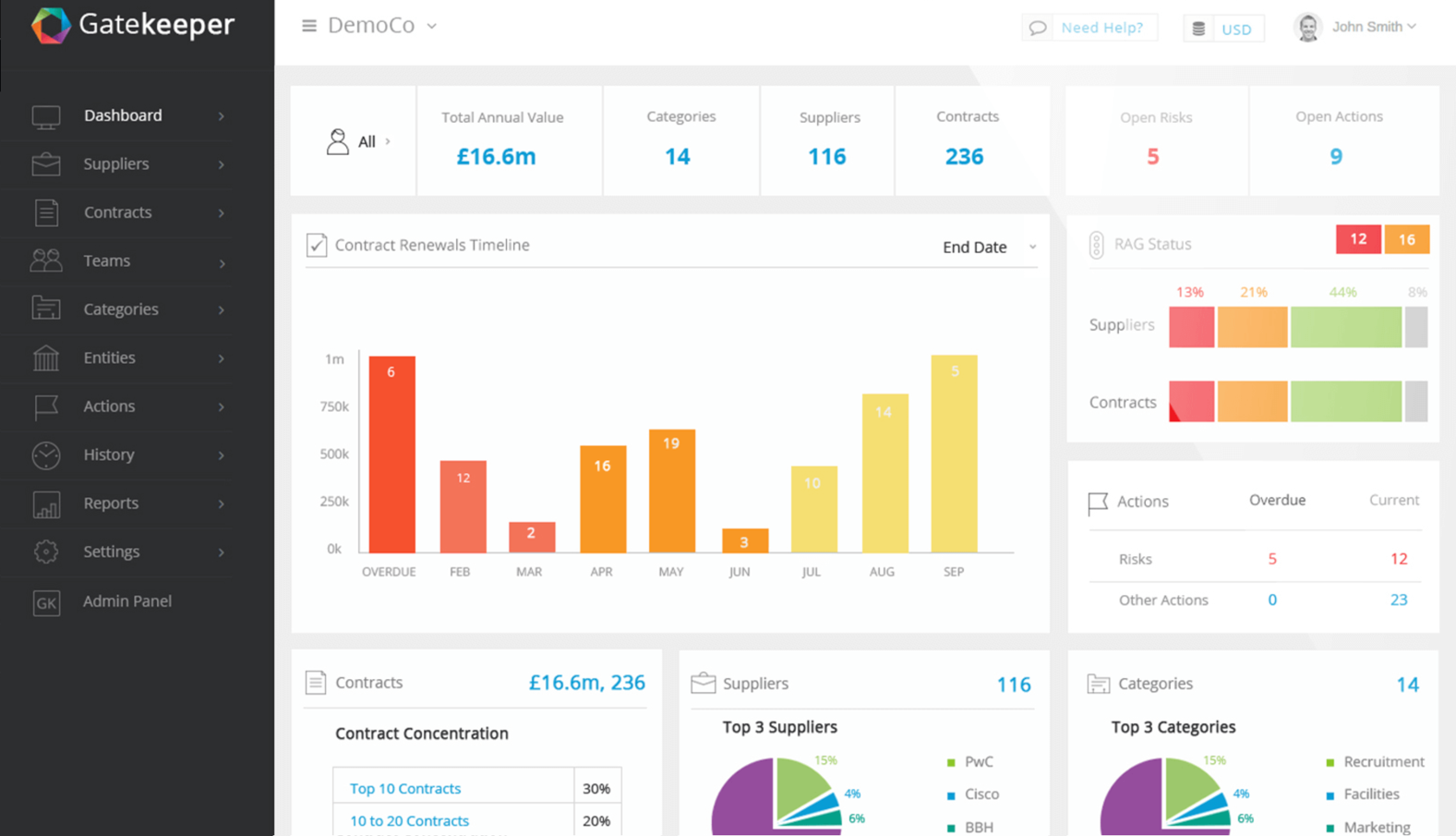
You'd think most vendor contracts were ancient artifacts, long lost to the passage of time, rather than critical, precedent-setting documents. Gatekeeper fixes this by treating vendor and contract lifecycle management as an active, ongoing process.
Gatekeeper is a standout primarily because of its Kanban-style vendor onboarding workflows. It gives you a highly visual, drag-and-drop board to see exactly where a new supplier is in the vetting process. This workflow forces compliance and requires all necessary documentation and signatures before any money swaps hands.
It also centralizes the actual contract execution with built-in eSignature capabilities and touchless contract generation. You can create compliant NDAs and MSAs automatically from approved templates, and the Vendor Portal lets suppliers upload their own compliance documents and update insurance certificates. It nixes the administrative burden from both your plates.
Gatekeeper is a great option to keep relationships organized if your business relies heavily on external contractors or a web of SaaS tools. And to top it off, you can connect Gatekeeper to Zapier. Triggers fire when a contract's approval status changes, when a supplier goes live, or when a contract is archived, so you can kick off downstream actions automatically in thousands of other apps.
Gatekeeper pricing: Contact Gatekeeper
Best procurement software for AI enterprise contract intelligence
Icertis Contract Intelligence (Web)
Icertis Contract Intelligence pros:
AI capabilities for extracting metadata from massive contract databases
Proactive AI-driven scoring to identify problematic legal clauses
Icertis Contract Intelligence cons:
Distinctly an enterprise-level tool that's overkill for SMBs
Implementation requires significant time and dedicated resources to train the models
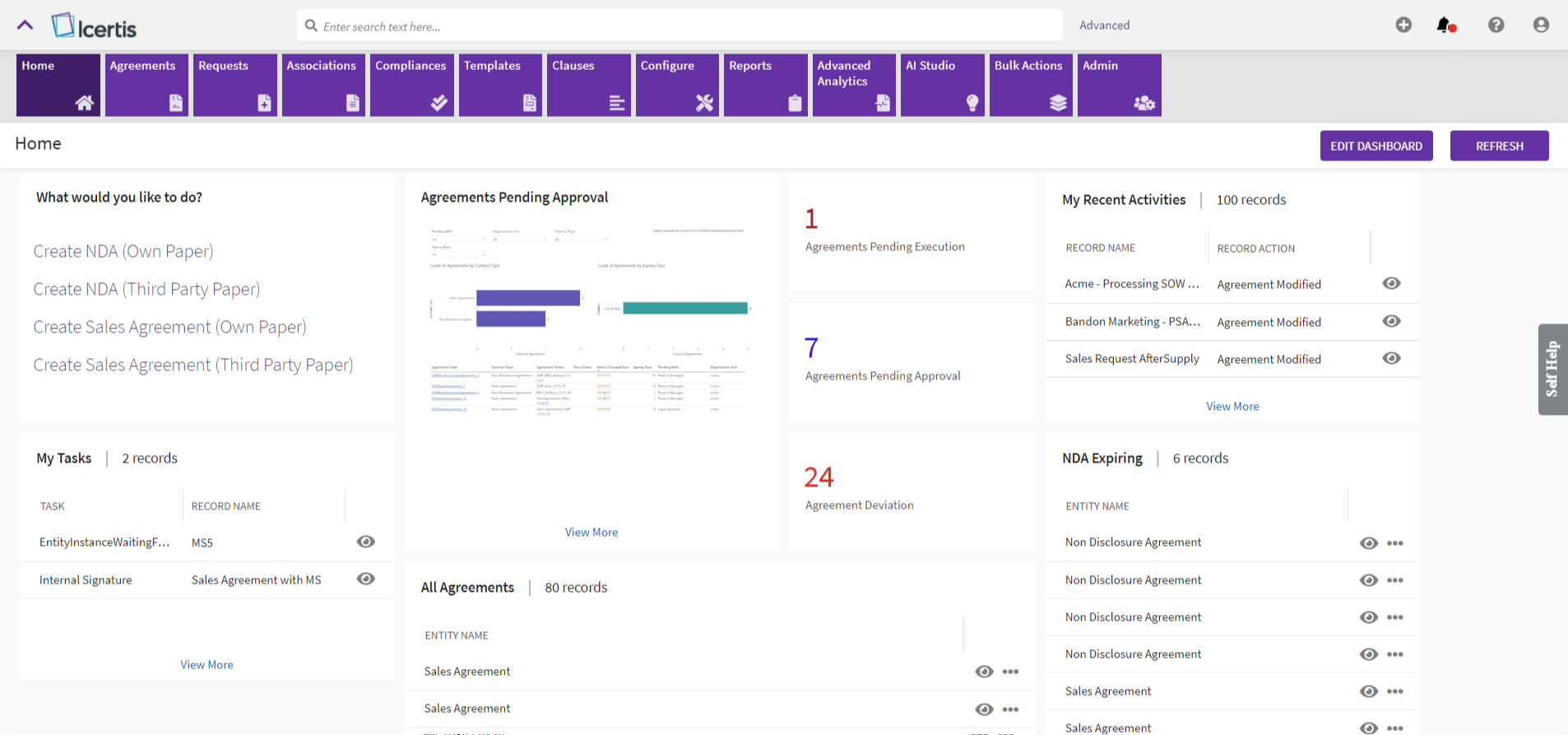
Huge supplier agreements are a job for a machine when you're in global enterprise procurement. Icertis Contract Intelligence turns static legal documents into strategic data assets using AI.
The platform uses AI-driven metadata extraction to pull key terms, obligations, and dates from your contracts. More impressively, it applies AI-driven contact risk scoring to flag potentially dangerous clauses before you sign them.
Icertis Contract Intelligence also excels at post-signature obligation management. It monitors and connects metrics to payment systems, like service-level agreement (SLA) performance. That way, you never pay full price if a vendor fails to deliver on their promised terms.
It's not a tool for buying office snacks, for sure. It's a deep, powerful system designed to protect large organizations from the hidden risks buried in their own supply chain agreements.
Icertis Contract Intelligence pricing: Contact Icertis
Best procurement software for cloud business spend management
Coupa (Web, iOS, Android)
Coupa pros:
Comprehensive platform covering everything from sourcing to supply chain design
Uses anonymized data from a massive global community for AI spend benchmarking
Coupa cons:
Premium pricing that reflects its enterprise status
Can be overwhelming to navigate due to the sheer volume of available modules
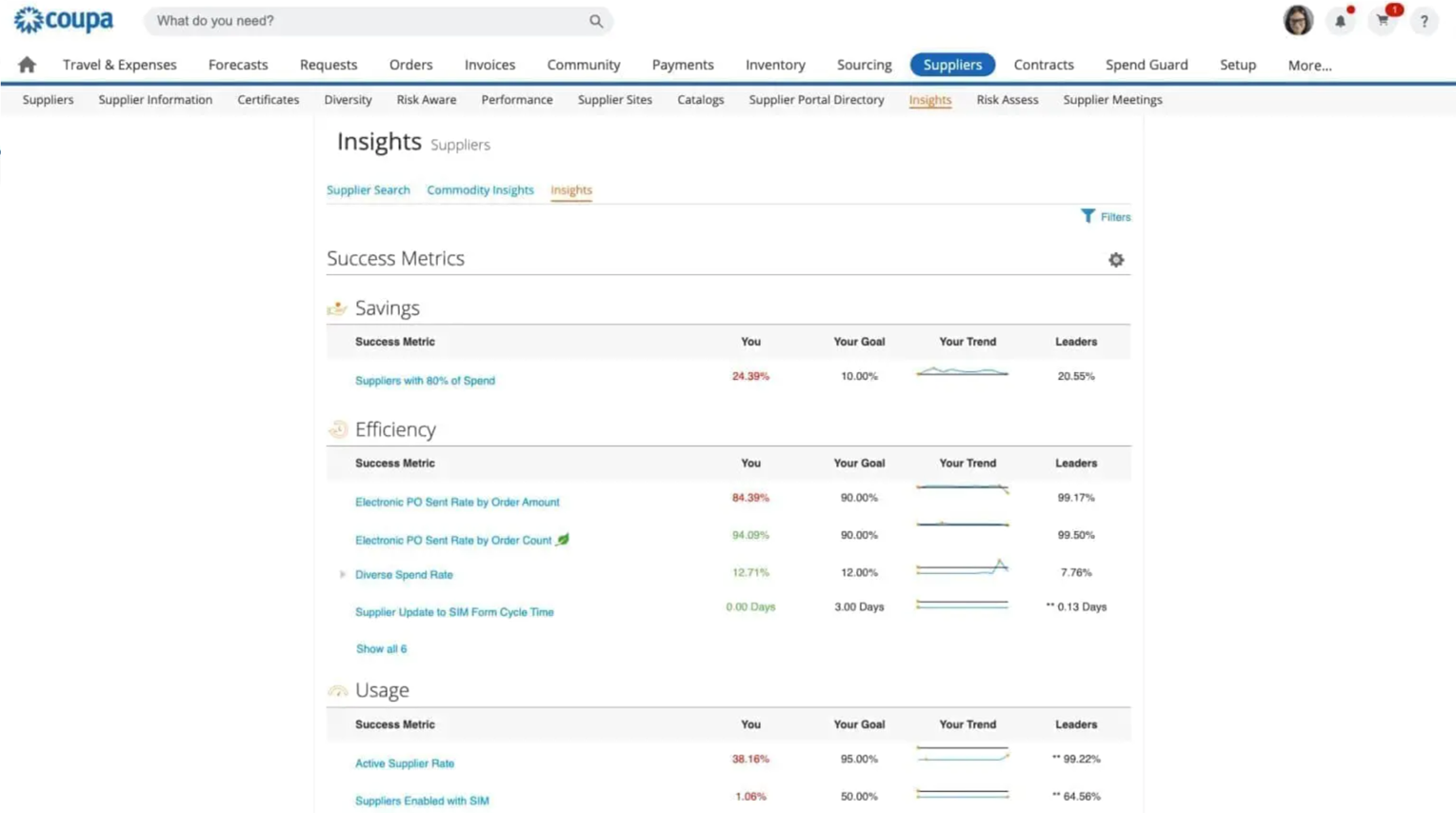
If your company is the size where spend is a strategic initiative rather than just paying the bills, Coupa is the platform you graduate to.
What makes Coupa uniquely powerful is its AI spend benchmarking, which leverages the anonymized purchasing data of its massive global user community. The software can tell you if you're overpaying for a specific commodity or service compared to what everyone else is paying. And it handles everything from the initial sourcing event through to complex treasury management.
The biggest hurdle with an enterprise platform is usually getting people to use it. And rolling out an extensive tool like Coupa isn't exactly a weekend project. Tom Bukevicius, CEO of Scube Marketing, explained to me why the human element is just as important as the tech when moving to a tool like this.
"We discovered we were paying for overlapping tools that different teams had purchased independently over time, which honestly happens more often than most companies admit," Tom told me. "My advice for companies moving to an enterprise procurement system is to spend more time on internal adoption…with Coupa, once our teams saw that approvals became faster and budgeting became more predictable, adoption improved dramatically."
Coupa gives large organizations total visibility over every dollar going out the door.
Coupa pricing: Contact Coupa for pricing
Best procurement software for global supply chains and supplier networks
SAP Ariba (Web)
SAP Ariba pros:
Connects you to the massive Ariba Network of millions of global B2B suppliers
Deeply integrated into the broader SAP enterprise ecosystem
SAP Ariba cons:
Notoriously steep learning curve and a somewhat rigid, clinical user interface
Implementation is a major operational undertaking
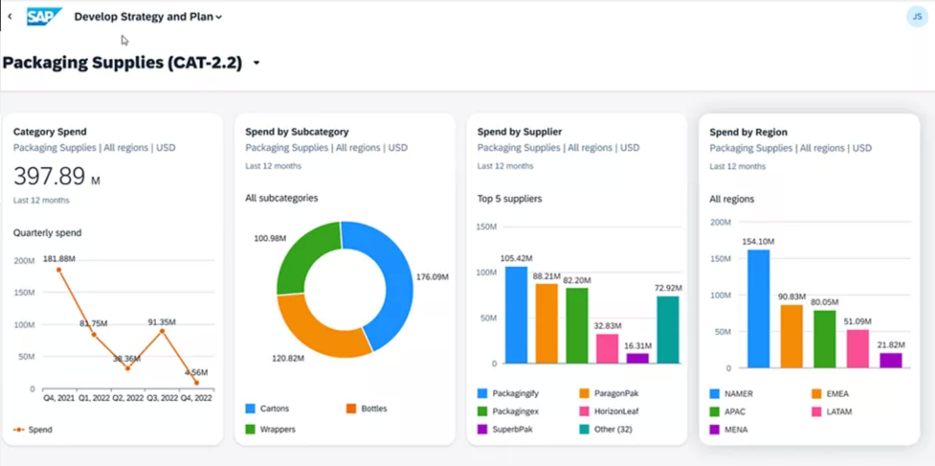
When you're talking about direct procurement for global manufacturing—like sourcing raw steel from multiple continents—you're talking about SAP Ariba. It's built specifically for complex global supply chains and navigating massive supplier networks.
The B2B supplier Ariba Network is a vast digital marketplace where millions of buyers and suppliers connect, negotiate, and transact securely. It handles the heavy lifting of enterprise sourcing and complex financial supply chain logistics.
Matthew Kinneman, Founder and CEO of Bully Max, admitted to me that getting their accounting integration up and running was messy, but shared a piece of advice for getting through it: "Don't try to customize everything [with SAP Ariba] from day one," he told me. "We spent way too much time in the beginning trying to make Ariba fit our processes instead of adapting our workflow to leverage what the platform does best."
If you can endure the initial setup and learn to play by Ariba's rules, it's a great tool for standardizing the buying processes of the world's largest companies and those with complex supply chains.
SAP Ariba pricing: Contact SAP for exact pricing; SAP Strategic Procurement from $2,420/user/month with a minimum contract duration of three months
Scale your spend control with Zapier
Procurement software works best when it actually talks to the rest of the tools you use every day, just like wait staff works best when they communicate, don't skip steps, and don't mess up the kitchen's (or each other's) flow.
Zapier lets you connect your procurement software to the rest of your tech stack, so you can build secure, automated workflows to power your business. And you can even access all your procurement data and take action securely from your AI tools.
Related reading: