Last week, I had to return some workout clothes to a company that I've decided to redact, as I don't want to get sued. I started on the app but gave up halfway through as I was being led on a virtual goose chase. I then called the support line and had to explain the whole thing again to a very nice person who had no idea I'd ever opened the app. To add insult to injury, I got an email a few hours later asking me to rate the app experience. Three touchpoints, minimal memory, and one frazzled (to put it lightly) customer.
What I just described to you was an omnichannel customer experience, albeit a very poor one. To keep your consumers happy—and to avoid them cursing your name to the heavens (and to all their social followers) on a Tuesday night—you need to weave together all of your mediums and touchpoints and deliver one connected and outstanding experience.
Here, I'll dig deeper into what an exemplary omnichannel experience looks like and how you can deliver it time and again to your customers.
Table of contents
Omnichannel customer experience definition
An omnichannel customer experience connects every interaction a customer has with your brand, no matter which channel it happens on. For example:
A conversation with a customer-facing chatbot or AI agent
A DM with a rep on social media
An email with a salesperson
A support question sent over WhatsApp
A form submission for a gated whitepaper
With an omnichannel experience, context travels with the customer, so their history, preferences, and open questions follow them from one touchpoint to the next—and they never have to repeat themselves. In practice, that means the agent who picks up the phone can instantly get up to speed on the customer's prior emails, AI agent chats, and support tickets.
Customer experience vs. customer service vs. customer support
These three terms get used interchangeably, but they describe different scopes:
Customer experience (CX) covers every interaction someone has with your brand. This is a broad discipline that can include support chats, social media interactions, and even a third-party review they read before ever contacting you.
Customer service is narrower, referring to the overall impression a customer forms by directly interacting with your brand, from pre-purchase research to post-purchase follow-up.
Customer support is a reactive approach within customer service. These are the troubleshooting, question-answering, and complaint-handling activities that kick in when the alarm bells start ringing.
The practical difference for an omnichannel strategy is reach. Omnichannel customer service focuses on connecting the channels a company directly controls, while an omnichannel customer experience aims to make every interaction—even the indirect ones—feel like part of the same coherent whole.
The verbiage is important because a company can have excellent customer support, yet deliver a putrid customer experience if those support interactions don't connect to the other channels the customer engages with.
What is the difference between omnichannel and multichannel?

The short version: multichannel means you're present on a lot of channels, and omnichannel means those channels actually talk to each other.
In a multichannel setup, a business offers customers several independent ways to engage, such as email, social media, a phone line, and a storefront. The key difference is that each one tends to operate in its own silo. The customer can reach you in plenty of places; they just can't carry anything with them when they move between channels.
Omnichannel integrates the same set of channels, so connections between departments and tools are always live. Your marketing, sales, and service data are linked—the same principle that drives omnichannel marketing—which means a conversation can start in one channel and continue in another without the customer losing context or repeating themselves.
To drive it home just a bit further: in an omnichannel interaction, a customer could reply to a marketing email with a question, a support agent picks it up and answers, and later the same customer continues the thread over WhatsApp, with the full history intact the whole way through. In a multichannel world, that WhatsApp message would float in like Wilson in Cast Away, devoid of any context.
Benefits of an omnichannel customer experience
You shouldn't treat omnichannel as something you slot on your spring cleaning list next to "empty the trash bins" and "call someone about the bat in the ceiling." If you aren't currently running it, it deserves your immediate attention. Here's why:
Improved customer satisfaction. The most common source of frustration in customer interactions is being asked to repeat yourself (I can tell you first-hand, and I'm guessing you can too), and connected channels remove that friction. When context follows the customer from one touchpoint to the next, they stop re-explaining themselves every time they switch lanes, keeping satisfaction high.
Increased revenue. Customers reward continuity with their wallets. 70% of consumers will spend more with companies that offer connected, conversational experiences, according to Zendesk. When switching channels doesn't force people to start over, they're more willing to keep buying, so retention and revenue both move in the right direction.
Boosted employee efficiency. When customer context lives in one place, your team stops digging through five apps to piece together who they're talking to. That reclaimed time is real: automating the handoffs between tools is one of the highest-value moves a team can make.
Refined decision-making. Every connected channel is also a data source. Pull those sources together, and you can see patterns you'd never spot in isolation, like which touchpoints cause most of your customers to bounce, or which questions come up again and again.
Common omnichannel customer experience technologies
No single tool delivers an omnichannel experience on its own. It comes from a stack of systems working together, each handling a piece of the customer journey and, ideally, passing information to the others. The mistake teams make is buying a lot of capable tools and never connecting them—which is how you end up multichannel by accident, wondering why five apps you pay good money for still can't agree on who the customer is.
Here are the categories that tend to make up an omnichannel stack:
Integration platforms. An integration platform connects your entire tech stack, allowing you to build workflow automations and sync information between tools and teams. This helps your CRM, marketing software, customer service app, and the rest of your tools talk to each other, so customer information is always available to the teammates who need it most. Zapier is an AI orchestration platform that can help you build end-to-end, AI-powered automations across 9,000+ apps. It handles the repetitive, always-on work that keeps channels connected, such as routing inquiries, drafting first responses, summarizing tickets, and moving data between systems the moment something changes.
CRMs. Your customer relationship management system is usually the central record of who each customer is and what they've done, making it the anchor that most other tools reference.
Marketing automation software. This powers the outbound side of the journey, enrolling customers in the right email or SMS sequences based on their behavior and keeping messaging consistent across campaigns.
Analytics and reporting tools. These turn the activity happening across channels into a picture you can act on, surfacing friction points, at-risk accounts, and trends worth chasing.
Customer service software. Help desks and ticketing platforms give agents a single view of a customer's history, so they can resolve issues with full context rather than starting from scratch.
How to create an omnichannel customer experience
When doing a puzzle, some people like to dump all the pieces out and get to work, while others like to meticulously categorize them by color before digging in. (I'm a sane person, so I do a rough categorization and start with the edges first.) You should take cues from the latter in your journey; building an omnichannel experience happens in stages: you connect the pieces you already have in the right order, instead of launching everything at once.
1. Understand your audience
Before you connect anything, you need to know everything about your customers: who they are, where they interact, and what type of dog they had in middle school. Customer journey mapping is the ideal place to start; it lays out every step your consumers take, from the first website visit to the final purchase or support resolution. It also highlights the channels they use, and any friction they hit at each stage.
If you want some extra credit, you could layer a journey analysis on top of that. This is an even deeper look that shows where people stall or drop off, helping you decide which friction points to prioritize.
2. Unify brand information
Once you know the journey, make sure the information a customer encounters is consistent everywhere. Pricing, product details, policies, and tone should always be the same whether someone reads them on your website, hears them from a support agent, sees them in an email, or overhears some gossip in their local coffee shop.
Inconsistency can make an experience feel disjointed (even if it's not) because the customer notices immediately when the app says one thing and the phone rep says another.
3. Integrate your tech stack
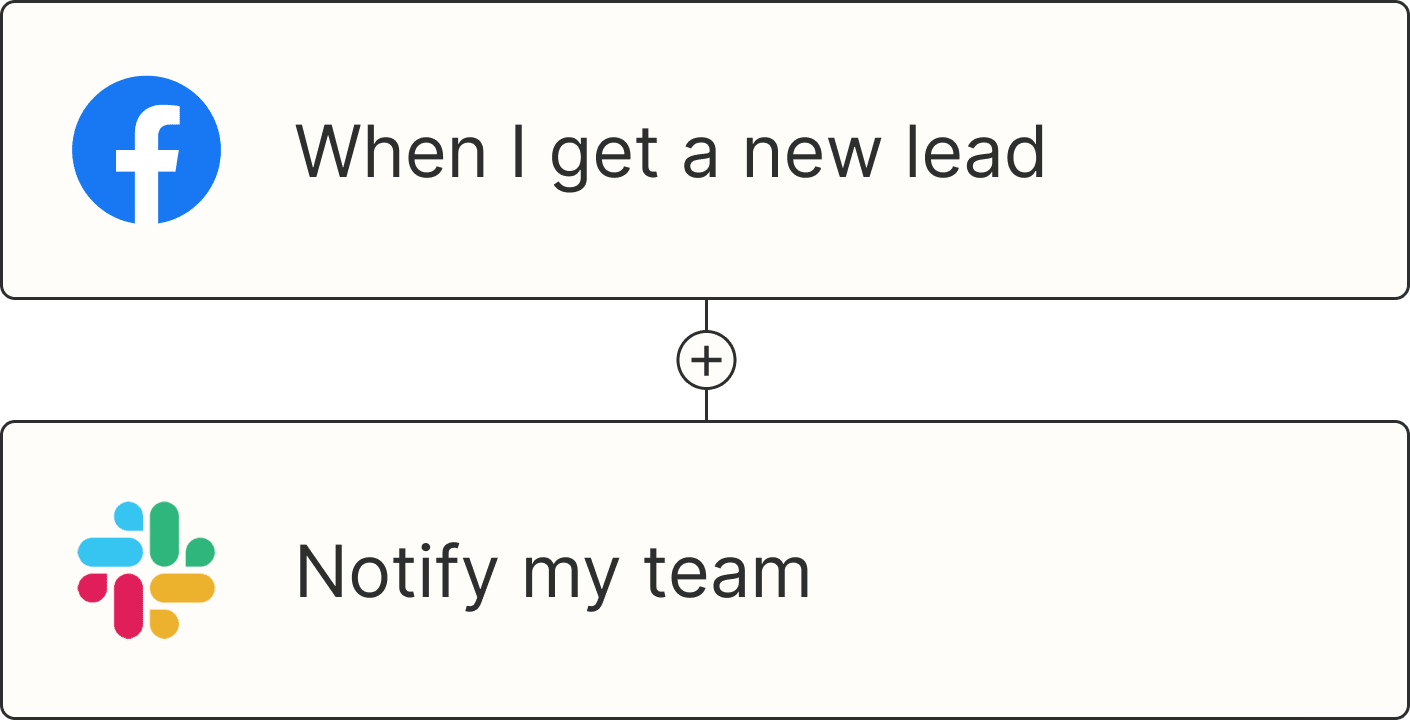
This is the step that turns multichannel into omnichannel. Your tools need to share information with each other so that an action in one system updates the others without anyone manually transferring data (in other words, a workflow automation). So, for example, when you get a new lead from a web form, it can land in your CRM, trigger a follow-up, and notify the right rep, all automatically.
Zapier can help you do all of this and more. Its integrations connect your CRM, marketing tools, help desk, and the rest of your stack so an action in one automatically updates the others; no manual data transfer required. When your systems share a live view of the customer, context can finally follow that customer from channel to channel instead of getting stranded in whichever tool it started in.
4. Test and refine your processes
An omnichannel experience is never finished, so treat it like something you tune. Decide on some KPIs that reflect a connected experience and track them consistently over time—you could start with first-response time, resolution rate, CSAT, and cross-channel drop-off. Watching those metrics move tells you which connections are paying off and which parts of the journey still need refinements.
Examples of omnichannel customer experiences
The clearest way to see this in practice is to look at teams that connected their channels and tools with automation. Here are Zapier customers who turned scattered touchpoints into a more coherent customer experience.
Smith.ai
Smith.ai runs a high-volume virtual receptionist service, fielding calls and chats on behalf of its client businesses across industries. This means the customer experience it delivers must remain consistent across every conversation and channel.
The team built its operations on ClickUp and more than 1,000 Zaps, using Code by Zapier to scan call transcripts for warning signs like long silences and flag them for coaching, so quality issues get caught rather than slipping by. Just as important is the feedback loop: every call summary goes out with a satisfaction survey, and any red or yellow rating routes instantly to the right manager in Slack for same-day follow-up. One quality-analysis Zap alone reviews 5,000 calls a week and saves an estimated 250 hours of manual review, letting the team fix problems before a customer has to ask twice.
Toyota of Orlando and Clermont
These two high-volume dealerships take in more than 200 leads a day from a scatter of sources, all in inconsistent formats, which made routing them a slow and error-prone job, especially after a ransomware attack knocked their CRM offline for a month. Director of Operations Spencer Siviglia built a 38-step Zap that uses AI to extract, clean, and route leads from every source into Zapier Tables, then synced that data to a real-time dashboard the team still uses.
The system now handles 4,000 to 5,000 leads a month and stores more than 30,000 clean records with no manual entry, and the automation strategy that started with lead routing now spans sales, service, and marketing, saving the team 20+ hours a week. Pulling every channel into one clean source of truth is what lets a 500-person operation respond to customers consistently, no matter where they came in.
Build a better omnichannel customer experience with Zapier
An omnichannel customer experience requires your channels, teams, and data to work from the same page so customers never have to start over. Zapier can help you create these connections via AI-powered workflow automations—all without writing a single line of code.
Zapier MCP takes that one step further. Securely connect an AI tool like Claude or ChatGPT to your apps, and anyone in a customer-facing role can ask about a customer and instantly pull up every touchpoint they've had across your whole stack without digging through five apps or waiting on another team.
And because that access runs through Zapier, it stays governed: credentials are never exposed to the model, and you control exactly which apps and actions each AI tool can reach.
Related reading: