Six steps for one receipt
Jaime Lewis has run Islandz Tours, a walking tour company in Nassau, for 14 years. He started using Zapier in 2022, when he and a developer friend began automating the parts of the business that hurt most after COVID. They started with accounting and built most of those early Zaps with a person checking each step.
The rum tour shows how much time one receipt still took to handle. A guide signs for cocktails at a local distillery, takes a photo of the receipt, and posts it in Slack. A bookkeeper reads the photo and types it into a Google Form. The form fills a Google Sheet. Someone approves the row, and QuickBooks Online creates a journal entry. It worked, but every improvement meant paying for outside help. A contractor built his Zaps, and an outsourced bookkeeper handled the data entry. Ideas for better workflows stayed shelved because building them wasn't worth the cost.
Next-Gen Zaps took that cost away.
The slow season
August through October is quiet in Nassau, and Jaime uses it to do an annual business review. He'd gotten early access to Next-Gen Zaps in August and set it aside. Then he watched Wade Foster, Zapier's CEO, talk about it at ZapConnect and opened it up.
Once he started building, he couldn't stop. "It dominated my life," he says.
For two weeks straight, he built until he hit his Claude usage limit, then anxiously waited for it to reset so he could keep building. Oftentimes, he woke up in the middle of the night when usage limits reset to give Claude instructions so it could continue working while he slept.
It felt bigger than a software project. "I told my wife, this is my road to Damascus moment," Jaime says. "You have this experience, and it literally changes your life and what's possible."
Rebuilding everything
Jaime started by pasting the classic Zaps from the past year into Claude and asking for Next-Gen versions. Twelve of his Next-Gen Zaps started that way.
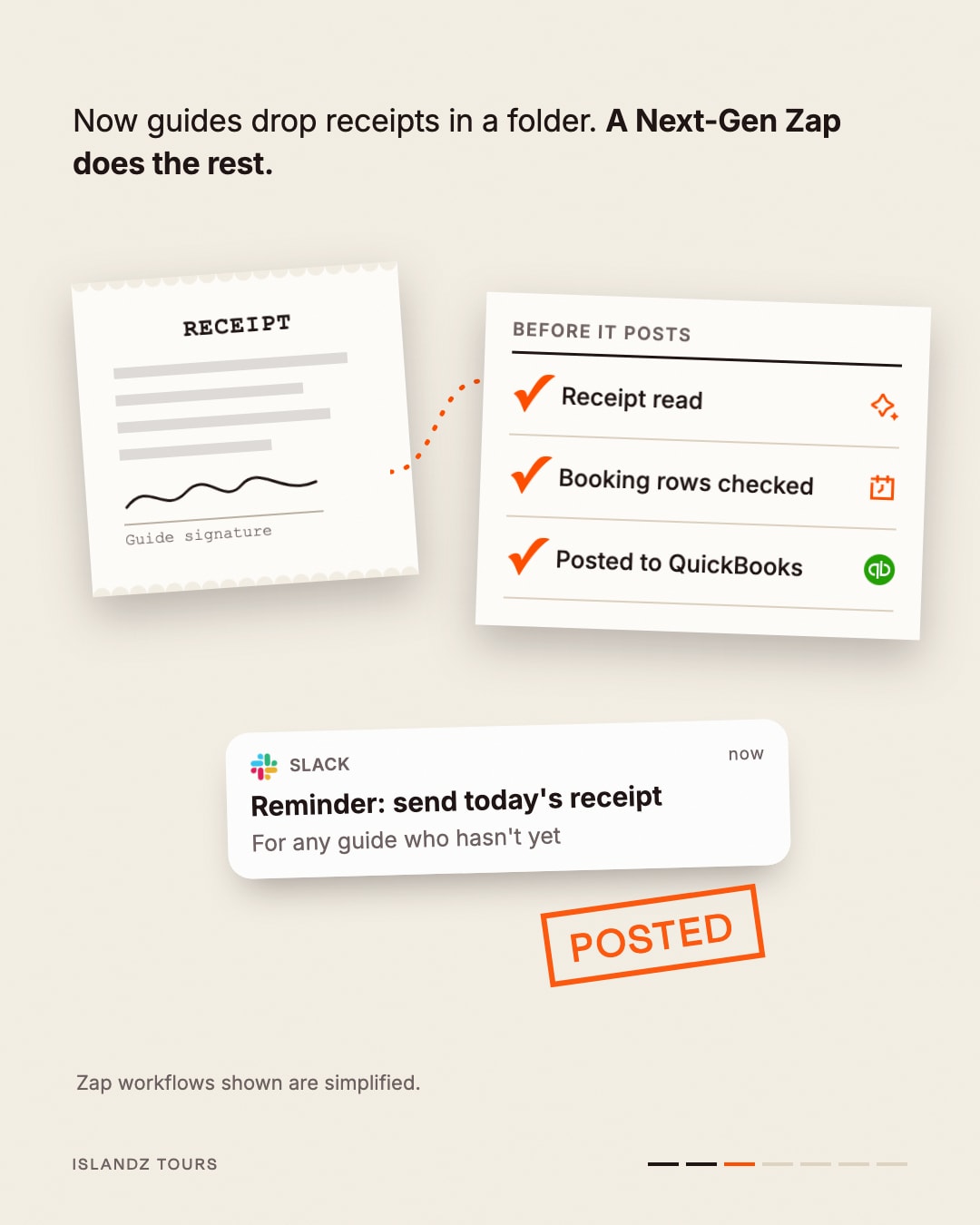
The bookkeeping got rebuilt first. Guides now drop receipts in a folder. A Next-Gen Zap reads each one and nudges any guide who hasn't sent theirs. An hourly check validates booking rows before they post to QuickBooks.
Then he moved on to the ideas he'd shelved for years because they weren't worth the setup time.
What changed was the setup. "Now with the next-gen, you can just very simply put it together, and they do it," he says. "Literally all of your automation and workflow dreams have come true."
Nassau is a big cruise port. A Jotform in the Islandz Tours confirmation email asks guests whether they're coming off a ship. Jaime asked Claude to review the email and the form and suggest something better. Some of the partners he books through restrict how they can contact guests for marketing, so he gave Claude their terms of service, more than 20 pages, and asked it to build the workflow within those rules.
He built it the day before we spoke. "Yesterday morning when I woke up, that wasn't on my mind," he told us. "Last night when I went to sleep, I already kind of dealt with it."
He did it while watching a ballgame.
He's built 40 Next-Gen Zaps so far. In the past four weeks, they've run nearly 700 times, with a 98.7% success rate.
Writing it all down
To track what he'd built, Jaime set up a registry in Notion with an entry for every workflow, and he has Claude write documentation as he builds each one. That gave him something he'd never had: a business manual.
Jaime thinks that's rare at his size. "I'd bet that most small businesses in my revenue bracket don't have a proper SOP and manuals and documentation," he says. "You can do all of that now."
With every workflow written down, he can train his team and hand them more of the day-to-day. He's applying the same approach to the speakeasy-themed bar he runs alongside the tours, The Lucerne, copying workflows into a second Zapier account.
He has a name for what he's doing. "I'm refounding the business," he says.
What it saves
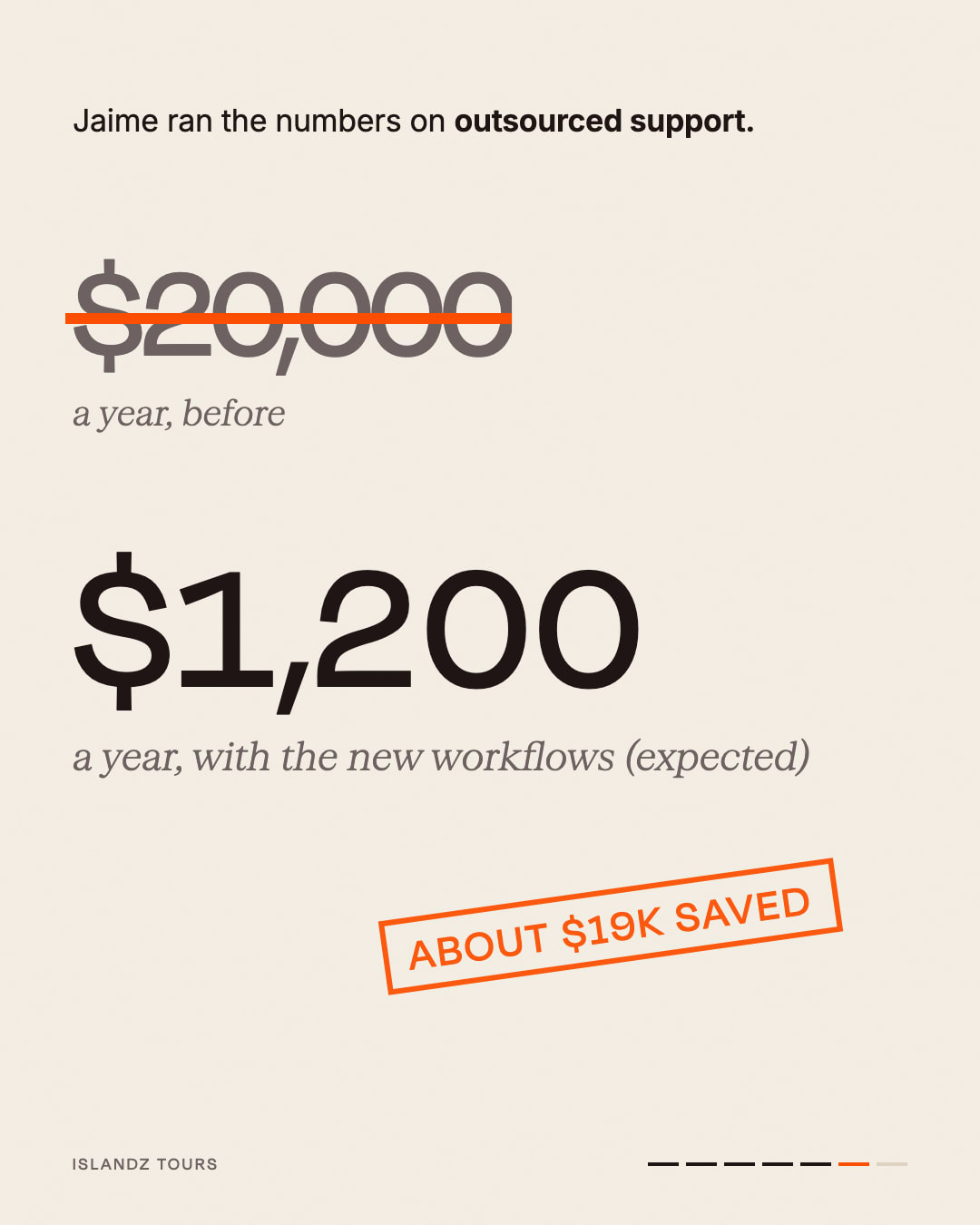
Jaime ran the numbers. Outsourced support was costing him about $20,000 a year. With the new workflows, he expects that to fall to about $1,200, a saving of roughly $19,000.
He's also downgrading software seats he no longer needs. "It's minimal, it's on the edges," he says, "but it still counts."
More time for the tours
Walking tours are about as human as a business gets. Jaime's bet is that less admin means more tours, more work for his guides and more of his own attention on the human side.
"We're very much in a hospitality business," he says. "That human touch is really what drives our business."
Last year, Jaime got seriously ill, and he's clear about how much the stress of running a small business contributed. The emails and admin that used to fill his days are now mostly handled. "That has a real benefit to my personal life as well," he says. "For small businesses and people who are trying to expand their personal capacity, I think this is a lifesaver."
He calls the whole experience "equal parts fascinating, exciting, and terrifying."
Then he puts it more simply: "I can't go back to running a business like I previously did."
Jaime Lewis is the owner of Islandz Tours, which runs rum, food, and history walking tours in Nassau, The Bahamas.
Learn more about Next-Gen Zaps.