Top companies trust Zapier to automate work that solves their unique business problems—no coding required.
How Zapier works
Zapier makes it easy to integrate Airtable with Stripe - no code necessary. See how you can get setup in minutes.
100%
Help
Airtable
Airtable
1. Choose trigger event
Stripe
Stripe
2. Choose action
1. Select the event
Setup
Test
Airtable
Choose a trigger event
Choose a trigger
A trigger is the event that starts your Zap—like a "New Record" from Airtable.
Add your action
An action happens after the trigger—such as "Cancel Subscription" in Stripe.
You’re connected!
Zapier seamlessly connects Airtable and Stripe, automating your workflow.
Supported triggers and actions
Zapier helps you create workflows that connect your apps to automate repetitive tasks. A trigger is an event that starts a workflow, and an action is an event a Zap performs.
Create a new record or update an existing record in your app.
Name
Email
Description
Billing - Address Line 1
Billing - Address Line 2
Billing - City
Billing - State
Billing - ZIP
Billing - Country
Billing - Phone
Shipping - Name
Shipping - Address Line 1
Shipping - Address Line 2
Shipping - City
Shipping - State
Shipping - ZIP
Shipping - Country
Shipping - Phone
Language
Invoice prefix
Next_invoice_sequence
Tax_status
Credit Balance
Metadata
Action
This is an event a Zap performs.
Write
Create a new record or update an existing record in your app.
Warning
Amount
Required
Currency
Required
Customer ID
Payment Method ID
Payment Method Types
Confirm Payment Immediately?
Error on Requires Action?
Off Session?
Payment Description
Receipt_email
Shipping - Name
Shipping Address - Line 1
Shipping Address - Line 2
Shipping Address - Postal Code
Shipping Address - City
Shipping Address - State
Shipping Address - Country
Shipping - Carrier
Shipping - Phone
Shipping - Tracking Number
Statement_descriptor
Statement_descriptor_suffix
Metadata
Capture_method
Action
This is an event a Zap performs.
Write
Create a new record or update an existing record in your app.
Product
Required
Price (in minor units, e.g. cents)
Required
Currency
Required
Recurring or One time?
Tax Behavior
Action
This is an event a Zap performs.
Write
Create a new record or update an existing record in your app.
Customer ID
Required
Items
Required
Collection_method
Required
Coupon ID
Default Payment Method ID
Cancel at period end?
Metadata
Action
This is an event a Zap performs.
Write
Create a new record or update an existing record in your app.
Customer ID
Required
Name
Email
Description
Billing - Address Line 1
Billing - Address Line 2
Billing - City
Billing - State
Billing - ZIP
Billing - Country
Billing - Phone
Shipping - Name
Shipping - Address Line 1
Shipping - Address Line 2
Shipping - City
Shipping - State
Shipping - ZIP
Shipping - Country
Shipping - Phone
Language
Invoice prefix
Next_invoice_sequence
Tax_status
Credit Balance
Metadata
Action
This is an event a Zap performs.
Write
Create a new record or update an existing record in your app.
Find Account Balance
Finds the account balance for your stripe account
Action
This is an event a Zap performs.
Search
Find existing data in your app
Created after
Created before
Currency
Payout ID
Source ID
Type
Transactions before
Transactions after
Action
This is an event a Zap performs.
Search
Find existing data in your app
Find by
Query
Required
Action
This is an event a Zap performs.
Search
Find existing data in your app
Payment Intent ID
Required
Action
This is an event a Zap performs.
Search
Find existing data in your app
For AI agents & developers
Use Airtable and Stripe with AI agents and code
Beyond Zap workflows. Call Airtable and Stripe actions directly from your AI client or your codebase, using the same 10,000+ app integrations Zapier already runs.
No code
Connect via Zapier MCP
Expose Airtable and Stripe actions as tools in any MCP client. Authenticate once, then call them in natural language.
Example actions on this page
Add Comment to Record
Cancel Subscription
Works with
Claude · ChatGPT · Cursor · any MCP-compatible client
There is no Python package yet. SDK is TypeScript-only (@zapier/zapier-sdk). The MCP server URL is personal to your account; get it at zapier.com/mcp.
Zapier is the automation platform of choice for 87% of Forbes Cloud 100 companies in 2023
93%
Customers who say using Zapier has made them better at their job
25m
Customers have created over 25 million Zaps on the platform
6 mins
The average user takes less than 6 minutes to set up a Zap
Practical ways you can use Airtable and Stripe
Create customer records for successful payments
When a new payment is completed in Stripe, Zapier automatically creates a corresponding record in Airtable to keep customer data organized. This workflow eliminates manual data entry, ensuring efficient and accurate customer management.
When a new customer is added in Stripe, Zapier notifies the marketing team via Airtable. This workflow prevents any lag in customer engagement by ensuring the marketing team is always aware of new customer signups.
When a subscription is updated in Stripe, Zapier automatically records the update in an Airtable table. This workflow helps project managers track ongoing project subscriptions without delays or manual updates, boosting operational efficiency.
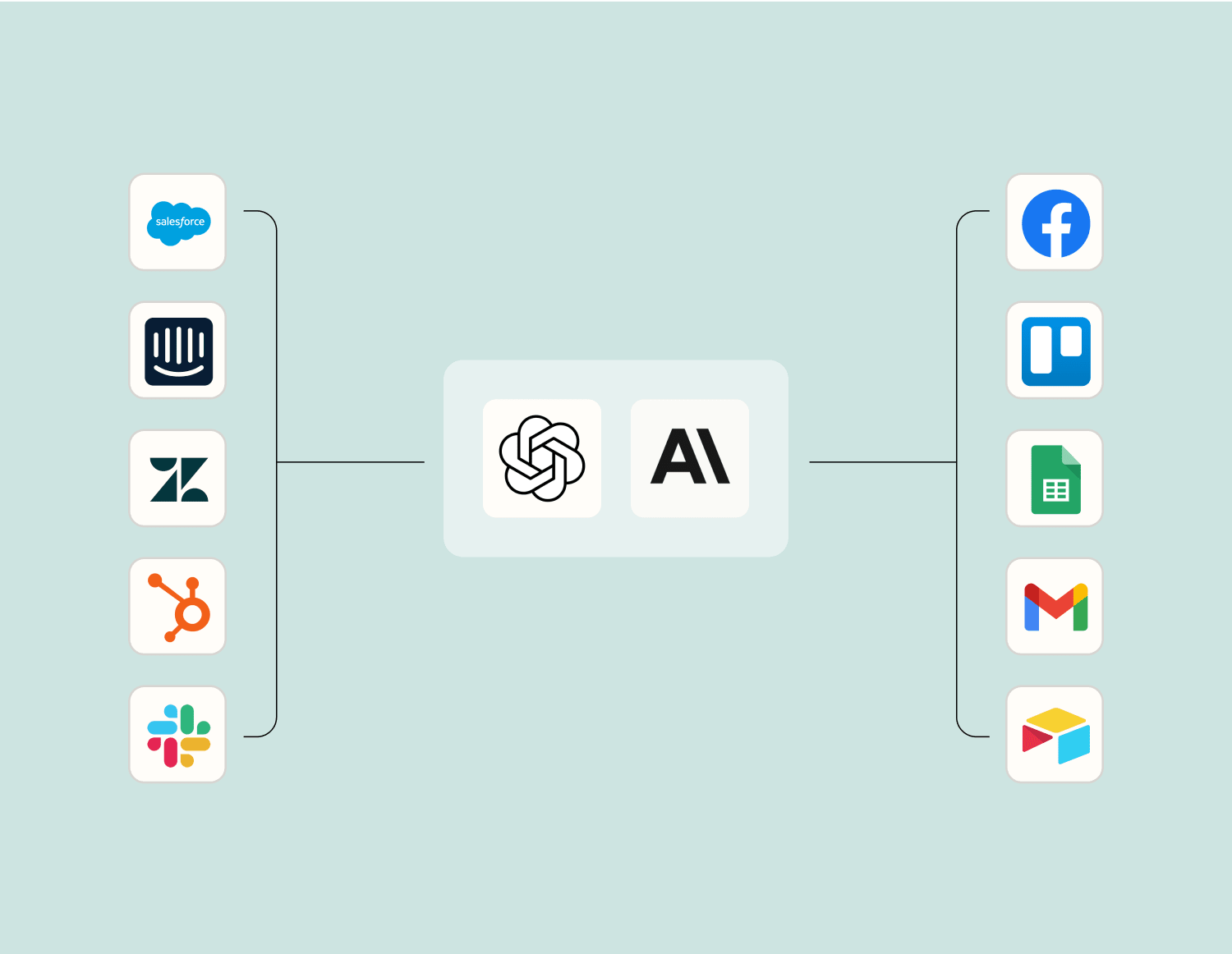
Level up your Airtable to Stripe integration with AI. Extract, summarize, and transform your integration data with leading AI models like OpenAI, Anthropic, and more.
Frequently Asked Questions about Airtable + Stripe integrations
New to automation with Zapier? You're not alone. Here are some answers to common questions about how Zapier works with Airtable and Stripe
How does the integration between Airtable and Stripe work?
The integration allows you to automate workflows between Airtable and Stripe using triggers and actions. For instance, you can set a trigger in Stripe, such as a new charge created, which then performs an action in Airtable, like adding a new record with the charge details.
Can I use this integration to update a record in Airtable when a payment is successful in Stripe?
Yes, you can set up a trigger for when a payment succeeds in Stripe. This will allow you to create an action where the corresponding record in Airtable is updated with the payment status and details.
Is it possible to create customers in Stripe from new records in Airtable?
Certainly! When a new record is added to your Airtable base, a corresponding trigger can be configured to create a new customer in your Stripe account automatically.
How do we handle failed payments from Stripe within this integration?
You can set up a trigger for failed payments in Stripe. The subsequent action could be updating an existing record or creating a new one in Airtable that logs the error details and allows your team to follow up accordingly.
Does this integration support handling subscription updates from Stripe?
Yes, when there are updates (like upgrades or downgrades) to subscriptions in Stripe, you can configure triggers that result in automatic updates to records in Airtable, reflecting these changes accurately.
Can we generate invoices using data from both Airtable and Stripe?
While our platform doesn't directly generate invoices, you can use it to compile data from both sources. For instance, use triggers that collect relevant transaction data from Stripe and combine it with customer information from Airtable for invoicing purposes using another tool like Google Docs or PDF generation services.
What happens if multiple events are triggered simultaneously? Will all actions be processed?
Our system processes each trigger individually but efficiently queues them so each corresponding action is performed as set up. If multiple events occur at once (e.g., several charges), each will initiate its defined workflow without overwriting others.
My AI agent already connects to my apps. Why add Zapier?
Your AI agent’s built-in or native connectors cover a limited set of popular apps. Zapier reaches 10,000+ apps and 90,000+ triggers and actions. Zapier also adds what your AI agent can’t: one place to manage logins and credentials, so you never paste an API key; automations that keep running after the chat closes, with fixes you can review when a run hits a snag; and the freedom to switch agent interfaces without starting over.
Can’t my AI agent already run tasks on a schedule?
Most popular AI agents can run scheduled tasks. And for simple recurring jobs, that might be all you need. Automations that run on Zapier can run on a schedule too, but they can also start the moment something happens in your apps—like when a new lead/ticket comes in or you get an email reply. Zapier also uses AI only in the steps that need judgment, so routine steps like posting to Slack or updating Salesforce don’t burn model tokens.
Why not have my AI agent write me a script?
You can, and the first version will probably work. The trouble comes later: a script needs somewhere to run, a way to hear about events, and someone to keep it going. If an API changes or a login expires, your script can quietly stop until you notice. It also holds your keys, often in a repo, where a leak can expose your accounts. With Zapier, your agent builds the automation, and you publish it. Zapier hosts it, handles your logins and credentials, and records every run. If a run fails, Zapier diagnoses what went wrong and prepares a fix you can review. Or you can decide which fixes Zapier can apply for you.
About Airtable
Organize anything with Airtable, a modern database created for everyone. Airtable is a fast and flexible way to create tables to keep track of anything, from sales leads to vacation planning to inventory management.
Stripe is a developer-friendly way to accept payments online and in mobile apps. Stripe's suite of APIs powers commerce for thousands of companies of all sizes, processing billions of dollars for businesses each year.