Zapier vs. Celigo
Published: 9/16/2026 | by Ryan Kane
Celigo has built one of the deepest NetSuite integration platforms on the market, and if syncing high-volume eCommerce orders in and out of NetSuite is your biggest automation problem, that specialization is worth paying for. But most enterprises need more than NetSuite plumbing. They need to be able to build AI-powered automation without waiting on a queue of NetSuite admins and integration architects. That's what Zapier is for: it's an AI orchestration platform that securely connects 9,000+ apps and lets anyone across an organization build what they need.
Here's what you'll get with Zapier:
Connect 9x the apps: 9,000+ integrations, governed by Zapier, compared with Celigo's 1,000+ connectors concentrated in the NetSuite ecosystem—and Zapier's stay automatically governed.
Build without a developer team: With Zapier, anyone on your team can create workflows and agents with Zapier's no-code editor and AI copilot; Celigo's flows are built by NetSuite admins, integration architects, and developers.
Skip the custom sales quote: Start for free with just an email address, and scale as you grow. Celigo's contracts run in the mid-five figures annually before you've built a single integration, and costs climb further with each endpoint and workflow you add.
Comparaison
Compare Zapier and Celigo pricing, integrations, and more
Avis
See why customers choose Zapier
Fonctionnalités
Review Zapier and Celigo features in depth
FAQ
Get answers to your questions
Celigo vs. Zapier comparison
| Zapier | Celigo | |
|---|---|---|
| Vue d'ensemble | Zapier is a comprehensive AI orchestration platform built for organization-wide automation across 9,000+ apps | Celigo is an iPaaS known for its deep integration with NetSuite and its specialized enterprise retail, eCommerce, and logistics workflows |
| Mise en œuvre | Most users build their first workflow in 15-20 minutes | NetSuite integrations typically take 8-12 weeks with developers or an implementation partner |
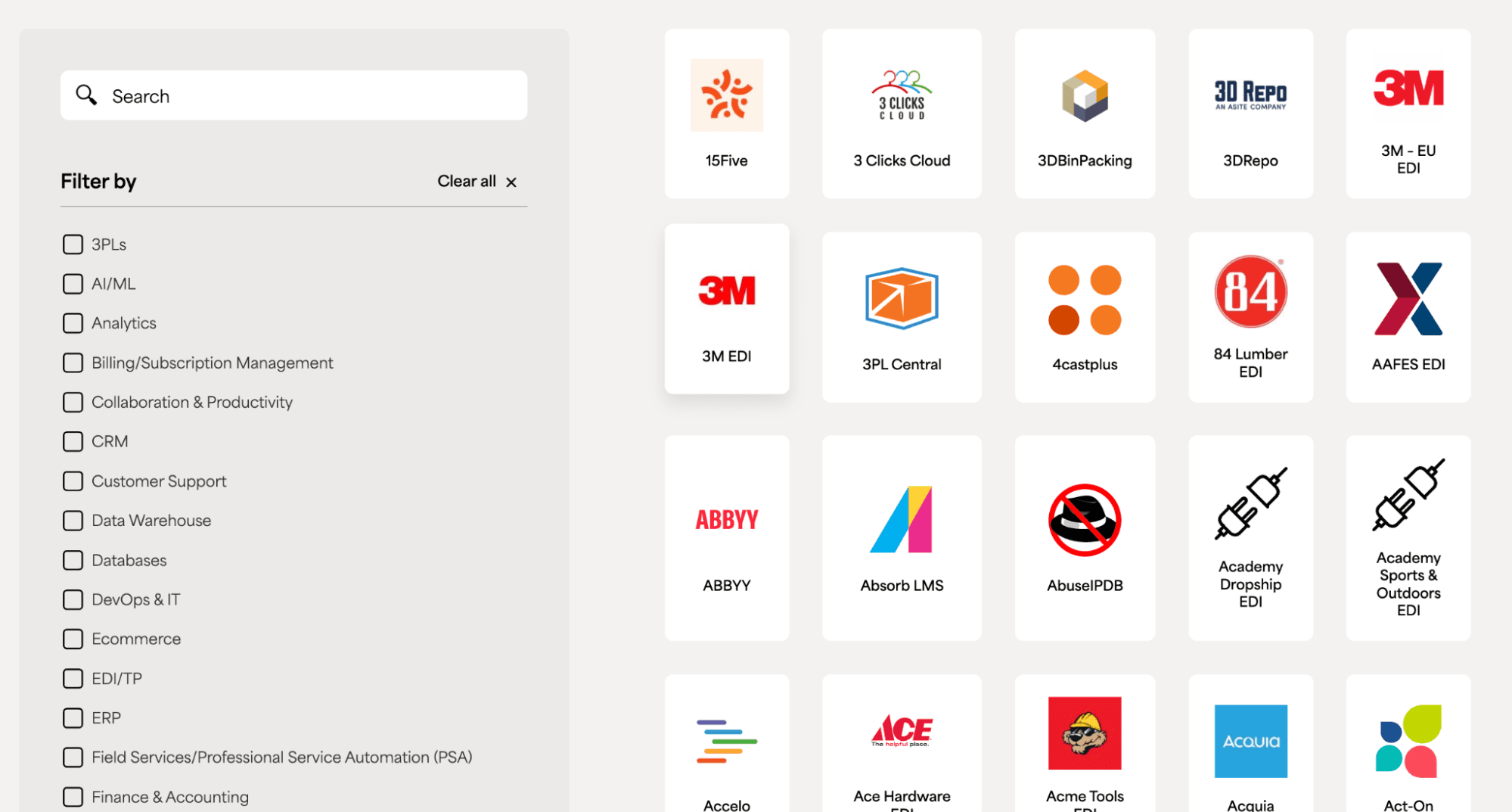
| Intégrations | 9,000+ apps, covering enterprise apps and niche SaaS; connections are automatically maintained | 1,000+ connectors focused on the NetSuite ecosystem, eCommerce, retail, logistics, and finance |
| Facilité d'utilisation | No-code platform, templates, and AI copilot make it simple for anyone to build workflows and agents | Built for NetSuite admins, integration architects, and developers; requires technical expertise |
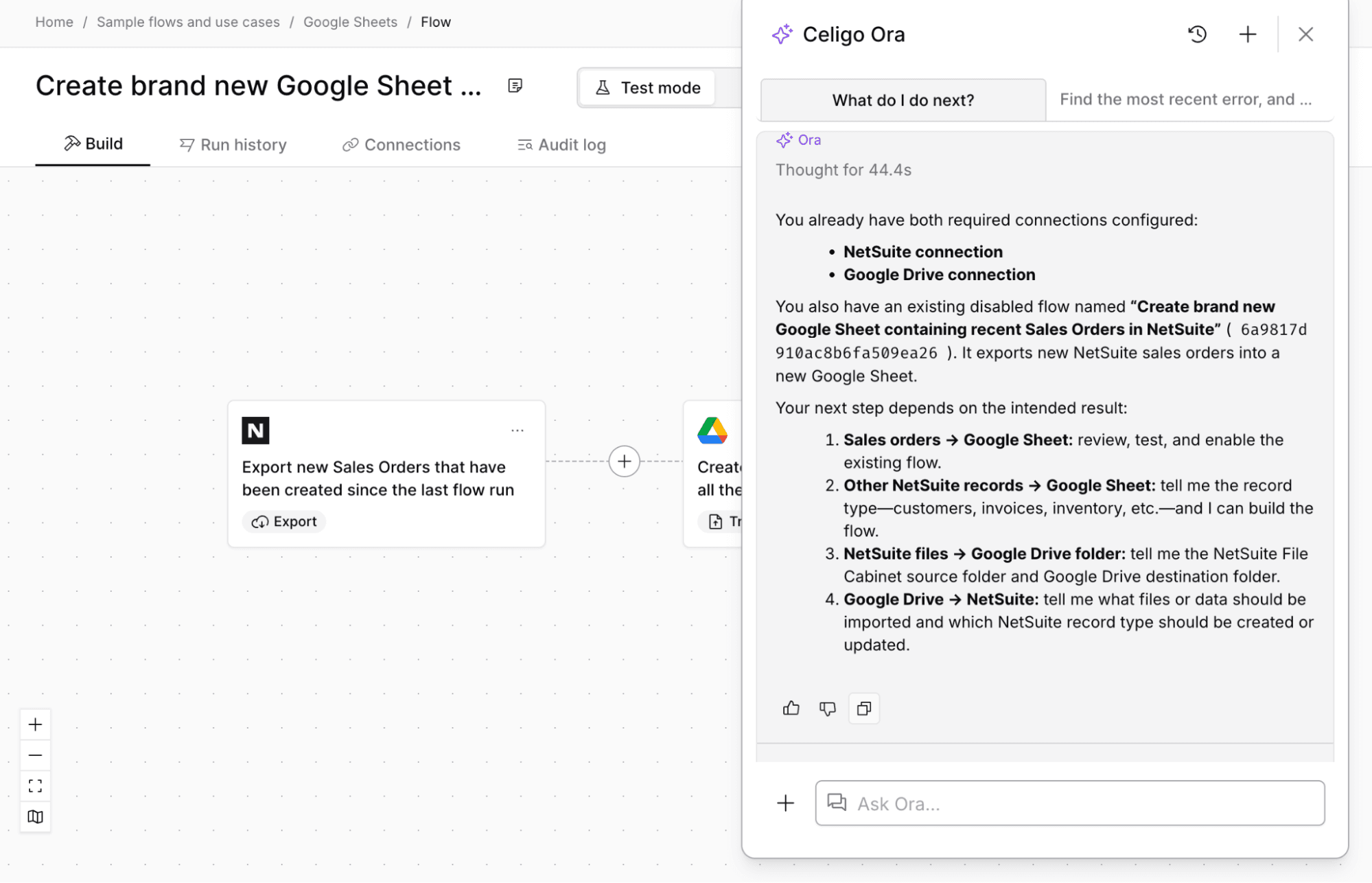
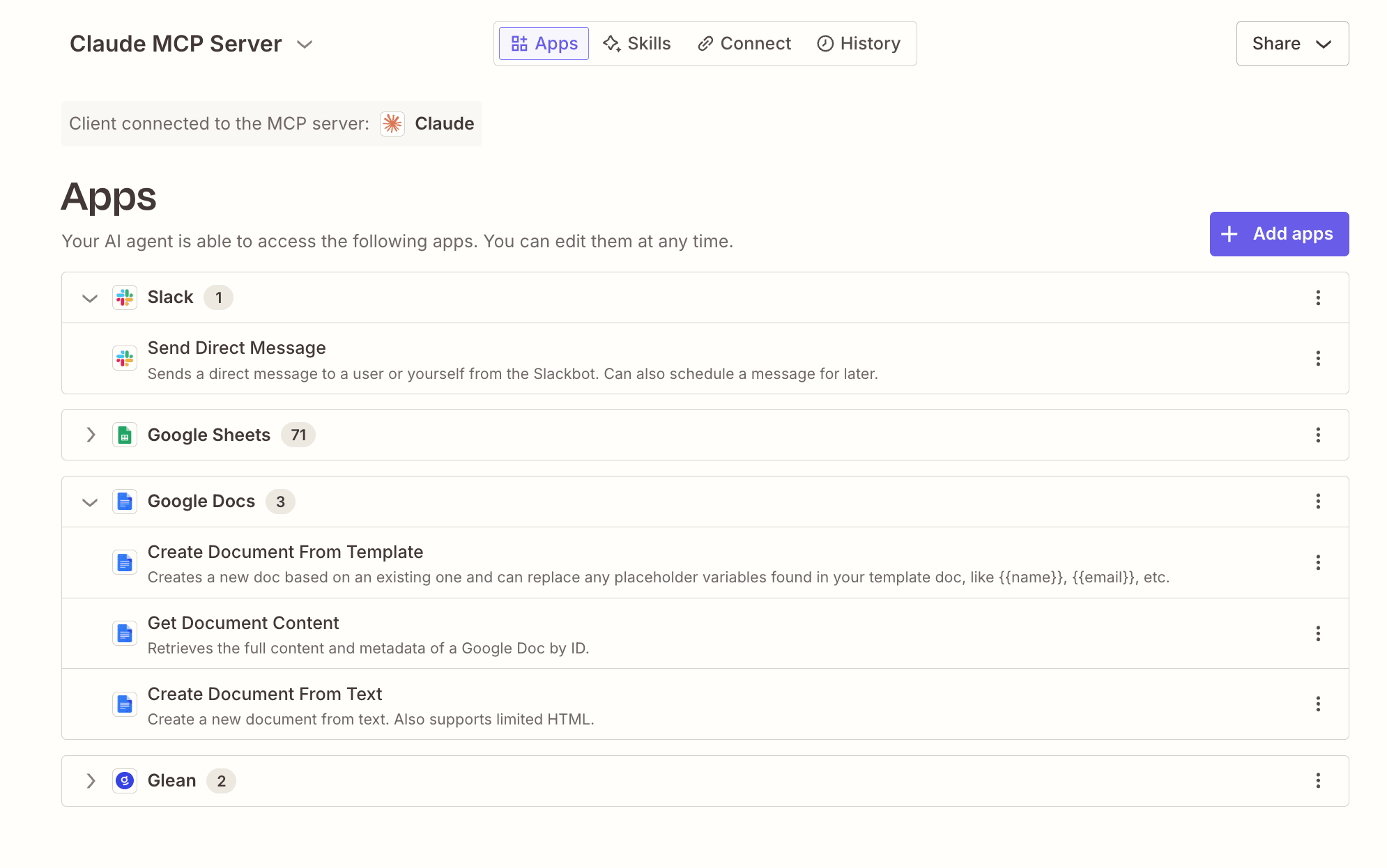
| AI capabilities | Agentic AI steps in workflows, MCP server, and an AI assistant that builds across any connected app | Ora AI assistant and Agent Builder with an MCP server, both scoped to automating and troubleshooting integrator.io's flows and connections |
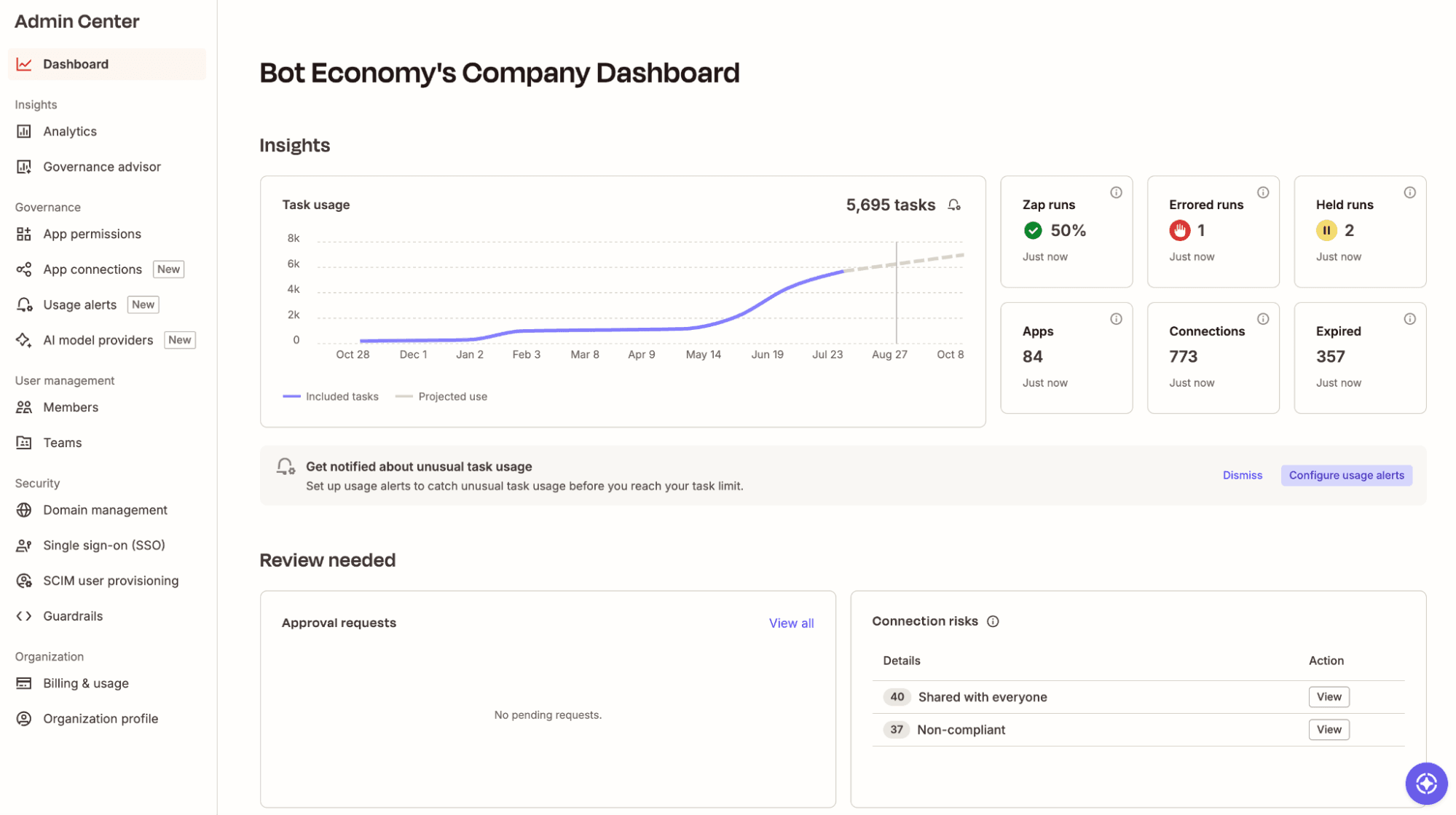
| Security & governance | SOC 2 Type II, SOC 3, GDPR, and CCPA certified, plus SAML SSO, audit logs, and role-based access control starting on the Team plan, with SCIM provisioning and app- and action-level restrictions added at Enterprise | SOC 2 Type II, SOC 1 Type 2, GDPR, CCPA, OIDC-based SSO, audit logs, HIPAA-ready (not certified), on-premise agents |
| Tarifs | Free plan available; task-based pricing starting at $19.99/month for solo users and $69/month for teams of up to 25 users; custom enterprise pricing | Estimated mid-five figures annually; custom pricing based on endpoints and workflows |
| Reliability & performance | Public status page, autoreplay, custom error handling, task histories, and version rollback included by default | Public status page with linked third-party endpoint status; auto-retry for intermittent and rate-limit errors requires enabling auto-resolve in flow settings |
What customers say about Zapier
"Zapier makes it to where I can just go in and change one small thing when something changes versus opening a ticket and waiting for engineering support."
—Korey Marciniak, Senior Manager of Customer Support Strategy and Operations, Okta
Customer testimonial
"With engineering, it's always 'what sprint will this be a part of?' With Zapier, I can just block off an hour and figure it out myself."
—Megan Tsang, Marketing Operations Manager, Superhuman
Customer testimonial
"By implementing Zapier to integrate our tools, we have significantly streamlined our internal processes. This has reduced administrative task volume and manual processing time, directly boosting overall team productivity."
—Javier Martínez, Partner Acquisition Manager, Just Eat Spain
Customer testimonial
"They have integrations for most major software, and that list is constantly growing. It's also super easy to learn and implement. We have Zapier processes running for our company every day, and it has helped make our lives much easier."
—Connor C., Technical Business Analyst
G2 review
3,4 millions d’entreprises nous font confiance



















AI automation starts and scales with Zapier
Build reliable, consistent workflows across tools, people, and processes. Access 9,000+ apps securely from any surface, and add AI to the mix only when you need it.
Compare features: Zapier vs. Celigo
If you're processing thousands of eCommerce orders daily through NetSuite, Celigo should probably be a part of the solution. But most enterprises also want to boost productivity by encouraging every department to adopt AI and automation. Zapier is built to scale quickly across your organization by empowering every team to launch AI workflows and agentic flows without developer support—and without IT losing sight of who's building what. I spent time researching and testing both platforms to evaluate how each handles different aspects of enterprise automation. Based on that experience, here's a full comparison to help you understand where each fits into your strategy.
Mise en œuvre
Zapier gets a non-technical user to a working automation the same day, while Celigo's real production work starts once you've signed a contract and booked time with an implementation partner.
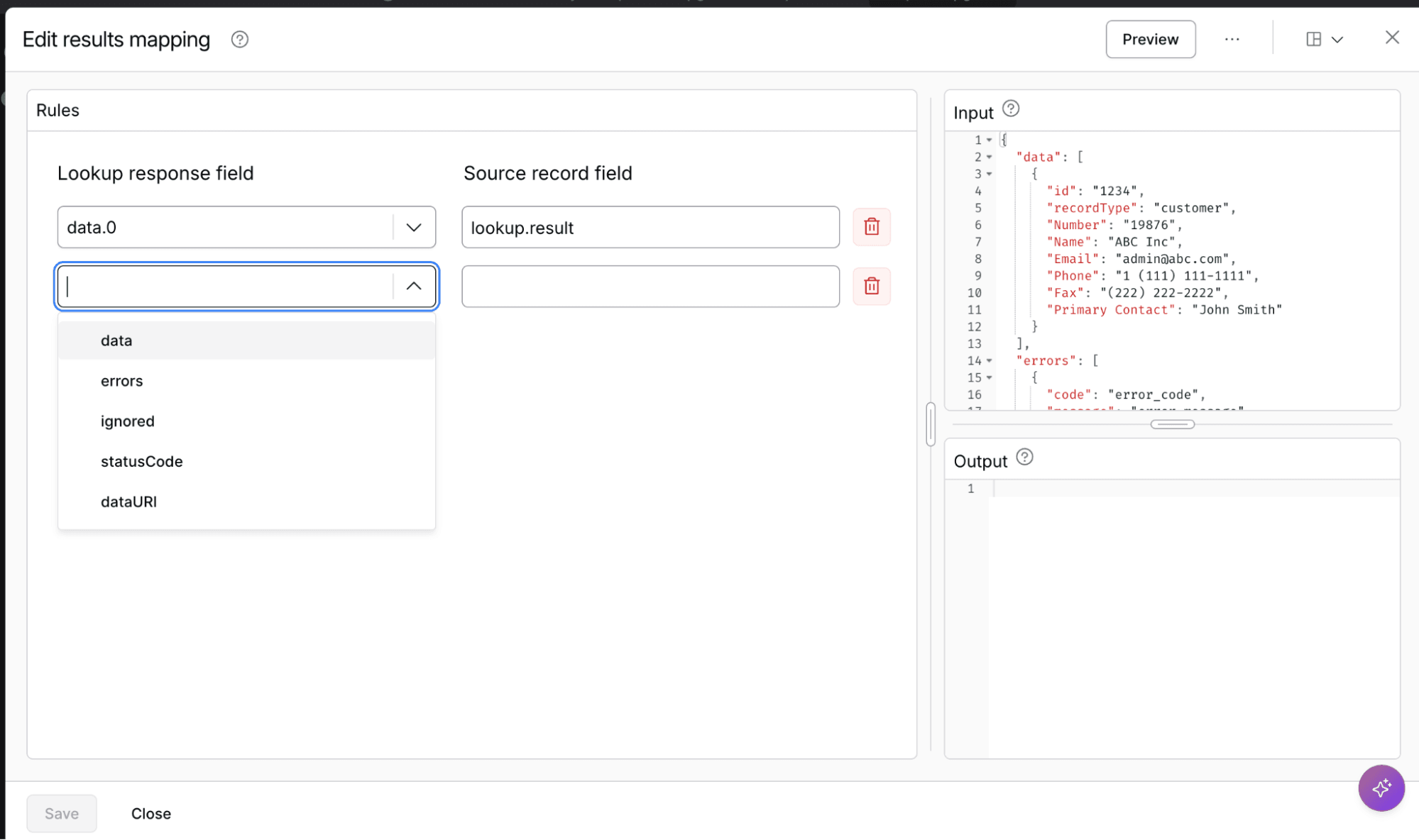
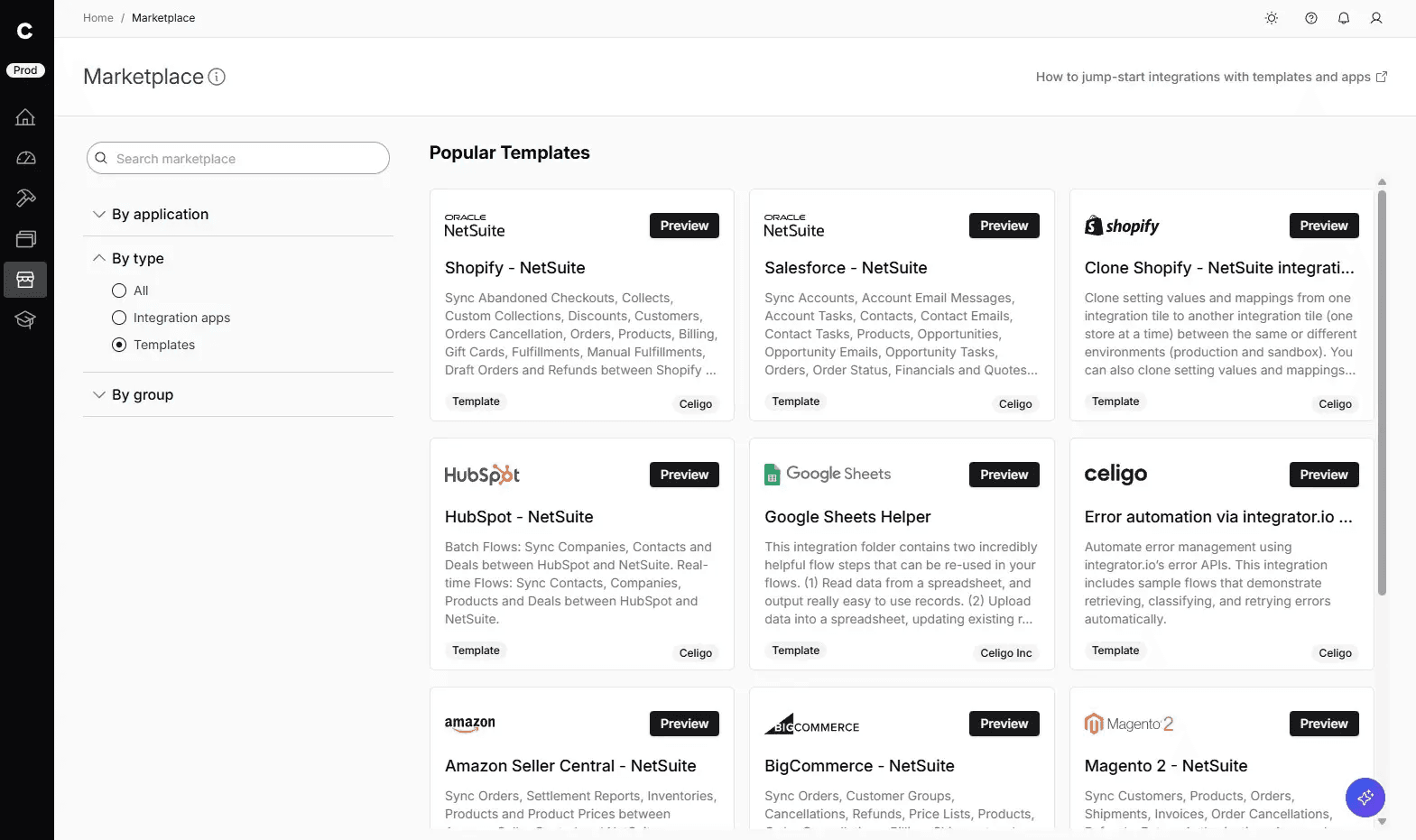
Anyone can create a free Celigo trial account in a couple of minutes at integrator.io's signup page (integrator.io is the name of Celigo's underlying platform), and Celigo's own quickstart templates can get a simple two-app flow running in an afternoon. Install the template, authenticate each connection with OAuth or an API key, and test it with mock data before going live.
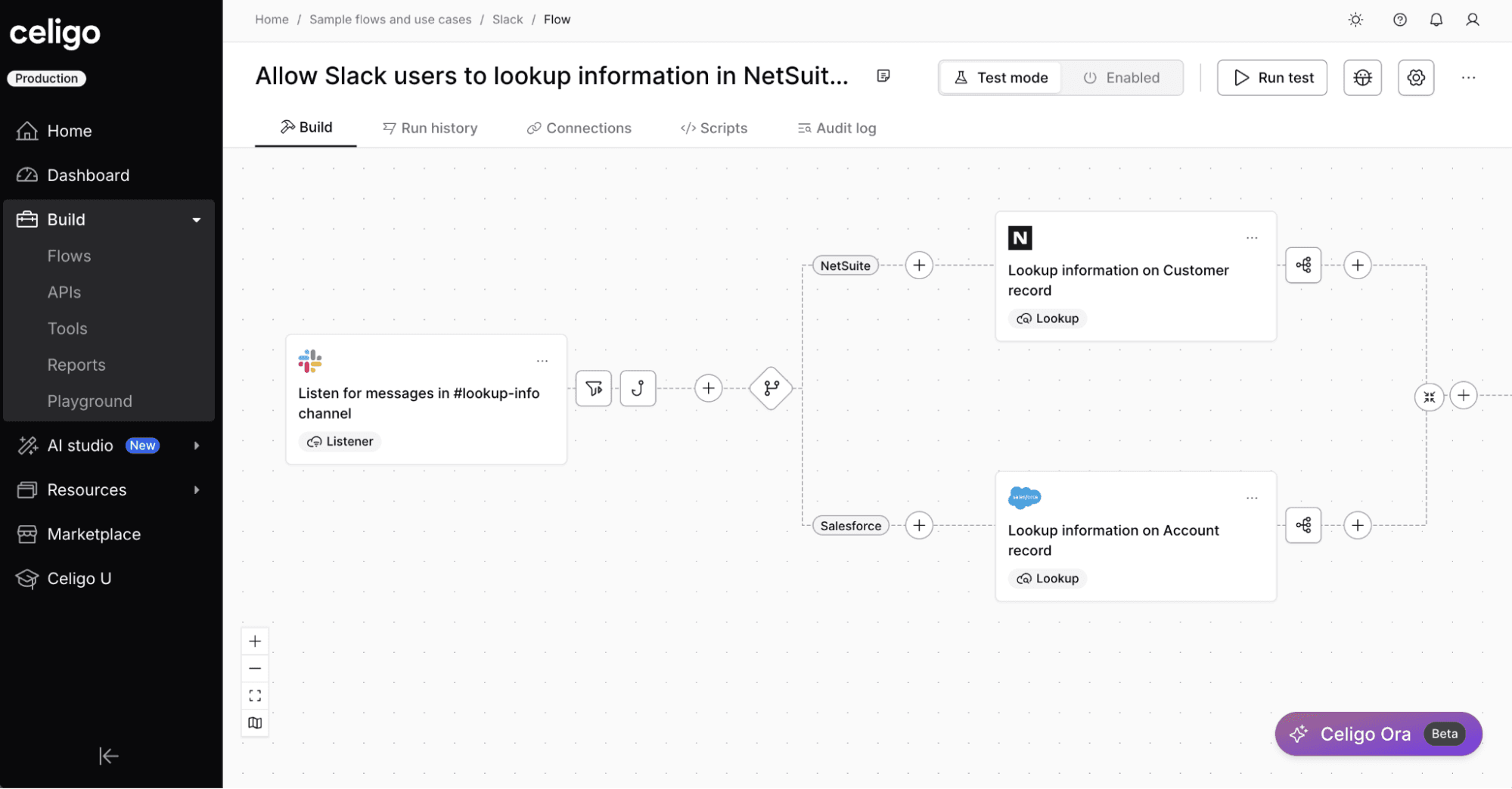
But that's the easy case. The moment a real NetSuite deployment is involved, the process changes shape completely. Independent pricing breakdowns of real Celigo deployments put total implementation costs at $30,000 to $100,000 and a timeline of roughly 8-12 weeks, typically requiring a solutions consultant or integration partner that most companies don't keep in-house.
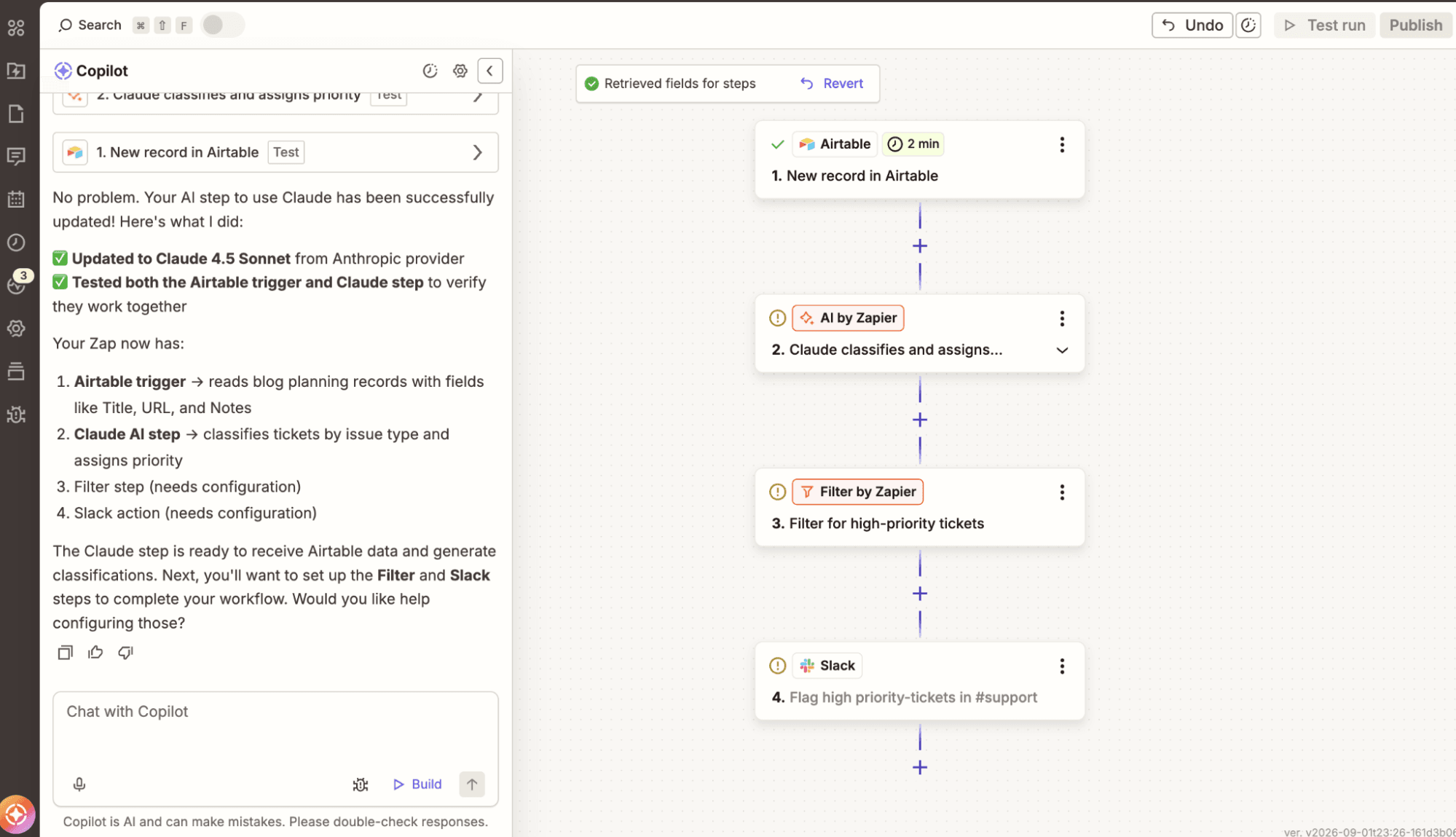
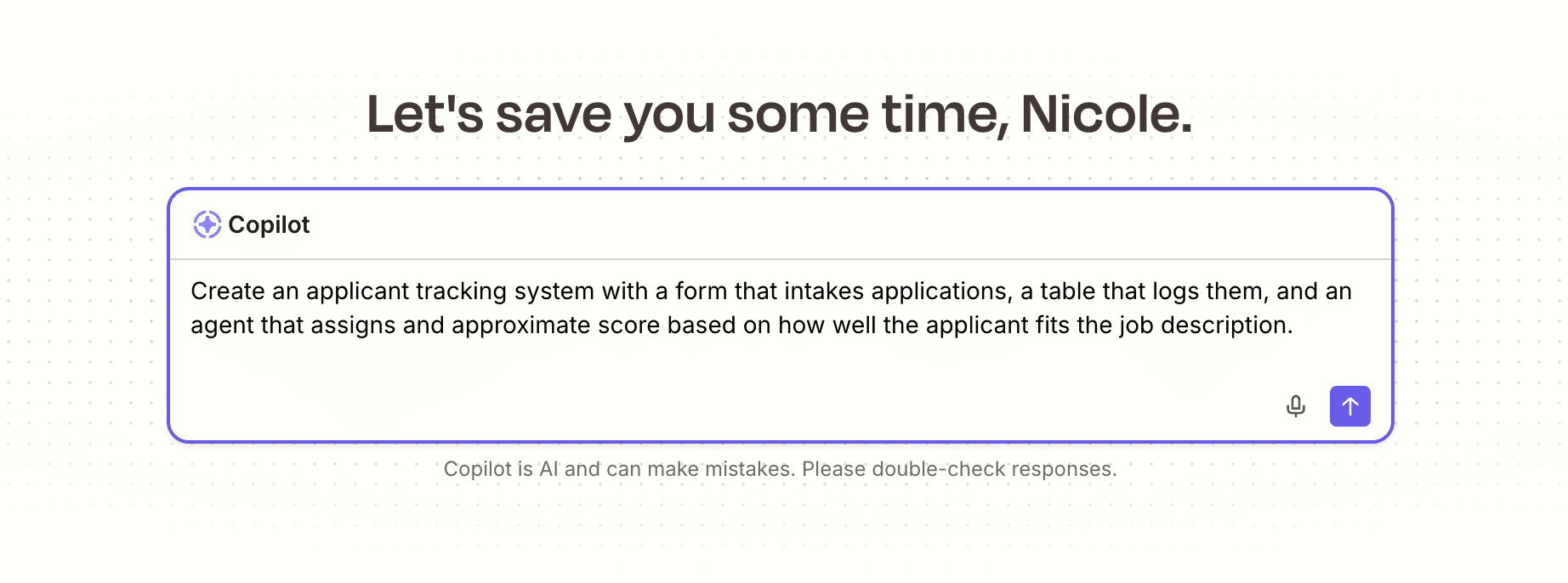
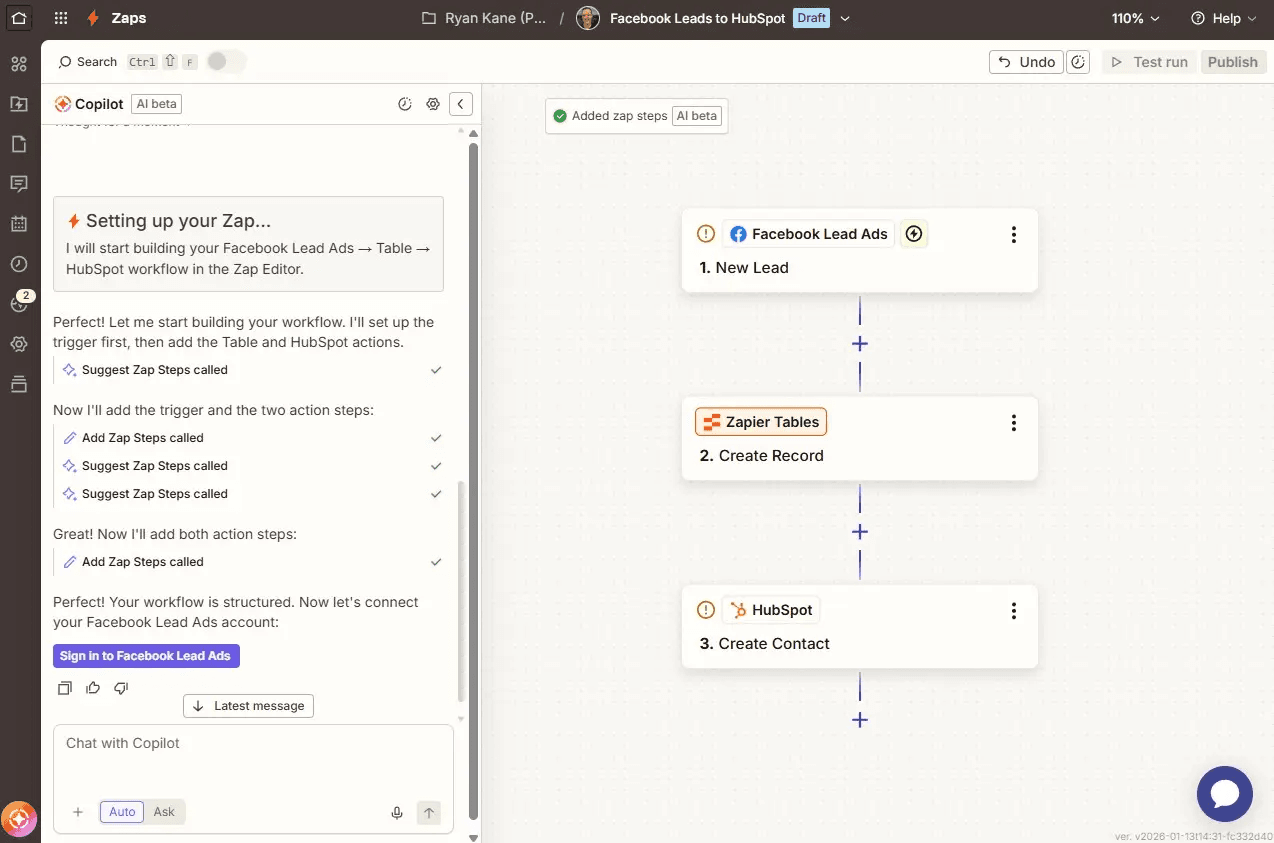
Zapier works the opposite way. Non-technical users can create an account, answer a few questions about their business, and start building the same hour. Using Zapier Copilot, an AI assistant, you can describe the workflow or agent you need in plain language, and Copilot builds it—asking clarifying questions along the way rather than requiring you to already know which fields map where.
Zapier also has a massive library of thousands of templates for an endless array of use cases, from simple workflows to complex business systems. Getting started is often as simple as launching the template you need.
FAQ: Zapier vs. Celigo
Do Zapier and Celigo compete, or do they work together?
Both, depending on what you need. Celigo is a strong fit for heavy NetSuite integrations—like syncing high-volume eCommerce or fulfillment data. Zapier is built for everything else: giving every department, not just integration specialists, the ability to build their own AI workflows. Many enterprises run both, with Celigo handling core ERP plumbing and Zapier covering the rest of the organization.
Which is better: Zapier or Celigo?
It depends on the job. If NetSuite is at the center of your operations and you're syncing high volumes of eCommerce, retail, or logistics data, Celigo's specialization is hard to match. For everything else, Zapier is the better fit, and usually the more affordable one.
Is Zapier cheaper than Celigo?
Yes, for most use cases. Zapier starts free and scales to $19.99/month for individuals, $69/month for a 25-user team, and custom Enterprise plans, with transparent, usage-based pricing throughout. Celigo doesn't publish pricing; most deployments run in the mid-five figures annually, plus implementation costs that independent estimates put at $30,000 to $100,000 for a full NetSuite-centric rollout. Celigo can make financial sense for a single high-volume, mission-critical integration, but Zapier is nearly always cheaper for broader automation needs.
Can Zapier replace Celigo?
For most automation needs outside of deep NetSuite-to-ERP data syncing, yes. Zapier can handle workflows, AI agents, and integrations across 9,000+ apps (including NetSuite) without developer support. But if you're running high-volume, mission-critical order or inventory syncs between NetSuite and eCommerce, retail, or logistics platforms, Celigo's purpose-built NetSuite connectors and dedicated implementation support are hard to fully replace with a general-purpose automation platform.
What does Celigo's Ora AI assistant do?
Ora is a conversational AI assistant built into Celigo that lets you build, modify, and troubleshoot integrations by describing what you want in plain language. It maps your account's flows and connections into a knowledge graph, then stages every change as a reviewable draft that only applies once you approve it. It's an AI copilot, but it's scoped to managing Celigo's own environment rather than building automations across outside apps the way Zapier Copilot does.
When is Celigo the better choice?
Choose Celigo if NetSuite is at the center of your operations, you're syncing high-volume data with eCommerce, retail, or logistics platforms, you have a team of developers who can manage complex integrations, and you're comfortable with mid-five-figure annual contracts and per-connection pricing. Celigo's HIPAA-ready compliance and on-premise agent option also make it a better fit for healthcare, finance, or government workloads with strict data-residency requirements.
AI automation starts and scales with Zapier
Build reliable, consistent workflows across tools, people, and processes. Access 9,000+ apps securely from any surface, and add AI to the mix only when you need it.
About the author: Ryan Kane is a writer and marketer based in Mérida, Mexico. He writes about SaaS, AI, and marketing while building fun Internet side projects. Learn more: ryankane.co.