Top companies trust Zapier to automate work that solves their unique business problems—no coding required.
How Zapier works
Zapier makes it easy to integrate Attio with Google Calendar - no code necessary. See how you can get setup in minutes.
100%
Help
Attio
Attio
1. Choose trigger event
Google Calendar
Google Calendar
2. Choose action
1. Select the event
Setup
Test
Attio
Choose a trigger event
Choose a trigger
A trigger is the event that starts your Zap—like a "Activity Created" from Attio.
Add your action
An action happens after the trigger—such as "Add Attendee(s) to Event" in Google Calendar.
You’re connected!
Zapier seamlessly connects Attio and Google Calendar, automating your workflow.
Supported triggers and actions
Zapier helps you create workflows that connect your apps to automate repetitive tasks. A trigger is an event that starts a workflow, and an action is an event a Zap performs.
Create a new record or update an existing record in your app.
Calendar
Required
Summary
Description
Location
Add Conferencing?
Start Date & Time
Required
End Date & Time
Required
Repeat Frequency
Repeat Until
Repeat How Many Times?
All day
Color
Use custom event colors?
Attendees
Visibility
Use Default Reminders?
Reminders
Minutes Before Reminders
Show me as Free or Busy
Guests Can Modify Event
Event Type
Action
This is an event a Zap performs.
Write
Create a new record or update an existing record in your app.
Source Calendar
Required
Event
Required
Destination Calendar
Required
Send Notifications
Action
This is an event a Zap performs.
Write
Create a new record or update an existing record in your app.
Calendar
Required
Event
Required
Summary
Description
Location
Start Date & Time
End Date & Time
Repeat Frequency
Repeat Until
Repeat How Many Times?
All day
Color
Use custom event colors?
Attendees
Notify Attendees?
Visibility
Use Default Reminders?
Reminders
Minutes Before Reminders
Show me as Free or Busy
Action
This is an event a Zap performs.
Write
Create a new record or update an existing record in your app.
Calendar
Required
Event ID
Required
Action
This is an event a Zap performs.
Search
Find existing data in your app
Calendar
Start Time
End Time
Action
This is an event a Zap performs.
Search
Find existing data in your app
Calendar
Required
Action
This is an event a Zap performs.
Search
Find existing data in your app
For AI agents & developers
Use Attio and Google Calendar with AI agents and code
Beyond Zap workflows. Call Attio and Google Calendar actions directly from your AI client or your codebase, using the same 9,000+ app integrations Zapier already runs.
No code
Connect via Zapier MCP
Expose Attio and Google Calendar actions as tools in any MCP client. Authenticate once, then call them in natural language.
Example actions on this page
Create or Update List Entry by Parent Record
Add Attendee(s) to Event
Works with
Claude · ChatGPT · Cursor · any MCP-compatible client
There is no Python package yet. SDK is TypeScript-only (@zapier/zapier-sdk). The MCP server URL is personal to your account; get it at zapier.com/mcp.
Zapier is the automation platform of choice for 87% of Forbes Cloud 100 companies in 2023
93%
Customers who say using Zapier has made them better at their job
25m
Customers have created over 25 million Zaps on the platform
6 mins
The average user takes less than 6 minutes to set up a Zap
Practical ways you can use Attio and Google Calendar
Sync client meetings to your CRM
When a new Google Calendar event is created with a specific tag, Zapier automatically adds the client meeting details to a designated list in Attio. This ensures business owners have a centralized record of all client interactions without manual entry, saving time and reducing data errors.
When a debugging session is scheduled in Google Calendar, Zapier automatically creates a task in Attio to track the issue and its resolution progress. This ensures engineering teams don’t lose track of recurring issues while improving coordination and task ownership.
When a project milestone event is added to Google Calendar, Zapier updates a record in Attio to reflect the milestone's completion status. This provides project managers a seamless way to monitor project progress without missing critical updates.
Learn how to automate Google Calendar on the Zapier blog
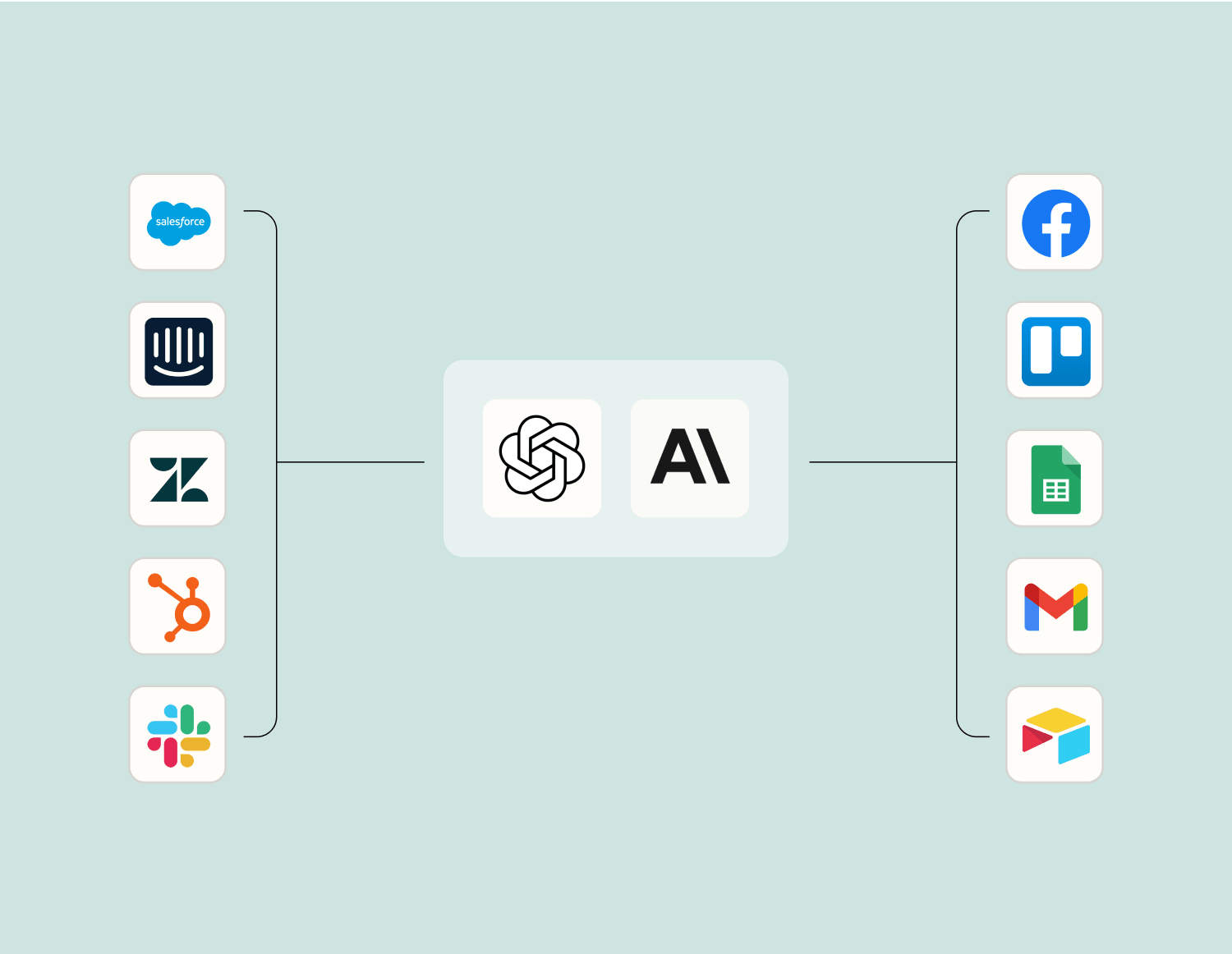
Make work flow with AI
Level up your Attio to Google Calendar integration with AI. Extract, summarize, and transform your integration data with leading AI models like OpenAI, Anthropic, and more.
Frequently Asked Questions about Attio + Google Calendar integrations
New to automation with Zapier? You're not alone. Here are some answers to common questions about how Zapier works with Attio and Google Calendar
How do I set up an integration between Attio and Google Calendar?
To set up an integration between Attio and Google Calendar, you'll need to use our platform to create a new Zap. Start by selecting Attio as the trigger app and choosing an appropriate trigger, such as 'New Contact' or 'Updated Contact'. Next, connect your Google Calendar account as the action app and specify actions like 'Create Detailed Event' or 'Update Event'. Follow the prompts to authenticate your accounts and map any necessary fields.
Can I create calendar events in Google Calendar from new contacts in Attio?
Yes, you can create calendar events in Google Calendar from new contacts in Attio by setting up a Zap where Attio is the trigger app. Choose 'New Contact' as the trigger event and for the action, select Google Calendar with 'Create Detailed Event'. Map contact details such as name and email to event fields to automate this process.
Is it possible to update existing Google Calendar events when a contact is updated in Attio?
Absolutely! You can update existing Google Calendar events when a contact's information is updated in Attio. Use our platform to set Attio's 'Updated Contact' as the trigger and configure the action in Google Calendar using 'Update Event'. Ensure you map relevant fields so that any edit in contact details reflects accurately on your calendar.
What authentication is required for integrating with Google Calendar?
To integrate with Google Calendar, our platform securely connects using OAuth authentication. You'll need to log into your Google account during setup to grant permission for data access. This ensures secure communication between Attio and your calendar while maintaining data privacy.
Are there any limitations on syncing data from Attio to Google Calendar?
There are no major limitations on syncing standard data types from Attio to Google Calendar. However, keep in mind that some complex data structures or custom fields may require specific mapping strategies during setup. Always ensure that field types are compatible between platforms for seamless integration.
How frequently does data sync between Attio and Google Calendar?
The frequency of data syncing depends on how you've configured your triggers. For most triggers involving creation or updates within Attio, changes are sent immediately via our platform's real-time processing capabilities, ensuring quick reflection of updates in your Google Calendar.
What kinds of triggers can be used with an integration involving Attio?
When integrating with other applications like Google Calendar, popular triggers available include actions like 'New Contact', 'Updated Contact', and specific tag-based filters within Attio. Selecting appropriate triggers will depend on what automated workflow you're looking to establish.
About Attio
Attio is the CRM of the future: data-driven, completely customizable and intuitively collaborative.
App Builder, CRM (Customer Relationship Management), Forms & Surveys, Zapier
About Google Calendar
Google Calendar lets you organize your schedule and share events with co-workers and friends. With Google's free online calendar, it's easy to keep track of your daily schedule.