Zapier vs. Gumloop
Published: 9/16/2026 | By Ryan Kane
Gumloop is betting that businesses want a tool built specifically for AI agents. But most companies don't need agents in isolation—they need agents that can act across every app their teams already use. Zapier is an AI orchestration platform built for exactly that, with agents and workflows in one governed system that scales from a single automation to AI adoption across your whole business.
Here's what you'll get with Zapier:
A complete AI orchestration platform, not just an agent tool: Deterministic automation, agentic AI, MCP, databases, and forms are all built into Zapier. Gumloop offers agents, a supporting workflow builder, and basic forms.
Connect 30x more apps: 9,000+ integrations, governed by Zapier, compared with Gumloop's 300+, so your agents can act anywhere your business runs.
Pay for what you actually get done: Zapier's task-based pricing is predictable, with a free plan and a long list of steps that never count as tasks. Gumloop's credit system charges separately for chat, tool calls, compute time, and an 8% orchestration fee, which makes costs harder to predict as you scale.
Comparación
Compare Zapier and Gumloop pricing, integrations, and more
Reseñas
See why customers choose Zapier
Características
Review Zapier and Gumloop features in depth
Preguntas frecuentes
Get answers to your questions
Gumloop vs. Zapier comparison
| Zapier | Gumloop | |
|---|---|---|
| Descripción general | Zapier is an AI orchestration platform that gives every team governed access to agents, workflows, forms, and databases across the whole organization | Gumloop is an agent-first automation platform, built around AI agents and self-improving Skills, for teams whose primary automation focus is AI |
| AI capabilities | Agentic AI built into structured workflows; MCP gives AI agents governed access across 9,000+ apps | Agents and self-improving Skills |
| Implementación | Sign up with just an email address; most first-time users publish a working Zap in 15-20 minutes | 14-day trial requires a credit card; a simple templated agent takes about 15 minutes, longer once you're connecting real apps |
| Integraciones | 9,000+ apps, governed by Zapier; connections are automatically maintained; MCP server allows access to all 9,000+ integrations | 300+ apps plus 50+ pre-built MCP servers; agents can react to events in connected apps via plain-language triggers |
| Facilidad de uso | Anyone can build across Zapier's whole product suite with an AI copilot and thousands of templates | Intuitive chat-first interface; 180+ templates and growing, but limited to Gumloop's own feature set |
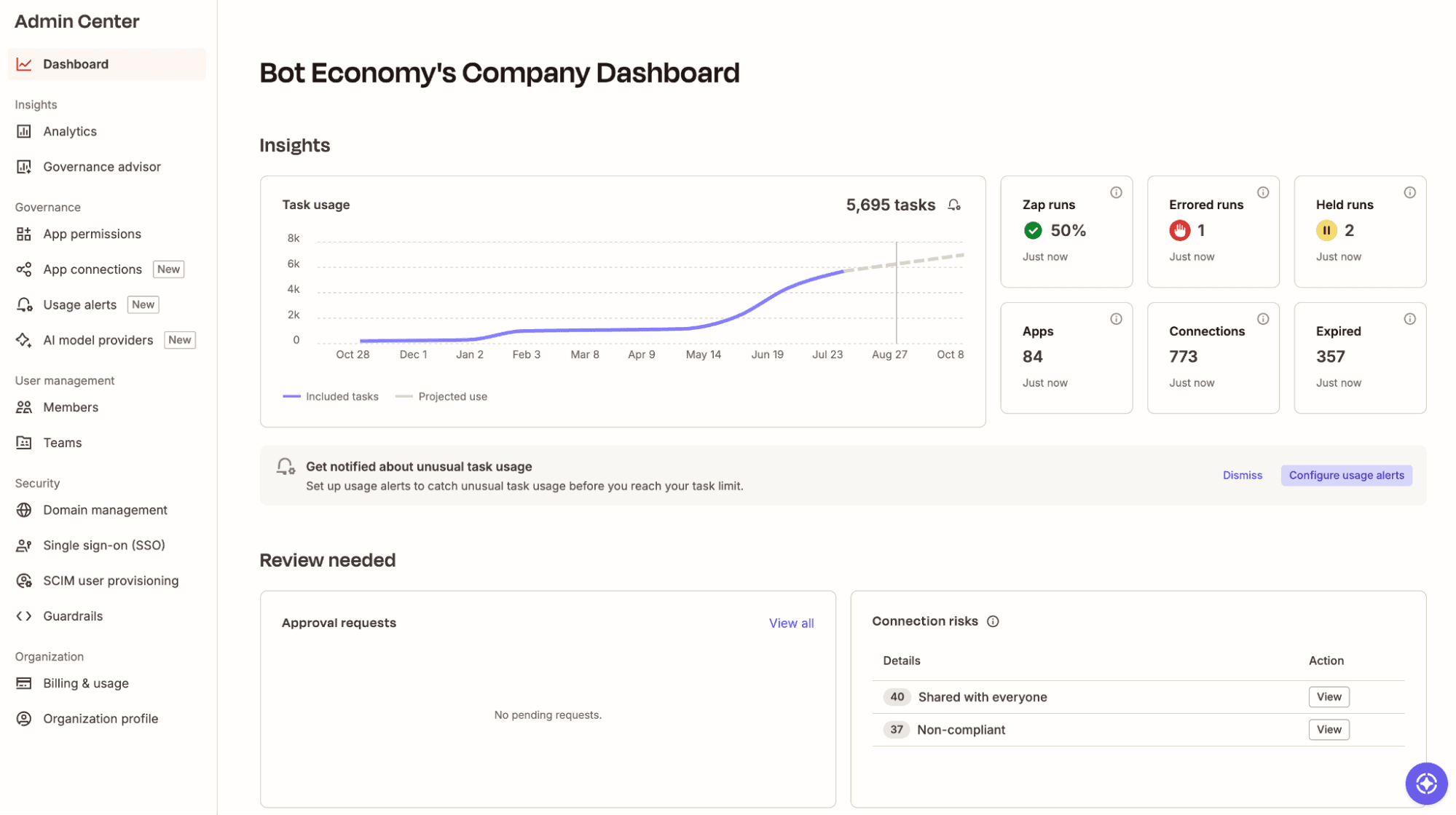
| Security & governance | SOC 2 Type II, SOC 3, GDPR, and CCPA certified, plus SAML SSO, audit logs, and role-based access control starting on the Team plan, with SCIM provisioning and app- and action-level restrictions added at Enterprise | SOC 2 Type II, GDPR, CCPA, HIPAA (with BAAs), SAML SSO, SCIM, RBAC, custom data retention, admin dashboards, audit logging; Gumstack for agent-tool-call monitoring, AI model access controls |
| Precios | Free plan available; predictable task-based pricing, with many steps that never count as tasks | Credit-based; Pro plan starts at $37/month for 20,000 credits, plus an 8% orchestration fee on model, tool, and compute usage |
| Reliability & performance | Autoreplay, custom error handling, task histories, version rollback, real-time failure alerts, public status page; 81 billion+ tasks automated to date | No native automatic retries at the workflow level; public status page and per-node Run Log; 950 million tasks automated to date (only founded in 2023) |
What customers say about Zapier
"Calls we thought were lost could actually be captured, structured, and put in front of the sales team automatically. Once that was proven, expanding with Zapier and AI wasn't a bet. It was the obvious next step to protect demand we couldn't afford to keep missing."
—Gabriele Luciani, Innovation Project Manager, Autotorino
Customer testimonial
"Zapier's biggest strength is how easy it is to connect thousands of apps and automate workflows with minimal setup. The no-code interface, step-by-step Zap builder, and clear testing process make implementation fast, even for non-technical users."
—Gerardo Pérez, Information Technology and Services
G2 review
"Before Zapier MCP, if Zendesk didn't have a trigger for something, the workflow just didn't exist. Now, as long as I have the data, I can build exactly what I need."
—Corey Smith, Senior Technical Support Engineer, ClickUp
Customer testimonial
"Once I got the lead scoring working, I started seeing everything else I could connect. Calendar, email, renter profiling. The ceiling I kept hitting with other tools just isn't there anymore."
—Marcus Rush, Founder and Team Leader, Rush Home
Customer testimonial
Con la confianza de 3,4 millones de empresas



















AI automation starts and scales with Zapier
Build reliable, consistent workflows across tools, people, and processes. Access 9,000+ apps securely from any surface, and add AI to the mix only when you need it.
Compare features: Zapier vs. Gumloop
Zapier is an established and widely integrated automation and AI orchestration platform that securely connects with thousands of business apps using agentic AI and deterministic workflows. Gumloop is a much newer, agent-first automation tool that has evolved from a workflow builder into a platform for deploying and managing AI agents. I built and ran agents in both Gumloop and Zapier and spent hours researching each tool's strengths and weaknesses. Based on that experience, here's how the two actually compare.
AI capabilities
Gumloop is built entirely around agents, while Zapier treats agents as one layer of a much broader AI orchestration platform.
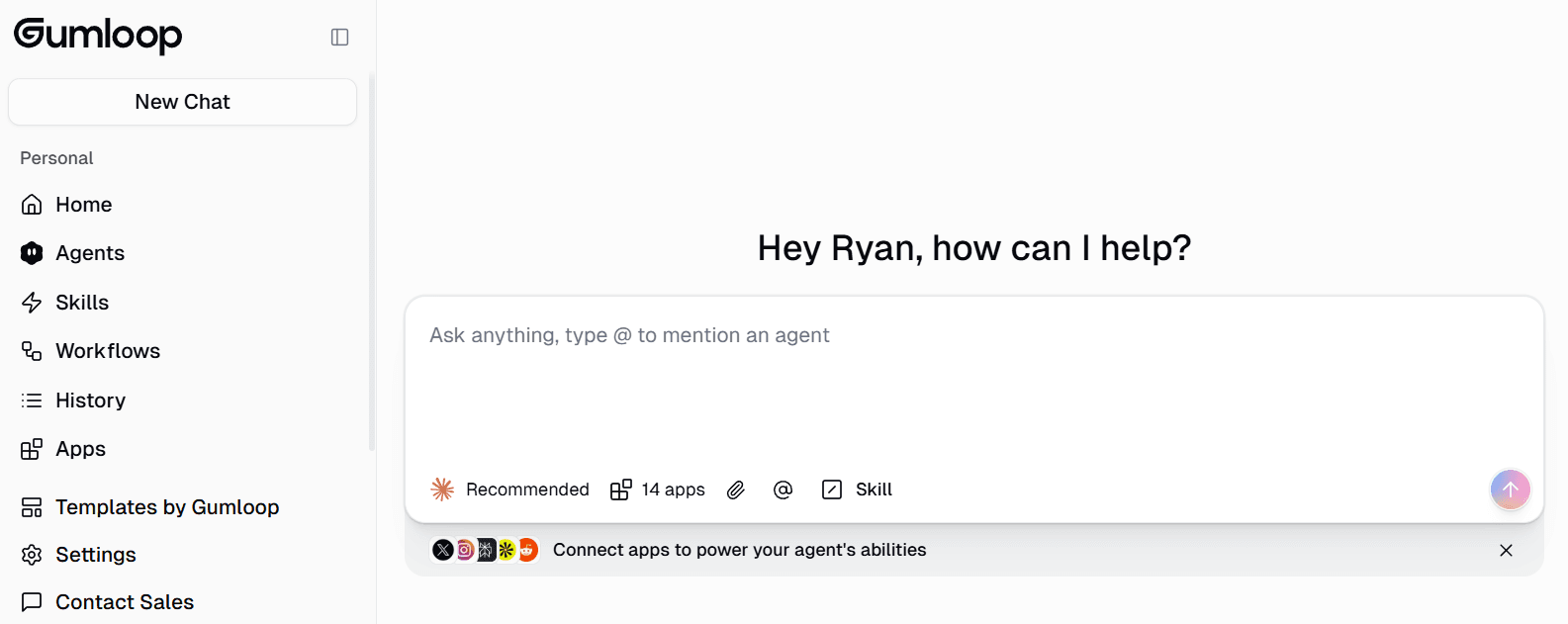
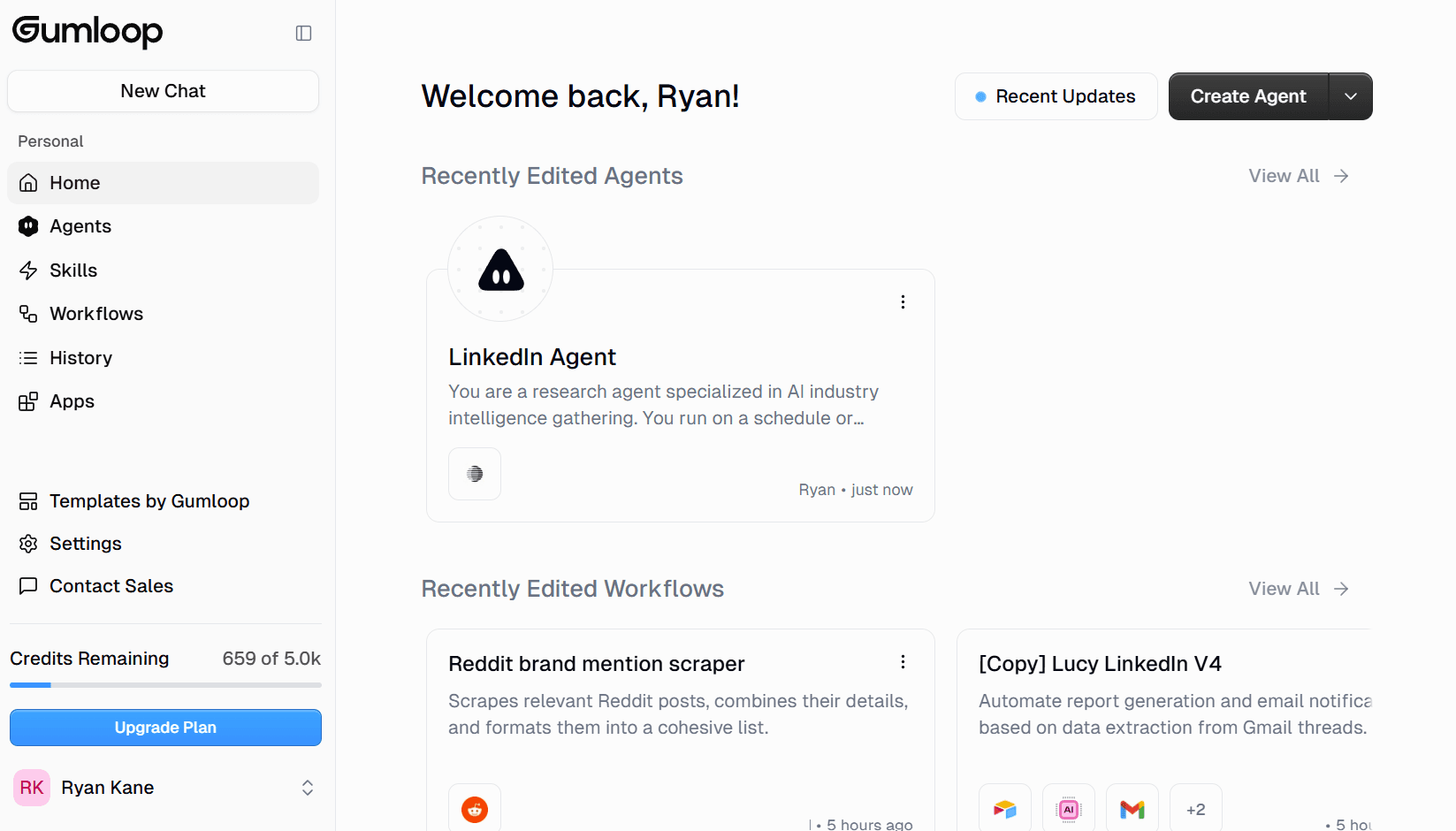
Gumloop has rebuilt itself around AI agents as the primary interface for getting work done. Agents can run on schedules, use skills and workflows, self-improve over time, and respond to trigger events that happen in any of your connected apps. As with Zapier's agentic workflows, which I'll get into shortly, you can define the parameters for your Gumloop Agent by simply describing what you need.
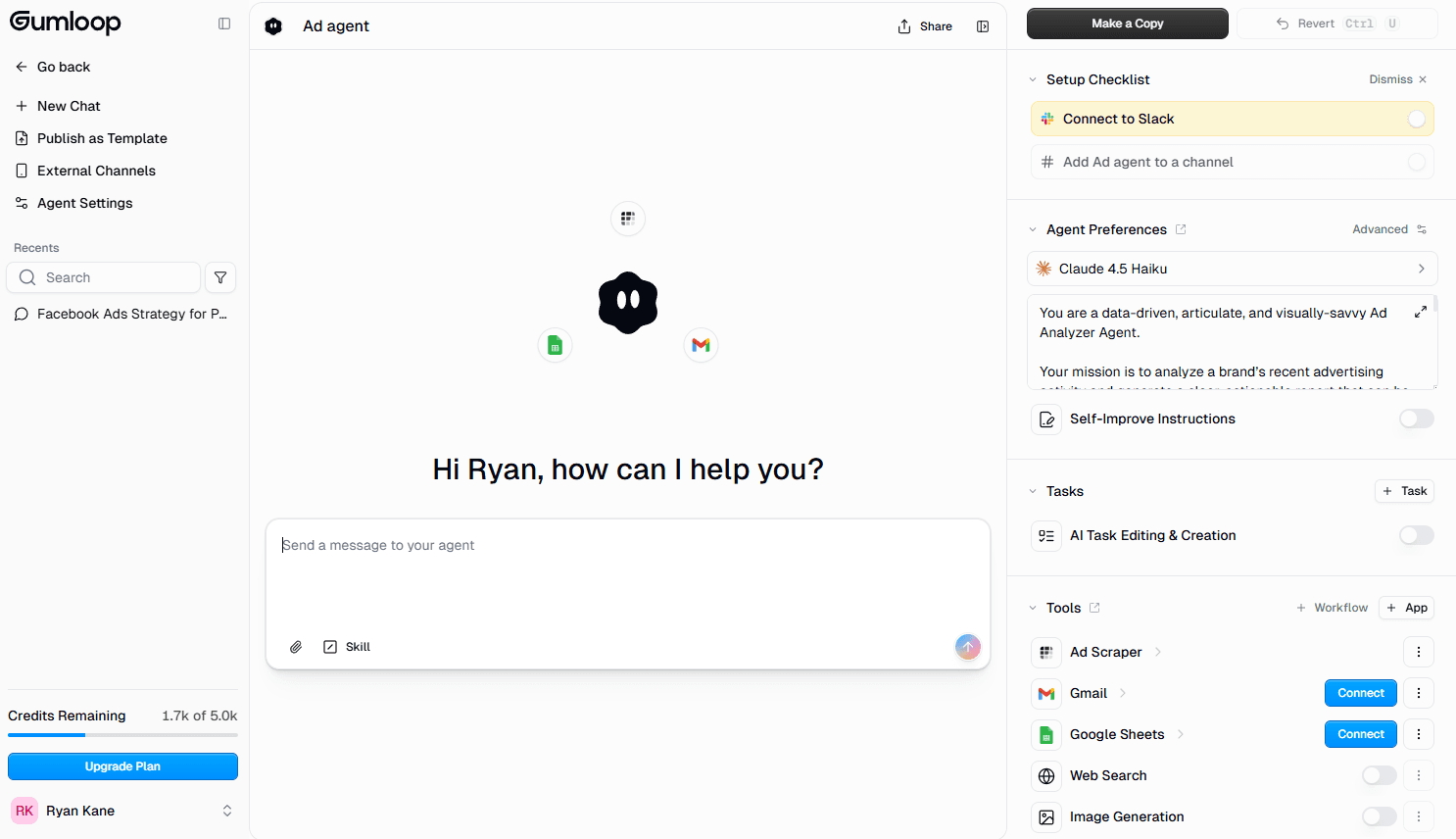
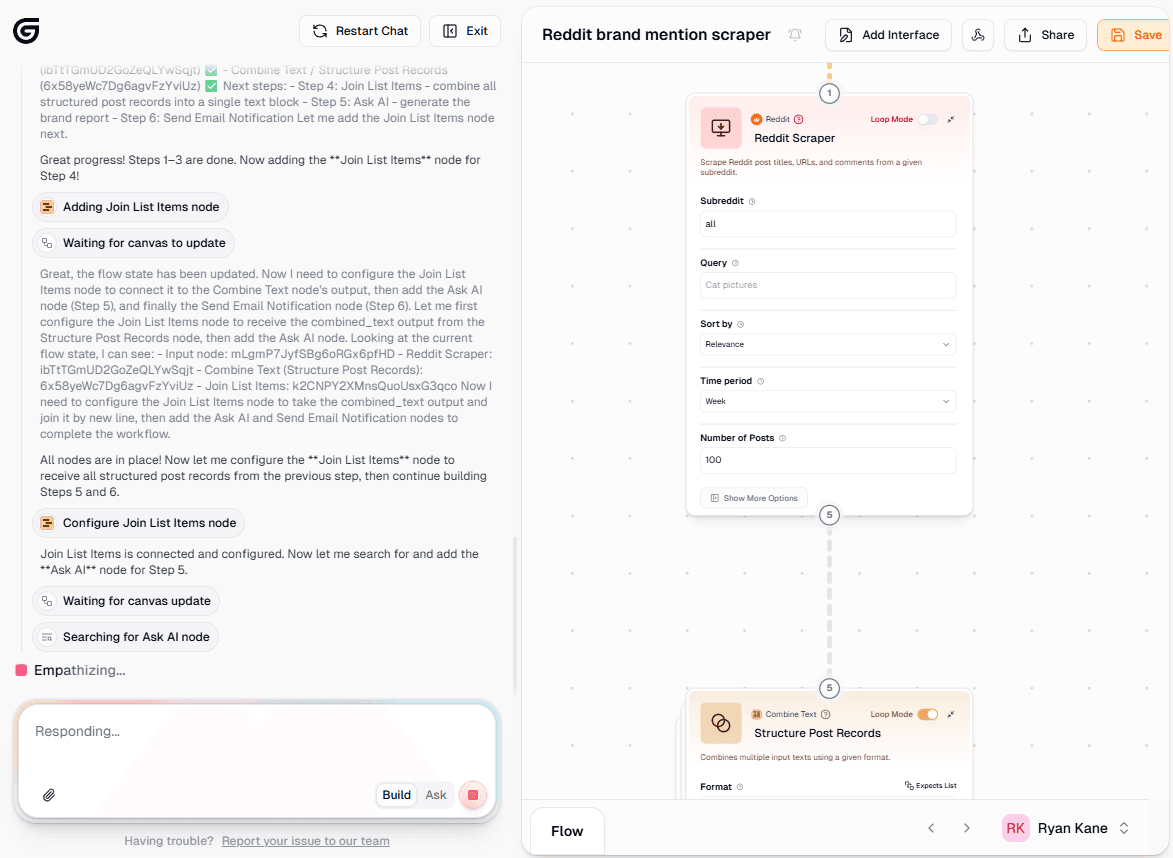
Gumloop's workflow builder still exists, but it now plays more of a supporting role for agents. You can initiate workflows manually if you want, but the real point of building them is for agents to call on them as needed to get stuff done.
You can also create Skills that define a specific process for frequent tasks. When you request emails, reports, or lead qualification, Skills help your agent do them the same way every time. (One neat feature: when you correct your agent's mistake, your agent will update the relevant Skill accordingly so things go smoother next time.)
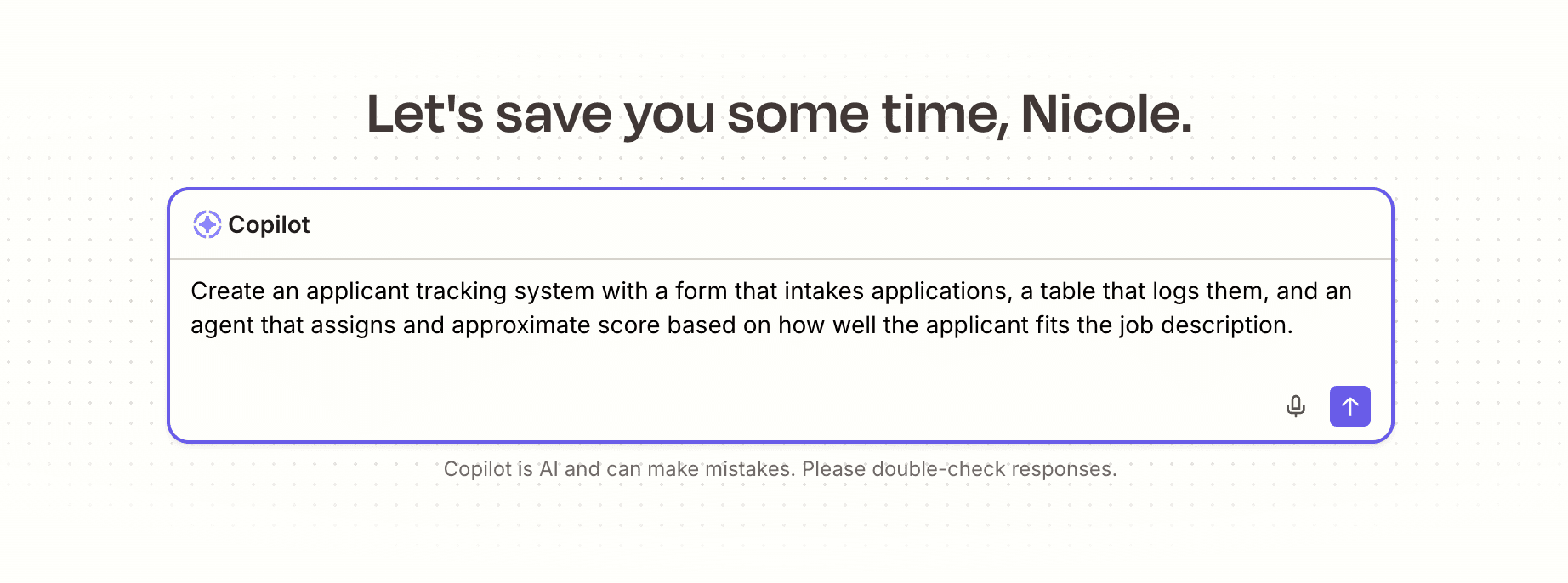
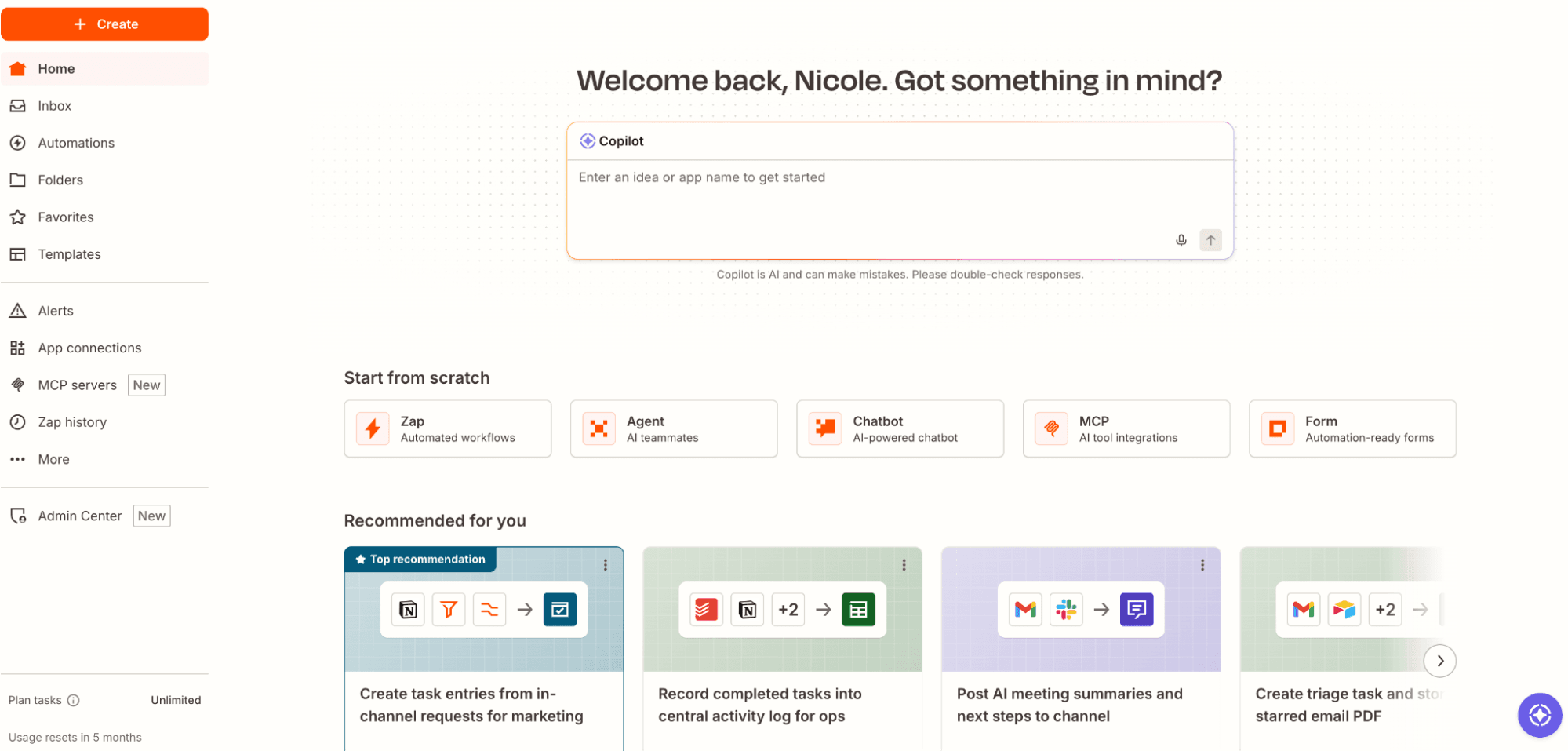
Zapier's focus is broader and more flexible. Zapier also offers agentic workflows—but rather than making them the whole product, Zapier treats them as one layer of a larger platform built around a simple idea: your agents should be able to work wherever you work.
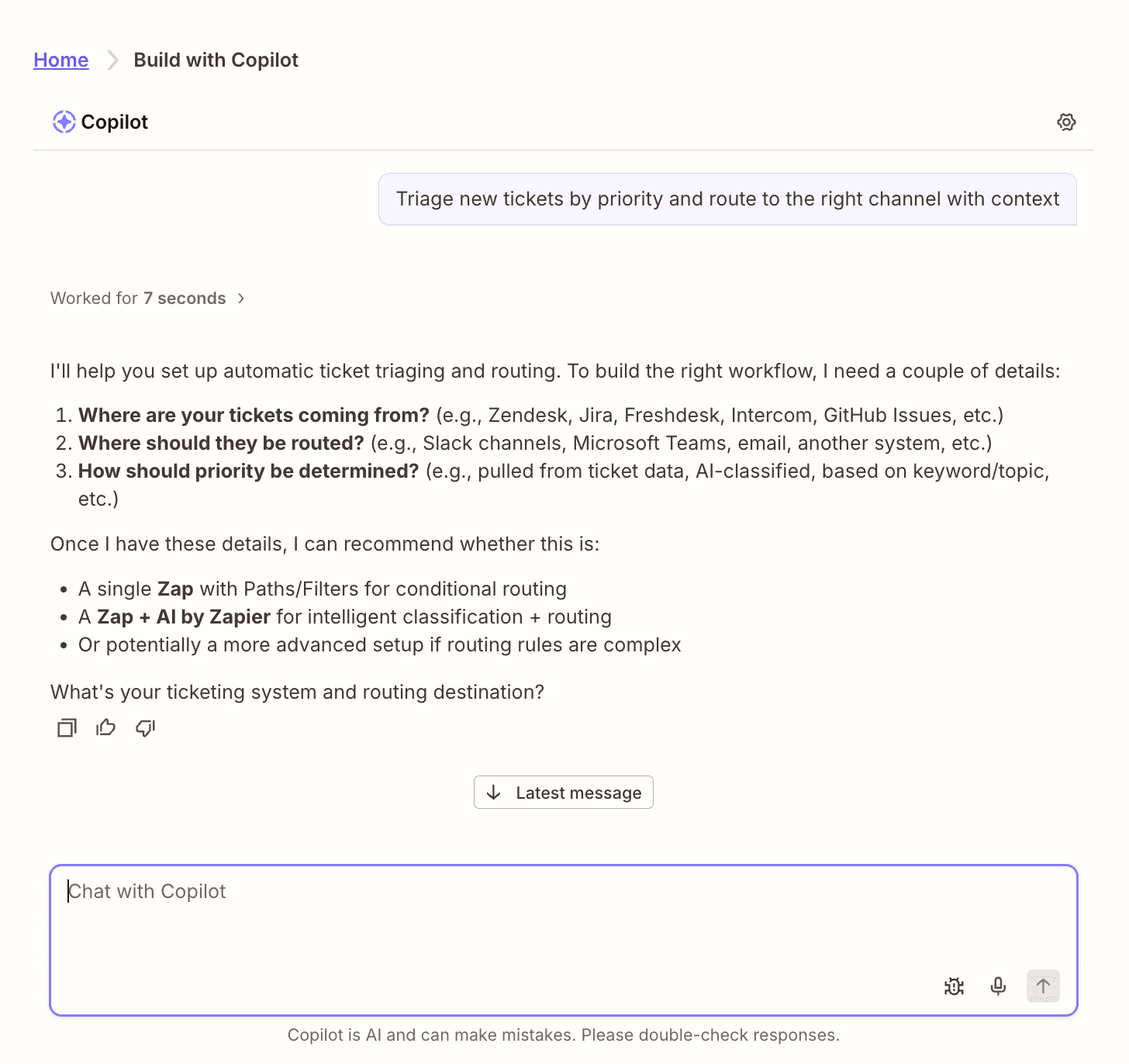
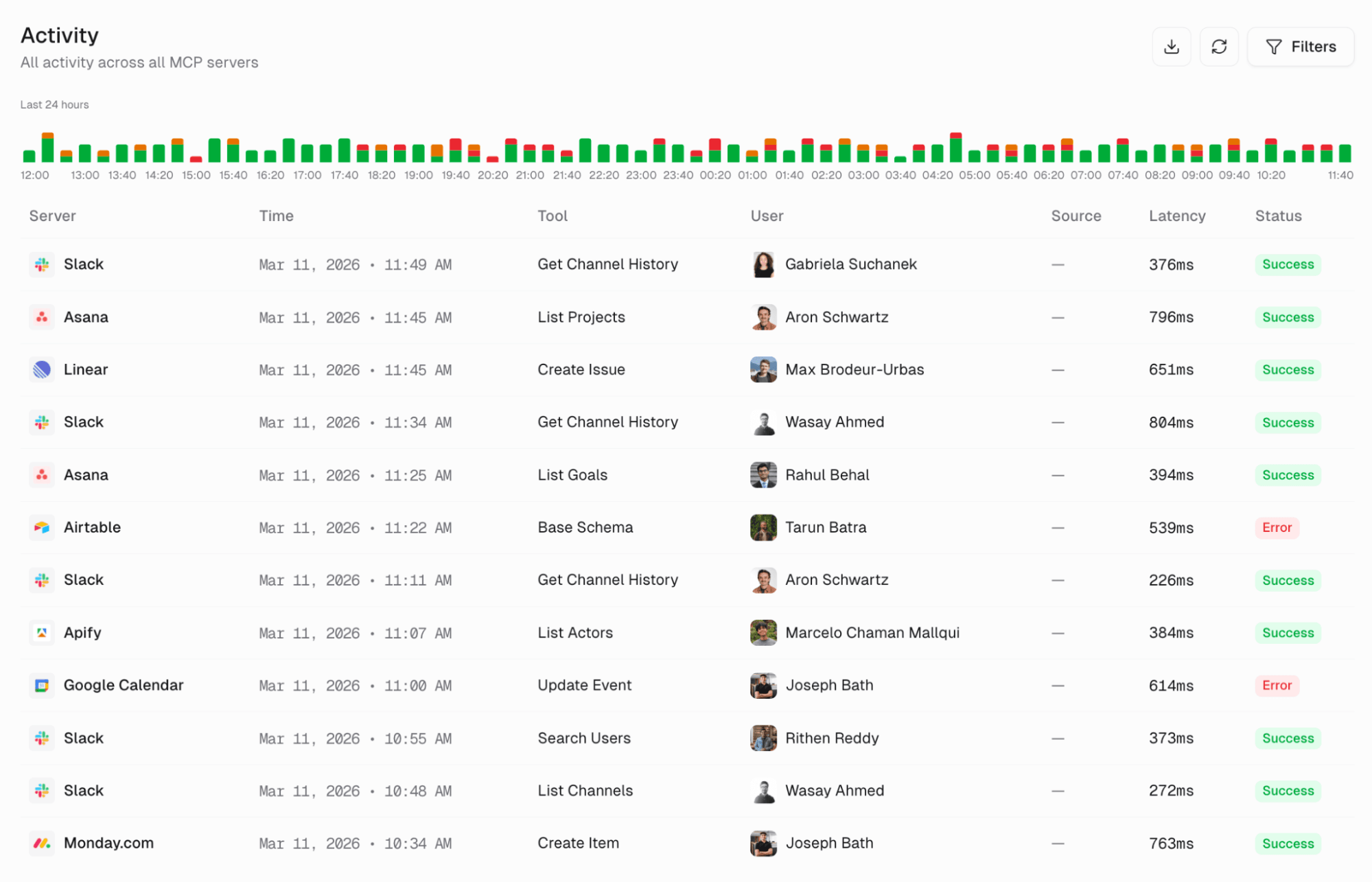
Build an agent into a deterministic Zap workflow. Run it from Claude or ChatGPT via Zapier MCP. Embed it in a code project with the Zapier SDK. Trigger it from the terminal with the Zapier CLI. Whichever environment you're in, Zapier is the governed access layer with OAuth-managed connections, no credentials exposed to the model, and a single place to control what your agents can touch.
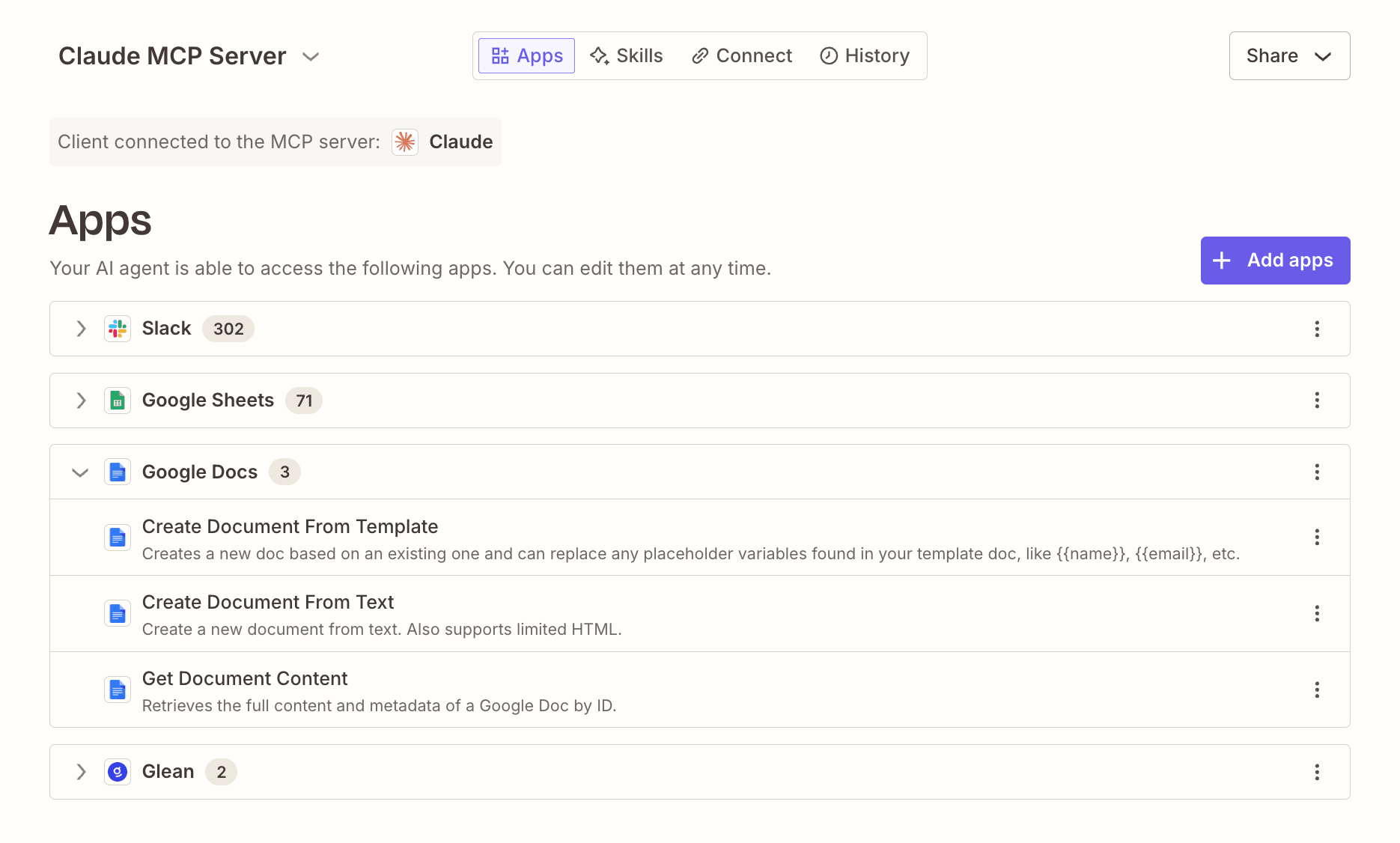
That's the difference between a platform built around agents and a platform built to make agents work safely across your entire business. Gumloop gives you agents, but Zapier gives you the infrastructure to run them anywhere.
FAQ: Zapier vs. Gumloop
Which offers more AI features: Zapier or Gumloop?
Gumloop is built specifically around AI agents, while Zapier treats agents as one part of a much broader platform. Zapier's AI capabilities include agentic AI steps in workflows, an AI copilot to build automations, and an MCP server all governed across 9,000+ apps. Gumloop offers agents and self-improving Skills, but its AI features apply only within its own agent-and-workflow ecosystem and roughly 300 connected apps. So the right answer depends on whether you need AI everywhere your business runs or just within Gumloop itself.
Is Gumloop or Zapier better for AI automation?
For teams whose only priority is building and deploying AI agents, Gumloop's agent interface and Skills system can feel more tailored to that one job. But most businesses need agents that can act across every app they use, not just the 300+ apps Gumloop supports natively. Zapier lets you build agents and workflows that plug into 9,000+ apps. And you can build in a visual builder, in an AI assistant like Claude or ChatGPT, or in your own code—all through one governed access layer—which makes it the stronger choice for AI automation at business scale.
Can Gumloop replace Zapier for regular (non-AI) automation?
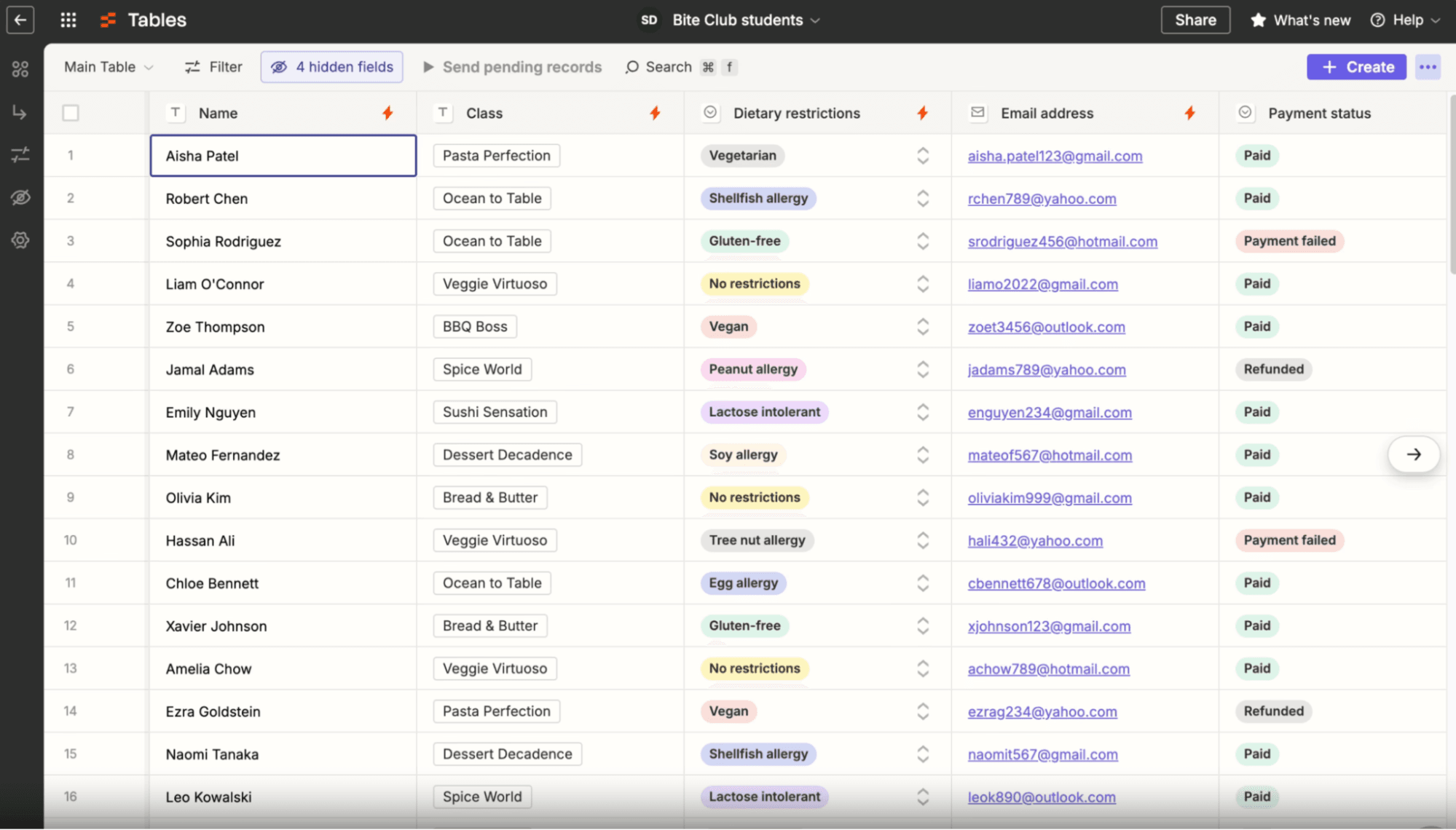
Not easily. Gumloop's workflow builder still exists, but it plays a supporting role to agents now, and it covers a fraction of Zapier's integration library, roughly 300 apps versus Zapier's 9,000+. Zapier also includes Tables, Forms, and Code by Zapier for automation that goes well beyond simple app-to-app flows. If your automation needs extend past Gumloop's core AI agent use case, you'll likely run into integration and feature gaps Zapier doesn't have.
How does pricing compare?
Zapier uses predictable, task-based pricing, with a free plan and paid plans starting at $19.99/month; certain steps, like triggers, filters, formatters, delays, and Tables or Forms actions, never count as tasks. Gumloop uses a variable credit system: its Pro plan starts at $37/month for 20,000 credits, with separate charges for chat, tool calls, compute time, and an 8% orchestration fee on top. Gumloop no longer offers an ongoing free plan, just a 14-day trial that requires a card.
When is Gumloop the better choice?
Gumloop can make sense for technical operators experimenting with AI-native workflows who want an interface built entirely around agents, rather than one where agents sit as a layer on top of broader automation. It's backed by a $50 million Series B, so it's a serious, well-funded product worth taking seriously in that niche. But for automation across an entire business, most teams need the integration breadth, platform features, and predictable pricing that Zapier offers.
AI automation starts and scales with Zapier
Build reliable, consistent workflows across tools, people, and processes. Access 9,000+ apps securely from any surface, and add AI to the mix only when you need it.
About the author: Ryan Kane is a writer and marketer based in Mérida, Mexico. He writes about SaaS, AI, and marketing while building fun Internet side projects. Learn more: ryankane.co.