Top companies trust Zapier to automate work that solves their unique business problems—no coding required.
How Zapier works
Zapier makes it easy to integrate NetHunt CRM with Webhooks by Zapier - no code necessary. See how you can get setup in minutes.
100%
Help
NetHunt CRM
NetHunt CRM
1. Choose trigger event
Webhooks by Zapier
Webhooks by Zapier
2. Choose action
1. Select the event
Setup
Test
NetHunt CRM
Choose a trigger event
Choose a trigger
A trigger is the event that starts your Zap—like a "Deleted Record" from NetHunt CRM.
Add your action
An action happens after the trigger—such as "Custom Request" in Webhooks by Zapier.
You’re connected!
Zapier seamlessly connects NetHunt CRM and Webhooks by Zapier, automating your workflow.
Supported triggers and actions
Zapier helps you create workflows that connect your apps to automate repetitive tasks. A trigger is an event that starts a workflow, and an action is an event a Zap performs.
Create a new record or update an existing record in your app.
URL
Required
Payload_type
Data
Wrap Request In Array
File
Unflatten
Basic Auth
Headers
Action
This is an event a Zap performs.
Write
Create a new record or update an existing record in your app.
For AI agents & developers
Use NetHunt CRM and Webhooks by Zapier with AI agents and code
Beyond Zap workflows. Call NetHunt CRM and Webhooks by Zapier actions directly from your AI client or your codebase, using the same 9,000+ app integrations Zapier already runs.
No code
Connect via Zapier MCP
Expose NetHunt CRM and Webhooks by Zapier actions as tools in any MCP client. Authenticate once, then call them in natural language.
Example actions on this page
Create Comment
Custom Request
Works with
Claude · ChatGPT · Cursor · any MCP-compatible client
There is no Python package yet. SDK is TypeScript-only (@zapier/zapier-sdk). The MCP server URL is personal to your account; get it at zapier.com/mcp.
Zapier is the automation platform of choice for 87% of Forbes Cloud 100 companies in 2023
93%
Customers who say using Zapier has made them better at their job
25m
Customers have created over 25 million Zaps on the platform
6 mins
The average user takes less than 6 minutes to set up a Zap
Practical ways you can use NetHunt CRM and Webhooks by Zapier
Receive CRM updates in a project management tool
When a new deal is created or updated in NetHunt CRM, notify a project management tool via a webhook to ensure all parties are aligned. This automation allows you to track deals and follow-ups seamlessly in one place, helping to eliminate communication bottlenecks and improve responsiveness.
Whenever a customer record is updated in NetHunt CRM, the details are automatically sent to an external application via webhooks, ensuring up-to-date data consistency across platforms. This eliminates manual data entry and decreases the likelihood of errors.
When a contact's record is modified with new marketing-relevant information in NetHunt CRM, trigger a webhook to pass the data to your campaign tool for immediate action. By keeping marketing campaigns aligned with real-time customer updates, this improves ROI and customer targeting while saving time on manual data transfer.
Learn how to automate Webhooks by Zapier on the Zapier blog
Make work flow with AI
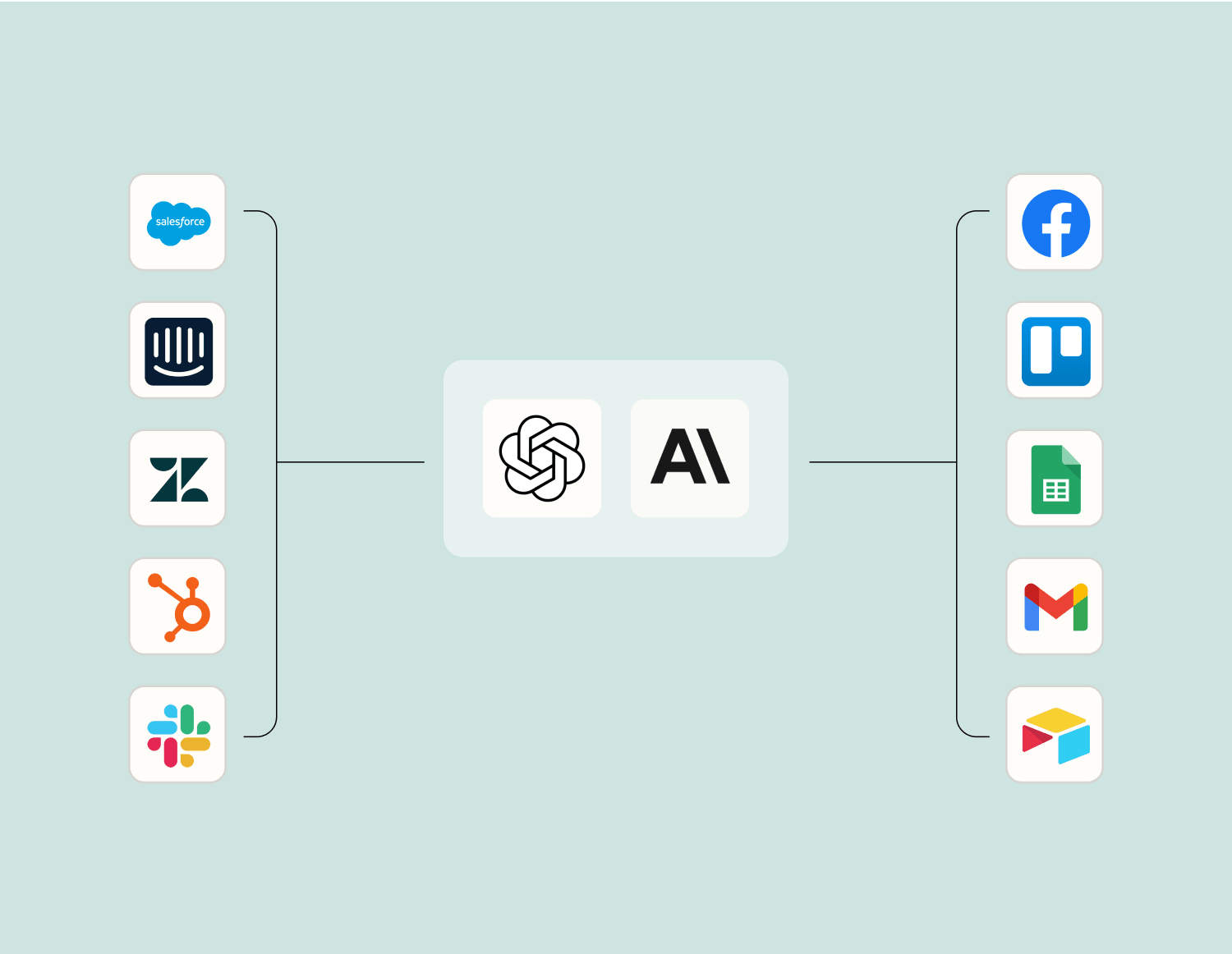
Level up your NetHunt CRM to Webhooks by Zapier integration with AI. Extract, summarize, and transform your integration data with leading AI models like OpenAI, Anthropic, and more.
Frequently Asked Questions about NetHunt CRM + Webhooks by Zapier integrations
New to automation with Zapier? You're not alone. Here are some answers to common questions about how Zapier works with NetHunt CRM and Webhooks by Zapier
What is the basic process of integrating NetHunt CRM with Webhooks by Zapier?
Integrating NetHunt CRM with Webhooks by Zapier involves setting up triggers and actions through Zapier's interface. You need to choose a specific event in NetHunt, such as a new lead, as the trigger, and then define a webhook in Zapier that will act upon this trigger to perform desired actions elsewhere.
How do I set up a trigger from NetHunt CRM using Webhooks by Zapier?
To set up a trigger from NetHunt CRM using Webhooks by Zapier, you start by choosing NetHunt as the app in your Zap configuration. Select an event such as 'New Contact' as the trigger event. You'll need to connect your NetHunt account and specify the conditions under which this trigger will activate.
What kind of actions can I automate with this integration?
Using this integration, you can automate various actions such as sending Slack notifications when new deals are added in NetHunt or creating Google Calendar events based on specific criteria met in your CRM records.
Are there limits on how many triggers or actions I can set up with NetHunt CRM and Webhooks?
There are no inherent limits on the number of triggers or actions you can set up between NetHunt CRM and Webhooks; however, keep in mind any subscription plan limits that may be imposed by either service.
Can I customize what data is sent via a webhook from my CRM?
Yes, you can customize data sent via a webhook through field selection and conditional logic within Zapier. This allows you to dictate exactly which pieces of data are transmitted every time an action is triggered.
What happens if my webhook fails during an integration?
If a webhook fails during integration, we recommend checking your connection settings first. You can also view error logs within the 'Task History' section in Zapier to diagnose issues. Common problems include authentication failures or endpoint errors.
Is coding expertise required to set up webhooks for this integration?
No direct coding expertise is required to set up webhooks between NetHunt CRM and other services via Zapier. The platform provides an intuitive interface where users configure integrations using predefined options for most actions.
About NetHunt CRM
NetHunt CRM is a customer relationship management system for Gmail and Google Apps.
App Builder, CRM (Customer Relationship Management), Forms & Surveys, Zapier
About Webhooks by Zapier
Webhooks simply POST data (or JSON) to a specific URL every time we see something new. Webhooks can also accept data (or JSON) to kick off a workflow in Zapier.