Top companies trust Zapier to automate work that solves their unique business problems—no coding required.
How Zapier works
Zapier makes it easy to integrate Google Sheets with Toggl Track - no code necessary. See how you can get setup in minutes.
100%
Help
Google Sheets
Google Sheets
1. Choose trigger event
Toggl Track
Toggl Track
2. Choose action
1. Select the event
Setup
Test
Google Sheets
Choose a trigger event
Choose a trigger
A trigger is the event that starts your Zap—like a "New Spreadsheet Row (Team Drive)" from Google Sheets.
Add your action
An action happens after the trigger—such as "Create Client" in Toggl Track.
You’re connected!
Zapier seamlessly connects Google Sheets and Toggl Track, automating your workflow.
Supported triggers and actions
Zapier helps you create workflows that connect your apps to automate repetitive tasks. A trigger is an event that starts a workflow, and an action is an event a Zap performs.
Create a new record or update an existing record in your app.
Organization
Required
Emails
Required
Skip email
Workspace
Required
Action
This is an event a Zap performs.
Write
Create a new record or update an existing record in your app.
Workspace
Required
Labor cost
Manager
Project
Required
Rate
User
Required
Action
This is an event a Zap performs.
Write
Create a new record or update an existing record in your app.
Workspace
Required
Project
Required
Task Name
Required
Task Status
Action
This is an event a Zap performs.
Write
Create a new record or update an existing record in your app.
Organization
Required
Workspace
Required
User
Required
Action
This is an event a Zap performs.
Write
Create a new record or update an existing record in your app.
Workspace
Required
Time entry
Required
Action
This is an event a Zap performs.
Write
Create a new record or update an existing record in your app.
Workspace
Required
Project member
Required
Labor cost
Manager
Rate
Action
This is an event a Zap performs.
Write
Create a new record or update an existing record in your app.
Workspace
Required
Billable
Clients
Description
Start date
Required
End date
Required
Grouped
Order by
Projects
Action
This is an event a Zap performs.
Search
Find existing data in your app
Workspace
Required
Project Name
Required
Action
This is an event a Zap performs.
Search
Find existing data in your app
Workspace
Required
Task name
Required
Task status
Action
This is an event a Zap performs.
Search
Find existing data in your app
Workspace
Description
Before
After
Action
This is an event a Zap performs.
Search
Find existing data in your app
Workspace
Required
Project filter
User filter
Action
This is an event a Zap performs.
Search
Find existing data in your app
Workspace
Required
Client Name
Required
Client Status
Action
This is an event a Zap performs.
Search or write
Find existing data in your app, or create a new record if no data is found
Workspace
Required
Tag Name
Required
Action
This is an event a Zap performs.
Search or write
Find existing data in your app, or create a new record if no data is found
Workspace
Required
Time entry description
Before
After
Start
Required
Duration
Required
Billable
Project
Task
Tags
User
Action
This is an event a Zap performs.
Search or write
Find existing data in your app, or create a new record if no data is found
For AI agents & developers
Use Google Sheets and Toggl Track with AI agents and code
Beyond Zap workflows. Call Google Sheets and Toggl Track actions directly from your AI client or your codebase, using the same 9,000+ app integrations Zapier already runs.
No code
Connect via Zapier MCP
Expose Google Sheets and Toggl Track actions as tools in any MCP client. Authenticate once, then call them in natural language.
Example actions on this page
Create Spreadsheet Column
Create Client
Works with
Claude · ChatGPT · Cursor · any MCP-compatible client
There is no Python package yet. SDK is TypeScript-only (@zapier/zapier-sdk). The MCP server URL is personal to your account; get it at zapier.com/mcp.
Zapier is the automation platform of choice for 87% of Forbes Cloud 100 companies in 2023
93%
Customers who say using Zapier has made them better at their job
25m
Customers have created over 25 million Zaps on the platform
6 mins
The average user takes less than 6 minutes to set up a Zap
Practical ways you can use Google Sheets and Toggl Track
Track client time data in Google Sheets
When a new time entry is recorded in Toggl Track for a client project, Zapier will automatically add the details (like project, time spent, and description) to a Google Sheets spreadsheet. This saves time on manual data entry and ensures that client time logs are centralized, improving billing accuracy.
When a new Toggl Track time entry is recorded for IT projects, Zapier automatically adds the data to a Google Sheets spreadsheet. It ensures IT departments maintain a clear and organized log of project hours, aiding in resource allocation and management.
When a time entry for a marketing campaign is started in Toggl Track, Zapier will log the data in a designated worksheet in Google Sheets. This allows marketing teams to track the time spent on campaigns, enabling better evaluation of time allocation and campaign efficiency.
Learn how to automate Google Sheets on the Zapier blog
Learn how to automate Toggl Track on the Zapier blog
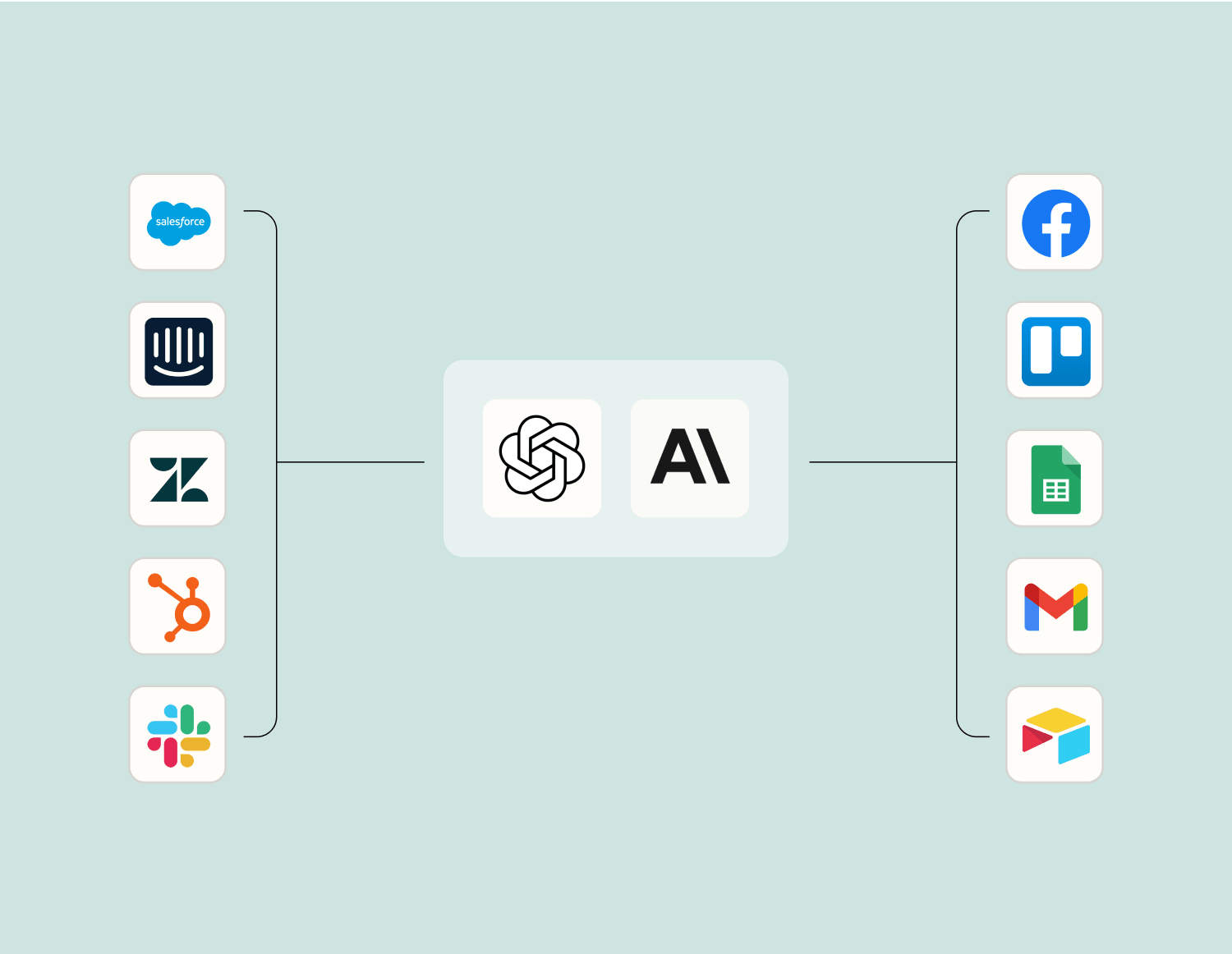
Make work flow with AI
Level up your Google Sheets to Toggl Track integration with AI. Extract, summarize, and transform your integration data with leading AI models like OpenAI, Anthropic, and more.
Frequently Asked Questions about Google Sheets + Toggl Track integrations
New to automation with Zapier? You're not alone. Here are some answers to common questions about how Zapier works with Google Sheets and Toggl Track
How do I set up an integration between Google Sheets and Toggl Track?
To set up the integration, you first need to sign in to both your Google Sheets and Toggl Track accounts. We provide a step-by-step guide that helps you connect both services through triggers such as 'New Row Added' in Google Sheets or 'New Time Entry' in Toggl Track. You then configure actions like creating timesheets in Toggl Track or updating spreadsheets based on tracked time entries.
What triggers can I use for integrating Google Sheets with Toggl Track?
You can use several triggers for this integration, such as 'New Row Added', 'Updated Row', or 'New Worksheet' for Google Sheets, which can initiate actions like creating a new time entry or updating an existing one in Toggl Track.
Can I update existing time entries in Toggl Track from Google Sheets?
Yes, you can update existing time entries in Toggl Track when a specific condition is met in Google Sheets, such as a change in an existing row. This ensures your data remains consistent and up-to-date across both platforms.
Is it possible to create detailed reports from Toggl Track data into Google Sheets?
Absolutely! By configuring the workflow to export toggled time entries into a new worksheet or adding them as new rows, you can create comprehensive reports that help analyze productivity trends over time.
What kind of actions are supported by this integration for managing projects?
The integration allows actions such as adding new projects from a spreadsheet entry or modifying project details based on updates from Google Sheets. This ensures seamless project management and accurate tracking of changes within your timelines.
How does the synchronization between the two apps work?
The synchronization relies on setting workflows where any trigger event like 'New Time Entry' in Toggl or 'Row Updated' in Google Sheets prompts automatic updates. This keeps data synchronized without needing manual intervention once set up properly.
Are there any limitations on the number of records I can import/export between these services?
While our integrations handle numerous transactions efficiently, it's important to be mindful of API rate limits set by both platforms, which may restrict the number of records processed at once during peak times.
About Google Sheets
Create, edit, and share spreadsheets wherever you are with Google Sheets, and get automated insights from your data.