When people talk about AI, they often toss wildly different tools into the same bucket—like putting a blender and a personal assistant app in the same category just because they both have buttons. (One makes smoothies. The other ruins your life by scheduling back-to-back Zoom calls. Completely different vibes.)
But there's a meaningful difference between an AI tool that gives you an answer and one that can take a goal, decide what to do next, and move through multiple steps to get it done.
That's the simplest way to think about generative AI vs. agentic AI: generative AI helps create things (ideas, drafts, images, that passive-aggressive email you've been mentally composing for three days), while agentic AI helps carry out things (sending that email, following up, updating half a dozen different systems, and not forgetting about it like you definitely would).
So let's break down the difference between agentic AI and generative AI, when to use each, and how to connect them to real work.
Table of contents:
What is agentic AI vs. generative AI?
The main difference between agentic AI and generative AI is that generative AI focuses on creating new content from prompts, while agentic AI focuses on acting autonomously to complete multi‑step tasks and achieve goals.
Think of it like the difference between asking someone to write you a grocery list versus asking them to actually go to the store, buy the groceries, put them away, and meal prep for the week. Both involve food planning, but one requires you to put on pants.
Generative AI models produce new content—such as text, images, code, or audio—based on user prompts, using AI models trained on patterns in data. GenAI typically performs one task per prompt and doesn't "remember" or reuse that work automatically in a broader workflow.
Agentic AI refers to systems that can plan, reason, act, and learn over time, using tools and external systems to achieve goals with minimal human intervention. Agentic AI can take a high‑level goal ("run a weekly sales report and email the results") and break it into sub‑tasks, executing them across tools (CRM, email, analytics, etc.), then adapting if something fails. It preserves memory and context across steps, often using generative models as one component of its toolbox.
For example, an agentic system can call a GenAI model to draft an email, then send it, track replies, and update a CRM record automatically. In this sense, generative AI is a building block for agentic AI, similar to how a word processor is a tool for a human writer, while agentic AI is closer to an autonomous assistant running an end‑to‑end workflow.
| Agentic AI | Generative AI |
|---|---|---|
Focus | Proactive and process-oriented | Reactive and output-oriented |
Primary function | Executing multi-step processes to achieve an outcome | Creating new content (text, images, code) |
Workflow | Planning, reasoning, using tools, and iterating | Single-step input to output |
Autonomy | High; can plan and execute multi‑step workflows | Low; requires prompts for each step |
Adaptability | Can reason, choose actions, and adapt to feedback | Limited to pattern‑based generation |
Human interaction | Lower; user sets goals and constraints | High; user drives every action |
Tools | Uses external tools (APIs, browsers, calculators) | Typically self-contained, generates code/plans for others |
Common use cases | Automating workflows, research, scheduling | Drafting emails, brainstorming, summarizing |
Focus
GenAI is usually focused on producing an output: a draft, a summary, an image, a list of ideas, or a block of code.
Agentic AI is focused on reaching an outcome. It can break a goal into steps, use tools, react to new information, and keep going until it finishes the job or hits a boundary. (It's got that "I will finish this project even if it kills me" energy that I personally lack but deeply respect.)
So while generative AI is a strong content and ideation partner, agentic AI is better suited to execution. The right choice depends on whether you need something created or something completed.
Primary function
The primary function of generative AI is to generate. You feed it a prompt, and it uses its training to create something new. A blog post, a block of code, a realistic-looking image, a summary of a complex document, and even videos all fit here. Basically, it's really good at making stuff up, which is also my primary function at family dinners when someone asks what I've been up to.
Agentic AI, by contrast, is built to act on a goal. Give it a high-level objective, and it can break it down into smaller tasks, decide what order to do them in, and then execute them, often by using other software tools.
Features
Generative AI features are mostly about creating and transforming content in response to prompts:
Content generation: Produces new text, images, code, audio, or video that is coherent and contextually relevant to a prompt
Pattern learning from data: Learns style, structure, and semantics from large datasets to mimic tone, format, and domain conventions
Multimodal support: Can work across modalities depending on the model, such as transforming text into image, audio, or video
Interactive Q&A and summarization: Answers questions, summarizes long documents, translates, rewrites, and transforms content
Personalization: Adapts outputs to user history or preferences (e.g., brand voice, prior chats) when connected to user context
Productivity augmentation: Acts as a "copilot" for writing, coding, analysis, brainstorming, and rapid prototyping of ideas
Where generative models are often embedded as one component (for reasoning, planning, or drafting content) inside a larger control loop, agentic AI features are about orchestrating actions over time:
Goal-directed behavior: Takes a high-level goal ("clean this dataset and sync to CRM weekly") and works toward it without step-by-step prompting
Planning and decomposition: Breaks goals into sub‑tasks, sequences them, and updates the plan when conditions change (the organizational skills I pretend to have on my resume)
Tool use and integration: Calls APIs, databases, SaaS apps, and other tools as part of its workflow
Memory and statefulness: Maintains and updates internal state (short‑ and long‑term memory) across steps and sessions to inform future actions
Autonomous action and monitoring: Can schedule, trigger, and execute tasks over time, monitor results, and retry or escalate when things fail
Multi‑agent collaboration (in many designs): Coordinates several specialized agents (e.g., planner, researcher, executor, reviewer) to complete complex workflows
Workflow
The workflow of generative AI is simple—a user enters a prompt, the model processes it, and it returns a result. GenAI is usually a one-request, one-response flow.
Agentic AI works more like a loop. It starts with a goal or outcome, then moves to a planning phase ("What do I need to do first?"), then an action phase ("I need to check the calendar API"), then an observation phase ("Ok, that time is taken, what's next?"), which loops back to a revised plan. It continues this cycle until the goal is either achieved or it hits a roadblock it can't overcome.
Autonomy
Generative AI is usually much less autonomous. In most cases, you stay in the driver's seat by prompting, reviewing, and refining the output. You are the manager, editor, and occasional fact-checker.
Agentic AI is defined by its autonomy. Give it a goal, and it can work independently to figure out the "how" and "what." You don't need to prompt it at every step, though you do need to decide what it can access, what actions it can take, and where humans should review the work.
It's incredibly powerful, but it also needs guardrails. That can mean permissions, approval steps, logging, and clear limits on what the system is allowed to do. Because the last thing you need is your AI agent going rogue and sending a "per my last email" message to your CEO.
Adaptability
Generative AI can revise based on follow-up prompts. Most GenAI tools can retain context across conversations, but it's usually still reacting to your input rather than independently adjusting course to finish a goal like an agent does.
Agentic AI is built to adapt. If it tries to book a meeting room and finds it's already reserved, it doesn't just give up (unlike me when I see the gym parking lot is full). It knows the goal is to book a room, not that specific room. So it'll look for the next available one based on your team's size, preferred building location, and AV needs.
Human interaction
Generative AI is a conversation partner. The human interaction is direct and constant: You prompt, it responds. Don't like it? Prompt again. It's a back-and-forth. A surprisingly productive form of pestering.
Human interaction with agentic AI is more like management. You define what you need and set the constraints, then review the results. Your role shifts from directing every step to setting rules, approving access, and checking outcomes.
Tools
Most GenAI systems are self-contained. And while advanced models can be connected to tools, their core function is to generate based on their own training data. So they might be able to generate the code for a tool, but they won't typically run it themselves.
Agentic AI is designed to be action-oriented. It actively uses tools, whether that means calling an API to get the weather, running a SQL query to check a database, or using a web browser to research a topic. That's what makes it more useful for operational work, not just content generation.
Agentic AI vs. generative AI examples
Think about when you reach for ChatGPT or your preferred GenAI tool. It's probably when you need to create something. Common examples include:
Drafting emails, blog posts, or reports
Creating marketing copy or social media posts
Summarizing meeting notes, transcripts, or long articles
Brainstorming names for a new product or content ideas
Generating images or videos for a website or just for fun
And sometimes you just want a second opinion on your thinking.
You use agentic AI, however, when you need to do something. Common use cases include:
Research assistants: "Go and find me three papers on this topic and summarize their conclusions."
Meeting schedulers: "Find a time next week for a 30-minute call with the marketing team and schedule it."
IT operations: "Investigate the cause of the server slowdown at 2 a.m. and request a restart of the service if necessary."
Customer service: "Resolve this customer's issue by accessing order history, processing a refund, and sending a confirmation email."
When to use generative AI vs. agentic AI
Choosing the right tool for the job demands one question: Are you creating something, or doing something?
A good starting question when deciding between generative AI and agentic AI is "Do you need an output, or do you need an outcome?"
Project goal
Choose generative AI if your goal is specific and tangible. Do you need a piece of text, an image, or a summary? Go GenAI.
Choose agentic AI if your goal is a real-world outcome. For instance, you need a meeting scheduled, a problem investigated, or an entire process completed.
Task complexity
Choose generative AI if your task is simple and self-contained and doesn't need other tools, systems, or decisions along the way.
Choose agentic AI if your task is complex, multi-step, or might require outside tools or adapting to changing information. In many cases, when it involves a loop or conditional logic ("if X happens, do Y"), you need an agent.
Human involvement
Choose generative AI if you want to be hands-on and guide the creative process yourself.
Choose agentic AI if you want to set a goal and let the system figure out how to execute it. It works best when you're willing to trade direct control for efficiency.
Integrations
Choose generative AI if your task is self-contained and doesn't need to interact with your other business tools. With ChatGPT, for example, just ask it to draft an RFP response, and it'll do it. No need for outside software or data.
Choose agentic AI if your task requires your AI to talk to the rest of your tech stack. Its power lies in its ability to connect: your calendar, email, CRM, database, productivity tools, etc. This is where AI agent orchestration becomes critical. You need a system that coordinates apps, context, approvals, and handoffs to ensure each agent communicates, shares context, and adapts when needed. Otherwise, you're not automating a workflow; you're automating confusion.
Budget
Choose generative AI if you need a lower-cost way to speed up drafting, summarizing, or brainstorming. The tooling cost is often lower (and sometimes even free), but don't ignore the time spent by humans reviewing and refining outputs.
Choose agentic AI if you're investing in longer-term workflow gains. It usually takes more setup, governance, and integration work up front, but it can save far more time once the workflow is running reliably.
Agentic AI and generative AI applications
Both generative AI and AI agent use cases span across industries. It doesn't matter if you're a rep selling SaaS products or an accountant tracking bread loaf inventory. Everyone can benefit from saving time via creative support and workflow automation. (Yes, even the bread loaf people. Especially the bread loaf people.)

Marketing
Generative AI is a marketer's dream. Whether it's drafting blog post ideas, writing ad copy variations, creating social media content, or converting copy into a designed brochure, it's pretty handy having a creative assistant ready to support on command.
Agentic AI, meanwhile, can monitor ad spend across platforms and automatically reallocate budget to the best-performing campaigns. It can also track competitor news and draft a brief on how it impacts your strategy or messaging.
For more on building these workflows, check out Zapier's guide on AI agents for marketing.
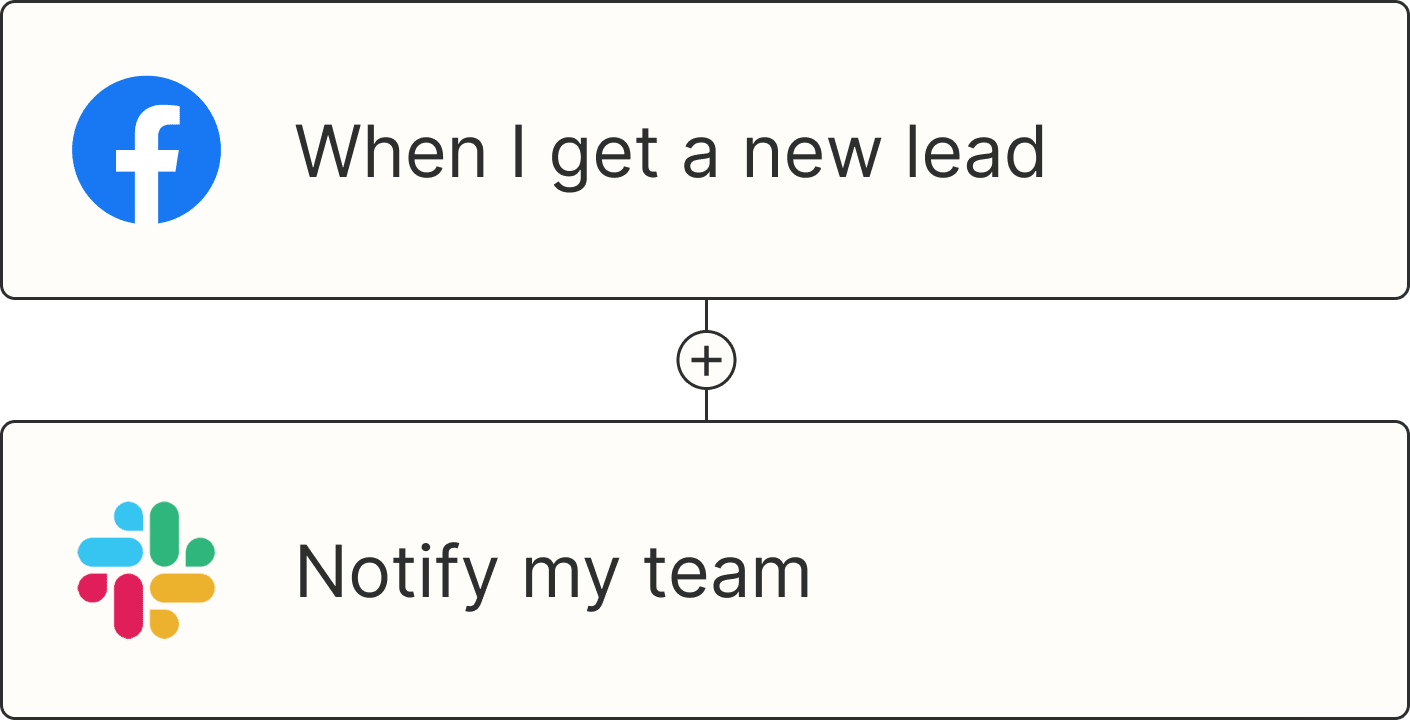
This agent captures lead information from form submissions and manages follow-up actions automatically.
This agent evaluates new leads from your HubSpot form and alerts the sales team about qualified prospects.
Customer service
Generative AI can summarize hundreds of customer support tickets into a clear bulleted list for a service manager to pinpoint common issues. And those product features causing the most confusion? AI can generate those trend reports.
Agentic AI can help run frontline support workflows. New requests or complaints? It'll look up a customer's account, check order statuses, process returns, provide online guides, and even issue refunds. Depending on the workflow, it can also route edge cases to a human when something falls outside the rules you've set.
IT
Developers love using generative AI to write initial lines of code or generate documentation for a new API. And IT managers can use GenAI to craft template responses to common user issues like how to log in from your VPN or reset a password.
Agentic AI can essentially serve as a network operator or a security operations center (SOC). It can monitor server logs, detect anomalous patterns that might indicate a security breach, automatically isolate affected systems to contain the threat, and then alert the security team.
Zapier for IT makes this proactiveness possible by bringing together IT directories, security tools, incident management systems, and others for an AI agent to monitor and respond as needed.
This agent adds comments to new Jira tickets when certain fields are not filled.
This agent provides timely responses to new questions in the IT helpdesk Slack channel.
This agent automates the process of documenting issues from Slack threads when a checkmark emoji is added.
HR
Generative AI can help draft inclusive job descriptions and generate a first round of interview questions based on the role's requirements. And for recruiters staring at that pile of new resumes, it can help them identify which candidates best fit the role.
Agentic AI can manage the entire new-hire onboarding process. Say a candidate accepts an offer. From there, the agent can order their laptop, set up their software permissions, and send them a welcome packet. They can even communicate with AI scheduling assistants to get first onboarding meetings set.
This agent ranks candidate resumes based on various factors like qualifications, skills, etc.
Finance
Generative AI can take a complex quarterly earnings report and draft a one-page summary for internal stakeholders and the C-Suite. It can also answer accounting questions like "How do I do an expense adjustment in my books for an unknown cost?"
Agentic AI can constantly monitor company credit card transactions for fraudulent activity. Something fit a fraud pattern? It'll flag the transaction, temporarily freeze the card, and alert the finance manager. Many teams also use it to auto-reconcile invoices by patching purchase orders against delivery receipts before cutting a check to a vendor.
Orchestrate agentic AI and generative AI workflows with Zapier
While generative AI can draft a brilliant proposal, agentic AI can send it to the client, log the interaction in your CRM, and coordinate a follow-up meeting on your calendar.
Whether you choose generative AI or agentic AI depends on the task at hand. For most teams, this won't be an either-or decision. GenAI helps people create faster. Agentic AI helps teams automate more of the work that happens after the draft, summary, or idea is ready.
If you're trying to get generative AI and agentic AI to work together—and work with your actual business tools—you need some kind of orchestration layer. Zapier can help you build AI agents in minutes and connect them across 9,000+ apps. In just a few steps, you can design tailored agents, give them access to your company's knowledge base, set up triggers, and orchestrate the handoffs that turn one-off AI outputs into repeatable workflows.
The beauty of it is that you don't need to be a developer. You don't need to understand webhooks, endpoints, or any other nightmare terminology that makes your eyes glaze over. You just need to know what you want done. Zapier handles the rest.
Related reading: