Top companies trust Zapier to automate work that solves their unique business problems—no coding required.
How Zapier works
Zapier makes it easy to integrate Azure DevOps with Salesforce - no code necessary. See how you can get setup in minutes.
100%
Help
Azure DevOps
Azure DevOps
1. Choose trigger event
Salesforce
Salesforce
2. Choose action
1. Select the event
Setup
Test
Azure DevOps
Choose a trigger event
Choose a trigger
A trigger is the event that starts your Zap—like a "Completed Build" from Azure DevOps.
Add your action
An action happens after the trigger—such as "Add Contact to Campaign" in Salesforce.
You’re connected!
Zapier seamlessly connects Azure DevOps and Salesforce, automating your workflow.
Supported triggers and actions
Zapier helps you create workflows that connect your apps to automate repetitive tasks. A trigger is an event that starts a workflow, and an action is an event a Zap performs.
Create a new record or update an existing record in your app.
Path after /services/apexrest/
Required
HTTP method
Required
Query parameters
Extra headers
Request body
Timeout
Action
This is an event a Zap performs.
Write
Create a new record or update an existing record in your app.
File
Required
Salesforce Object
Required
Description
Attachment visibility
Action
This is an event a Zap performs.
Write
Create a new record or update an existing record in your app.
Create Contact
Creates a new contact.
Action
This is an event a Zap performs.
Write
Create a new record or update an existing record in your app.
File
Required
Title
Description
Salesforce Object
Action
This is an event a Zap performs.
Write
Create a new record or update an existing record in your app.
Note Title
Required
Note
Salesforce Object
Required
Note Visibility
Use Assignment Rules
Action
This is an event a Zap performs.
Write
Create a new record or update an existing record in your app.
Salesforce Object
Required
Use Assignment Rules
Allow Duplicates
Action
This is an event a Zap performs.
Write
Create a new record or update an existing record in your app.
Flow
Required
Manual flow input parameters
Action
This is an event a Zap performs.
Write
Create a new record or update an existing record in your app.
To
Required
CC
BCC
Subject
Required
Email Format
Required
Sender Type
Required
Action
This is an event a Zap performs.
Write
Create a new record or update an existing record in your app.
Lead to Update
Required
Use Assignment Rules
Action
This is an event a Zap performs.
Write
Create a new record or update an existing record in your app.
Salesforce Object
Required
Record to Update
Required
Use Assignment Rules
Action
This is an event a Zap performs.
Write
Create a new record or update an existing record in your app.
Query Type
Required
Include Deleted Records
Action
This is an event a Zap performs.
Search
Find existing data in your app
Parent Object
Required
Action
This is an event a Zap performs.
Search
Find existing data in your app
Salesforce Object
Required
SOQL WHERE clause
Required
Action
This is an event a Zap performs.
Search
Find existing data in your app
Salesforce Object
Required
SOQL WHERE Clause
Required
Sort by
Sort Order
Maximum Number of Records
Action
This is an event a Zap performs.
Search
Find existing data in your app
Salesforce Object
Required
Search Value
Required
Second Field to Search By
Second Search Value
Search Operator
Use Assignment Rules
Allow Duplicates
Action
This is an event a Zap performs.
Search or write
Find existing data in your app, or create a new record if no data is found
For AI agents & developers
Use Azure DevOps and Salesforce with AI agents and code
Beyond Zap workflows. Call Azure DevOps and Salesforce actions directly from your AI client or your codebase, using the same 9,000+ app integrations Zapier already runs.
No code
Connect via Zapier MCP
Expose Azure DevOps and Salesforce actions as tools in any MCP client. Authenticate once, then call them in natural language.
Example actions on this page
Trigger Build
Add Contact to Campaign
Works with
Claude · ChatGPT · Cursor · any MCP-compatible client
There is no Python package yet. SDK is TypeScript-only (@zapier/zapier-sdk). The MCP server URL is personal to your account; get it at zapier.com/mcp.
Zapier is the automation platform of choice for 87% of Forbes Cloud 100 companies in 2023
93%
Customers who say using Zapier has made them better at their job
25m
Customers have created over 25 million Zaps on the platform
6 mins
The average user takes less than 6 minutes to set up a Zap
Practical ways you can use Azure DevOps and Salesforce
Track closed Salesforce opportunities in Azure DevOps
When an opportunity is marked as closed in Salesforce, Zapier can create or update a task in Azure DevOps to align ongoing development work with the newly finalized deal. This enhances task planning and connects business wins with operational follow-through in real time.
Sync updated Salesforce contacts to Azure DevOps work items
Whenever a Salesforce contact is updated, Zapier will update related Azure DevOps work items with the contact's latest information. This keeps communication smooth and ensures the support team has access to up-to-date client details within their workflow.
Create Salesforce cases for new Azure DevOps work items
When a new work item is created in Azure DevOps, Zapier will automatically generate a corresponding case in Salesforce. This ensures IT teams seamlessly track related issues without having to manually replicate data, keeping incident documentation accurate across tools.
Learn how to automate Salesforce on the Zapier blog
Make work flow with AI
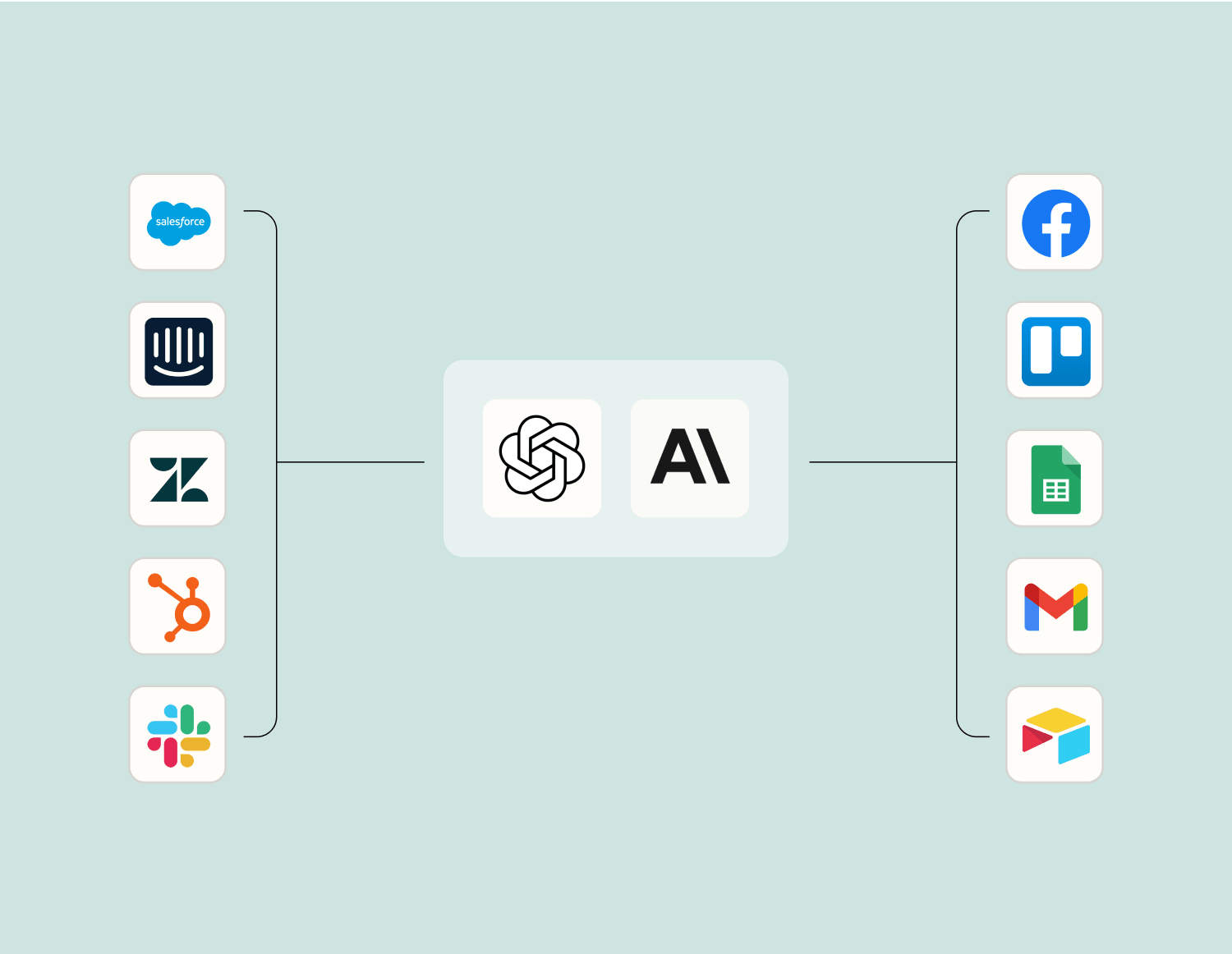
Level up your Azure DevOps to Salesforce integration with AI. Extract, summarize, and transform your integration data with leading AI models like OpenAI, Anthropic, and more.
Frequently Asked Questions about Azure DevOps + Salesforce integrations
New to automation with Zapier? You're not alone. Here are some answers to common questions about how Zapier works with Azure DevOps and Salesforce
Can I integrate Azure DevOps with Salesforce directly?
Integration between Azure DevOps and Salesforce is possible through tools that facilitate seamless data and process flow between the two platforms. One can use middleware or integration services to bridge the gap without extensive custom development.
What are some common triggers for an Azure DevOps and Salesforce integration?
Common triggers might include the creation of a new work item in Azure DevOps, a change in the status of an existing work item, or updates in specific fields. These events can trigger actions such as updating a record in Salesforce or creating a related task.
What actions can be performed in Salesforce when triggered by Azure DevOps events?
When an event occurs in Azure DevOps, such as a work item status change, we can update corresponding records in Salesforce, create new tasks or cases, or log interactions within the account or contact that pertains to the event.
Are there limitations when integrating Azure DevOps with Salesforce?
Integrations may have limitations regarding real-time data syncing and possible data transformation needs. Careful configuration ensures that only relevant data is synced between systems, respecting field compatibility and adhere to both platform's API limits.
How do we handle authentication for integrating these two platforms?
Secure authentication is typically managed via OAuth tokens or API keys that ensure encrypted communication between Azure DevOps and Salesforce services. During setup, you will grant necessary permissions for data access and task execution across both environments.
Can I customize which fields are synced between Azure DevOps and Salesforce?
Yes, we provide options to customize field mappings so that only relevant information is shared between platforms. This customization helps maintain organized data flows by ensuring teams only receive actionable insights pertinent to their workflows.
Is it possible to automate workflows across both platforms simultaneously?
Automation workflows involving both Azure DevOps and Salesforce can be configured using triggers from either platform. For instance, closing a task in Azure DevOps could automatically update related opportunity stages within Salesforce, streamlining project-management efforts.
About Azure DevOps
Azure DevOps is where teams manage, develop, and deliver software in the cloud. Azure DevOps provides free, private Git project hosting for up to 5 users, project and test management tools, build and CI, and team collaboration. Connect using the development tools of your choice, including Visual Studio, Eclipse, Xcode, and more.