Zapier vs. n8n
Published: 9/16/2026 | By Ryan Kane
Looking for an n8n alternative that's easier to scale across your business? Switch to Zapier for a fully managed AI orchestration platform that lets every team build and govern automations and AI agents—without taking on the cost, maintenance, and security burden of running your own infrastructure.
Here's what you'll get with Zapier:
Implement in minutes, not sprints: Skip the Docker containers, persistent volumes, and server upkeep—start building the moment you sign up.
Build securely by default: Get centralized credential brokering, SOC 2 Type II and GDPR compliance, and admin controls out of the box, on every plan.
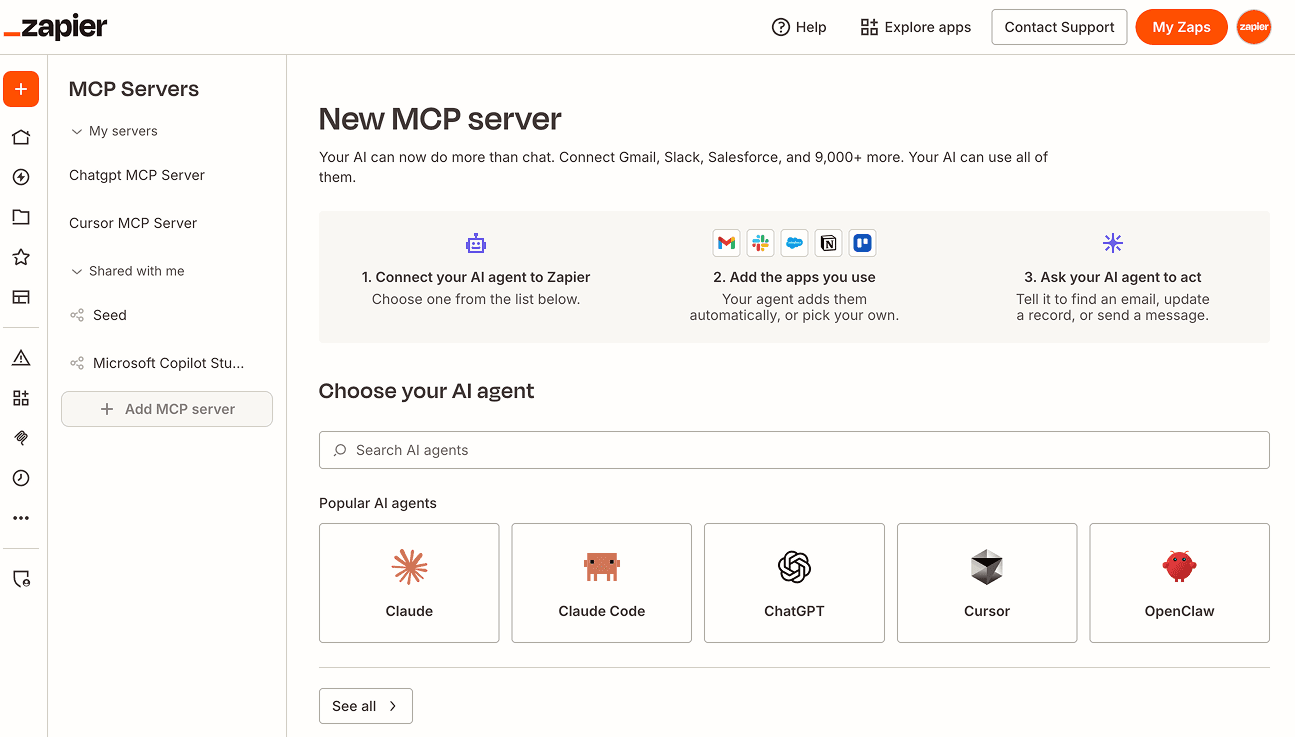
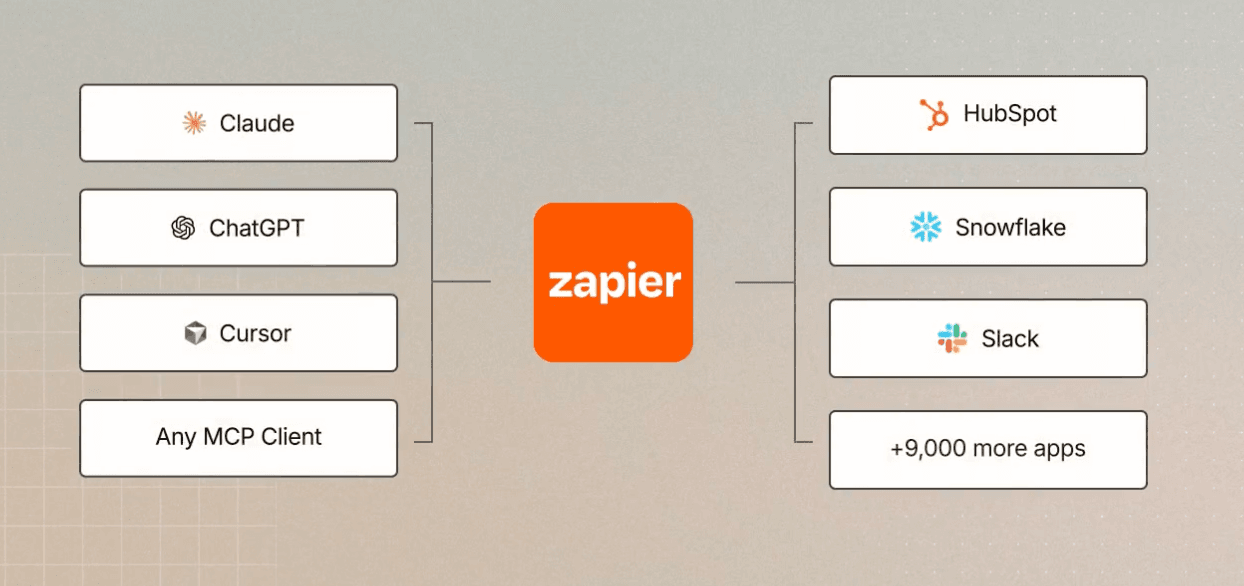
Build with 9,000+ apps: Connect roughly four times more apps than n8n, all officially governed by Zapier.
Vergleich
Compare Zapier and n8n pricing, integrations, and more
Rezensionen
See why customers choose Zapier
Eigenschaften
Review Zapier and n8n features in depth
Häufig gestellte Fragen
Get answers to your questions
n8n vs. Zapier comparison
| Zapier | n8n | |
|---|---|---|
| Überblick | Zapier is a cloud-based AI orchestration platform that helps businesses scale automation and AI across their entire organization quickly and safely. | n8n is a self-hosted automation platform built for technical teams that want full infrastructure control. |
| Security & governance | SOC 2 Type II, SOC 3, GDPR, and CCPA certified, plus SAML SSO, audit logs, and role-based access control starting on the Team plan, with SCIM provisioning and app- and action-level restrictions added at Enterprise | Security and collaboration are your responsibility on the free Community Edition; RBAC, shared credentials, and SSO require the paid Business plan, and infrastructure security is still on you. n8n Cloud carries its own SOC 2 Type 2, SOC 3, and GDPR certification, but that doesn't extend to a self-hosted instance |
| Reliability & performance | Fully managed infrastructure with automatic scaling, retries, error handling, and failure alerts built into every plan. | Reliability depends on your self-hosted setup—your team monitors performance, manages database capacity, and builds your own recovery workflows. |
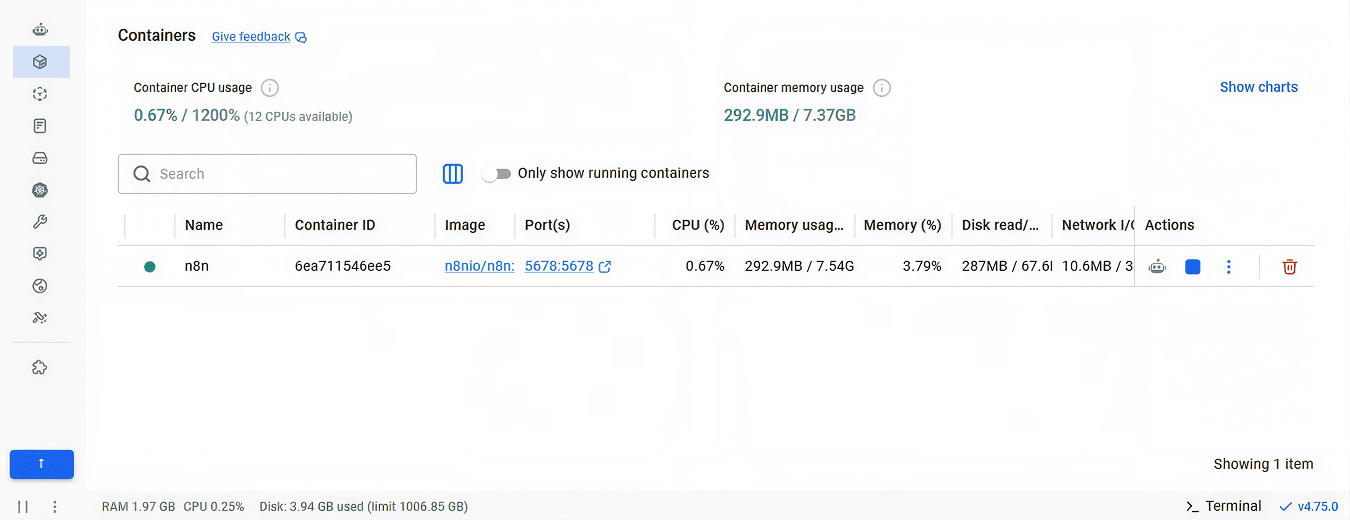
| Implementierung | Fully managed cloud infrastructure; no servers, containers, or ops burden—start building the day you sign up. | Self-hosted via Docker, a VPS, or cloud/on-prem servers; your team owns setup, updates, and uptime. |
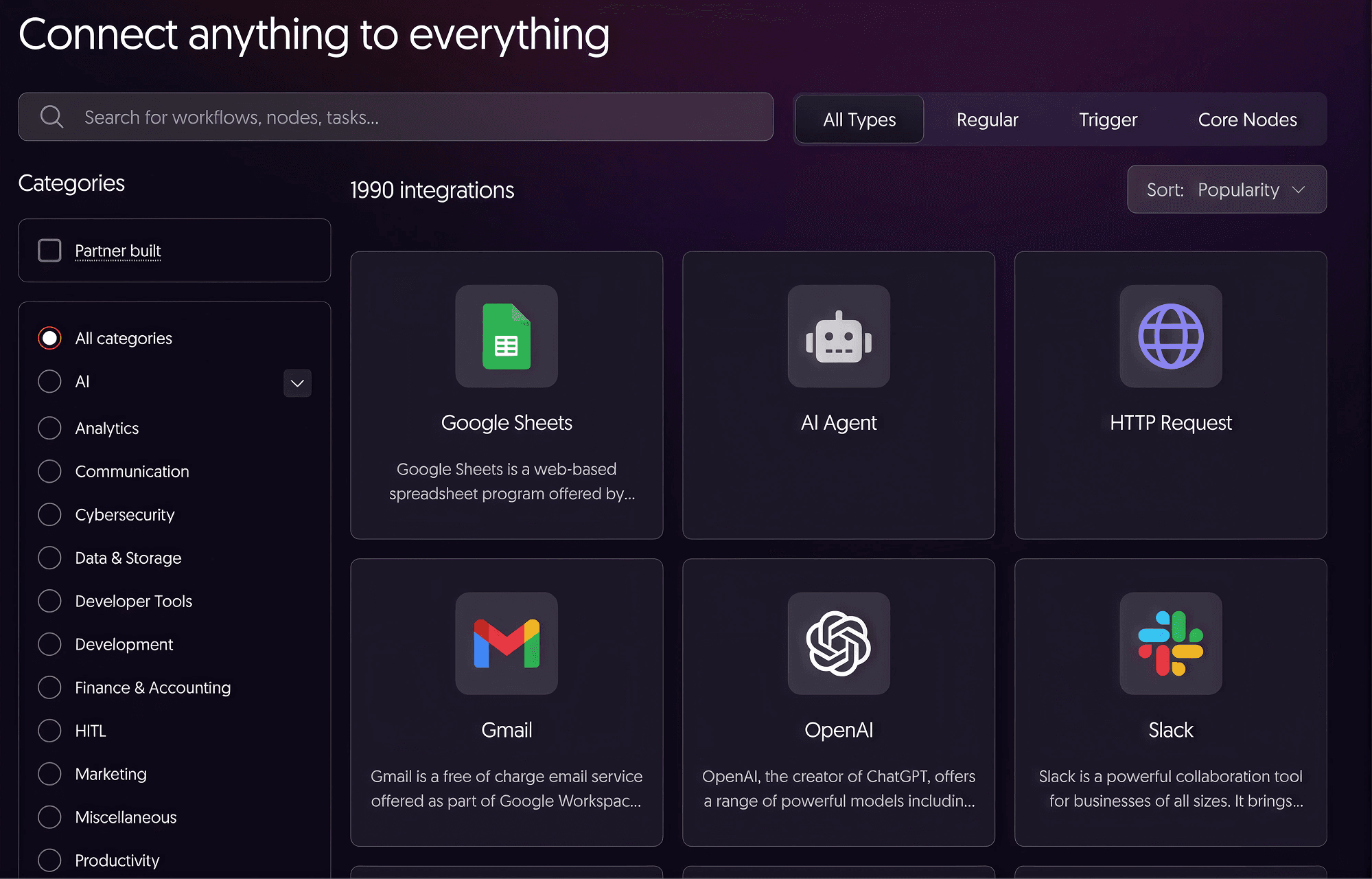
| Integrationen | 9,000+ apps, officially governed by Zapier; API changes are handled automatically. | ~2,000 apps; many are community-maintained with irregular update schedules. |
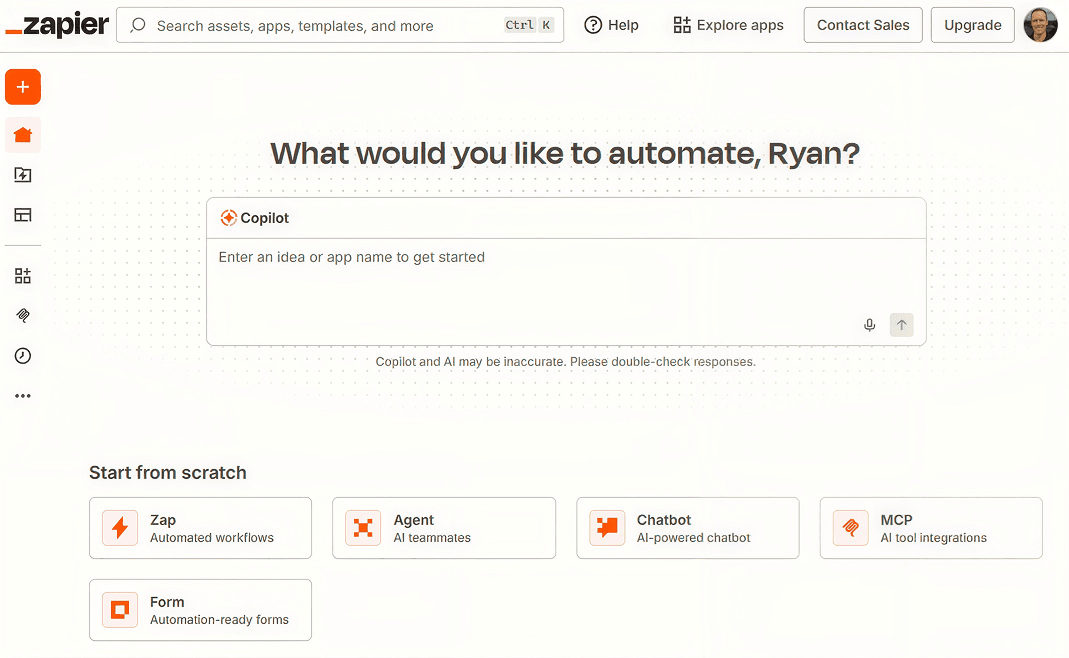
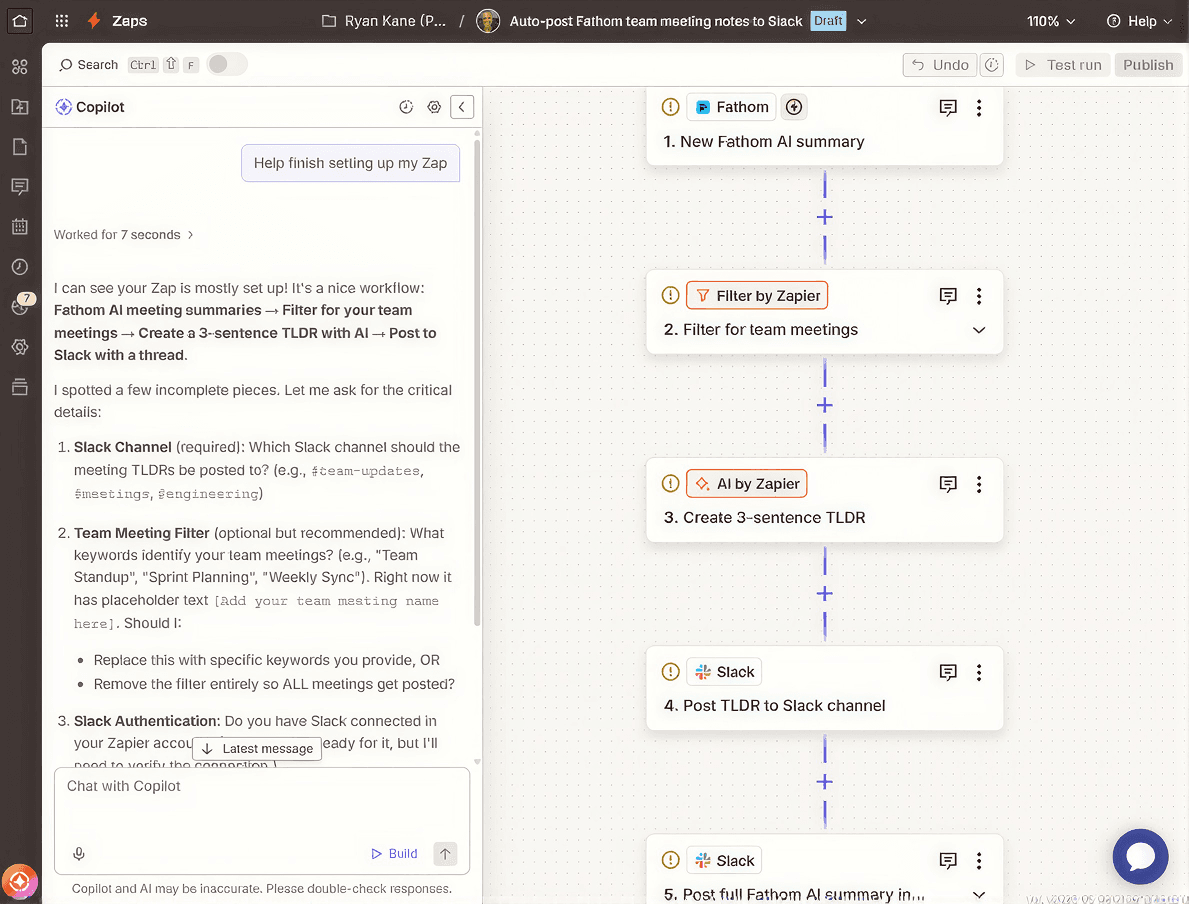
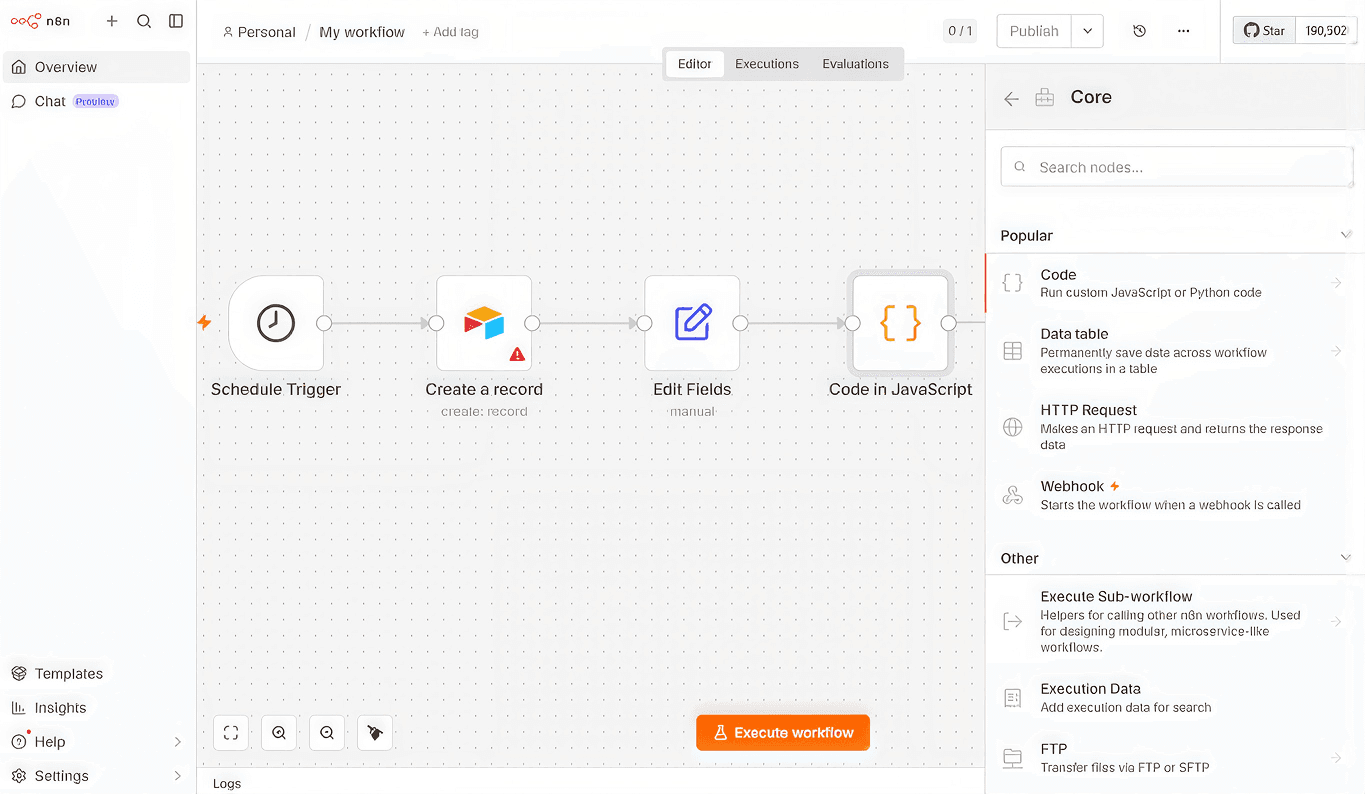
| Benutzerfreundlichkeit | No-code and AI-assisted for every team—describe what you need, and Zapier Copilot builds it, or build directly from your favorite AI assistant. | Steeper learning curve; a visual builder, but many common actions require JavaScript expressions or code nodes. |
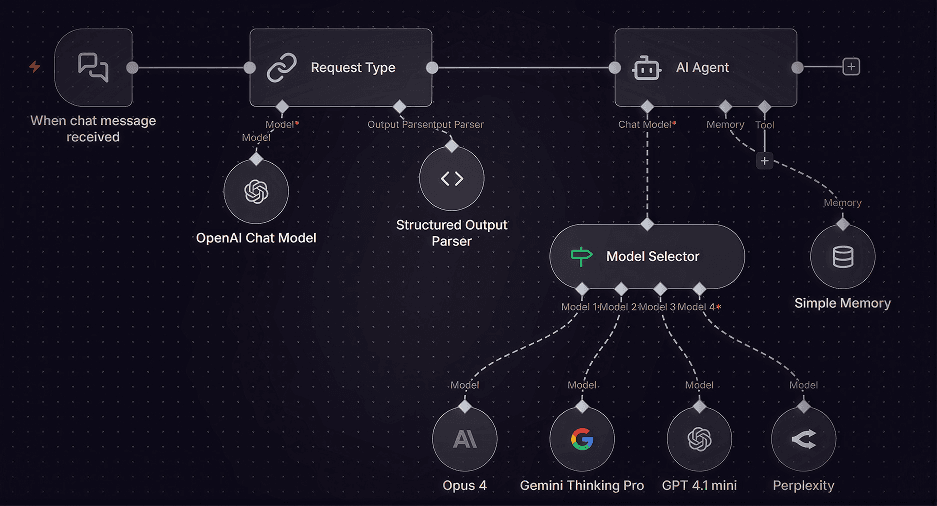
| AI capabilities | Add AI steps and agentic tooling into deterministic workflows; access to 9,000+ apps from any AI agent harness; AI Guardrails and human-in-the-loop built in. | AI Agent, MCP, and human-in-the-loop nodes available; an AI-assisted builder is only on n8n's roadmap, gated to the pricier Business plan. |
| Preise | Free plan available; Professional starts at $19.99/month, Team at $69/month for 25 users; Enterprise has custom pricing. Pay only for completed work tasks. | Free to self-host via the Community Edition; cloud plans run $20–$50/month, and Business jumps to $800/month, still self-hosted. Billing is per execution. |
What customers say about Zapier
"[Zapier] saves me a lot of time and helps me stay focused on more important work. I looked into other tools like n8n and Microsoft Power Automate, but Zapier felt more straightforward for what I needed."
—Rafael A., Sales Manager
G2 review
"We were eager to adopt AI integrations but had real reliability and security concerns—Iron Noodle addressed those directly by leveraging Zapier's newer MCP tools."
—Jamie Miller, Iron Noodle
Customer testimonial
"The [9,000+] app integrations, the relentless product improvements, the webinars, the Slack community. I love Zapier. It just feels better than n8n or others."
—A co-founder at a financial-services marketplace
Customer testimonial
"I had never used Zapier before. A few weeks later, Redis had SSO, SCIM, governed access, critical app restrictions, and a path for teams to bring AI automation ideas forward."
—Jeff Hirsch, Systems Architect, Redis
Customer testimonial
3,4 Millionen Unternehmen vertrauen uns



















AI automation starts and scales with Zapier
Build reliable, consistent workflows across tools, people, and processes. Access 9,000+ apps securely from any surface, and add AI to the mix only when you need it.
Compare features: Zapier vs. n8n
I spent a lot of time building automations in n8n and Zapier—and doing loads of research about each app—to understand where each one shines and who each platform is best for. The summary: Zapier makes it easier to scale automation and AI across your business without adding infrastructure or operational overhead. Compared with n8n's self-hosted, developer-led model, Zapier offers faster implementation, a much larger managed integration library, and one governed platform for building and overseeing workflows, agents, and AI. (Note: n8n also offers a cloud version. But in this comparison, I'll be addressing the self-hosted version, which has the on-premises, data residency, and cost differentiators that are the biggest reasons teams consider n8n in the first place.)
Security & governance
n8n's free version puts security entirely in your hands. It's a big responsibility, and if you're not sure what you're doing, it's possible for important details to slip through the cracks and leave you exposed.
If you're running n8n for low-risk personal projects, or if you're confident in your IT skills, you might be able to safely manage security for a single n8n instance that only you log in to. But if you're collaborating with a team, n8n's free plan is effectively off the table: it doesn't have role-based access controls (RBAC), shared credentials, or external credentials.
Upgrading to n8n's paid Business plan solves some of these problems. You get RBAC, shared credentials, external credentials, version control using Git, and SAML SSO. But features like mandatory 2FA, audit logging, and external secrets management are only available on n8n's Enterprise plan—and since you're still self-hosting, infrastructure security is still entirely on your plate.
Self-hosting doesn't eliminate security risk, either—it just moves it onto your team. A remote-code-execution vulnerability disclosed in 2026 meant any unpatched, self-hosted n8n instance was exploitable without authentication until the operator applied the fix themselves. With a managed platform, that patching responsibility isn't on your plate in the first place.
With Zapier, you don't have to think about security at all. Zapier's infrastructure is SOC 2 Type II, SOC 3, and CCPA-certified and GDPR-compliant, and data is encrypted in transit and at rest. On every plan—including the free plan—Zapier handles credential management centrally, so your API keys go in once, OAuth flows are managed, and your raw keys are never exposed. Starting at just $69/month, Zapier's Team plan adds shared app connections, SAML SSO, role-based access controls, and connection event logs.
Zapier's Enterprise users get a broader set of security features, including:
SCIM user provisioning
Workspace-level permissions
App and action restrictions
Benutzerdefinierte Datenaufbewahrung
Beobachtbarkeit-API
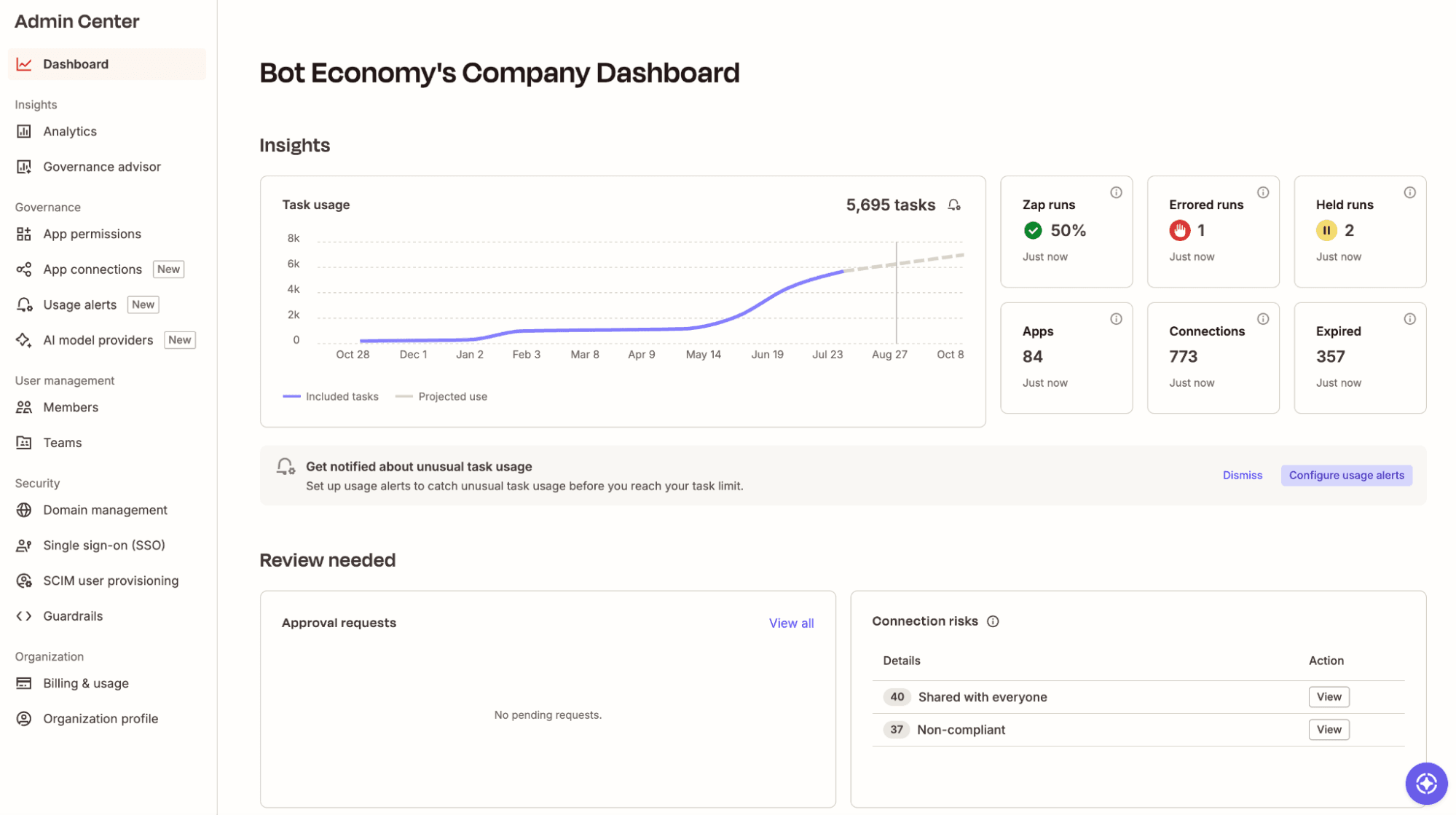
You can manage all of this from Zapier's Admin Center, which gives IT a single dashboard for governance, user management, and activity monitoring.
FAQ: Zapier vs. n8n
Which is better: Zapier vs. n8n for small businesses?
For most small businesses, Zapier is the better choice. It's faster to set up, easier for non-technical users, and comes with thousands of ready-made integrations that are maintained for you. That means less time troubleshooting and more time actually running your business. n8n is better suited to teams that are willing to manage infrastructure and ongoing maintenance.
Is n8n cheaper than Zapier?
n8n's Community Edition is free, which makes it look cheaper at first glance. But that sticker price doesn't include the server costs, maintenance hours, and IT time it actually takes to run it—someone has to handle hosting, security patches, backups, and monitoring. That labor is the hidden cost of using n8n. Even n8n's paid tiers still require self-hosting all the way up through the $800/month Business plan, so the hidden costs never fully go away; some teams end up spending hundreds of thousands annually once that time is priced in.
Zapier's subscription price is closer to the total price. Hosting, security, and maintenance are built in, so there's no separate infrastructure bill or dedicated IT time required to keep it running.
Is n8n open source, and when is that the better choice?
n8n describes itself as "fair-code" and source-available, not strictly open source. Self-hosting gives you more control over infrastructure and data, but also makes you responsible for hosting, updates, backups, monitoring, and security. If open source is a hard requirement, n8n may fit better; if the goal is control with less operational overhead, Zapier's managed model usually wins on total cost.
Which is better for developers: Zapier or n8n?
It depends on what developers need. n8n is a strong fit for teams that want self-hosting, direct infrastructure control, and the flexibility to add JavaScript or Python throughout workflows. Zapier is better for developers who want to build faster without managing infrastructure, using tools like the Zapier SDK, CLI, MCP, and Code by Zapier. It also includes managed authentication, token refresh, retries, error handling, and access to 9,000+ integrations.
Can Zapier replace n8n?
For most businesses, yes. Zapier's visual builder and Copilot cover the same ground as n8n's node-based canvas. Code by Zapier handles the custom logic steps n8n builds with JavaScript or Python nodes. And Zapier's 9,000+ maintained integrations cover what n8n handles through native and community-built nodes (or raw HTTP requests for anything unsupported).
Where Zapier can't fully replace n8n is in code-first, infrastructure-adjacent cases: workflows built around deep custom logic and raw API calls, or automations that specifically need to run inside a self-hosted, air-gapped, or on-premises environment for compliance reasons. For everything else—connecting SaaS apps, orchestrating AI, and building workflows that non-technical teams can maintain—Zapier is the more scalable replacement.
Which is more reliable: Zapier or n8n?
Zapier is generally more reliable for teams that don't want to run their own infrastructure—with automatic scaling, updates, backups, retries, and failure alerts on every plan. With self-hosted n8n, uptime is literally your team's job: if the server goes down at 2 a.m., someone on your team has to notice, diagnose, and fix it. n8n can be just as reliable with the right engineering support behind it, but that reliability is something you build and maintain yourself, not something the platform provides by default.
How hard is it to switch from n8n to Zapier?
To switch from n8n to Zapier, teams would likely need to recreate workflows in Zapier, reconnect app accounts, and test each automation. The process may be easier when Zapier already supports the same apps and actions, but complex n8n workflows that rely on custom code, HTTP requests, or self-hosted infrastructure might require more manual rebuilding.
What are the primary limitations of n8n?
n8n's biggest limitation is its hands-on approach to integrations. Building and maintaining workflows often requires technical expertise—especially when working with apps that lack strong native nodes or when creating custom connections. You're also on the hook for fixing issues and keeping workflows up to date as APIs change.
Is n8n good for enterprise?
It can work, but usually only for organizations with a strong enough self-hosting or infrastructure-control requirement to justify dedicating engineering and IT resources to running it—automation in that model stays centralized with a technical team rather than spreading across the business. Enterprises that want automation to scale across departments without routing every workflow through developers typically choose a managed platform like Zapier instead, for the built-in reliability, governance, and non-technical accessibility that come with it.
Can you use n8n for marketing automation?
n8n can handle marketing automation, but the level of hands-on setup required can slow things down for most marketers. It also offers fewer native integrations than a tool like Zapier, so teams will often need to build or maintain connections to their marketing tech stack themselves.
For most marketing teams, Zapier is the better option: with 9,000+ integrations, a no-code interface, and AI-assisted workflow building, marketers can launch and refine automations quickly without needing engineering support.
AI automation starts and scales with Zapier
Build reliable, consistent workflows across tools, people, and processes. Access 9,000+ apps securely from any surface, and add AI to the mix only when you need it.
About the author: Ryan Kane is a writer and marketer based in Mérida, Mexico. He writes about SaaS, AI, and marketing while building fun Internet side projects. Learn more: ryankane.co.